
Discover our section specialized in congenital heart disease pathologies, where you can find more than 200 pathologies.
Collaboration with Prof. Daniel Tobler and University of Basel


Congenital (MS) results from a variety of anatomic anomalies in the pediatric population, and it is commonly associated with parachute (PMV),, an abnormality in which the mitral valve (MV) chordae insert into a single (anterolateral papillary muscle [ALPM] or posteromedial papillary muscle [PMPM]). Parachute-like asymmetric mitral valve (PLAMV) is a similar anomaly in which chordae are..
Read More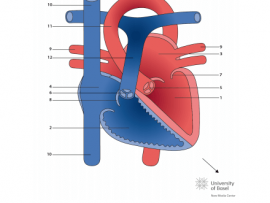
In levocardia, the heart is predominantly in the left hemithorax with a leftward apex. In , the heart is predominantly in the right hemithorax. Primary dextrocardia is defined as a condition in which the heart is in the right hemithorax due to a structural . In primary dextrocardia the apex usually points to..
Read More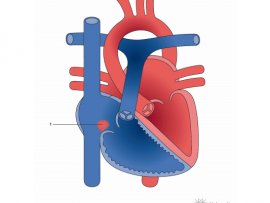
Inferior sinus venosus defects (SVDs) are rare imperfections located in the inferior portion of the atrial septum, leading to an overriding inferior vena cava (IVC) and an interatrial connection. These defects have increased risk of anomalous pulmonary venous return (PAPVR) and often are confused with secundum atrial septal defects (ASDs)..
Read More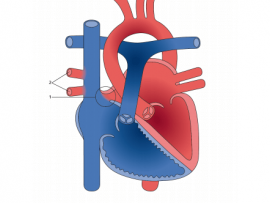
Partial anomalous venous connection (PAPVC) is a rare congenital heart disease where the blood flow from one or more pulmonary veins (but not all) returns to the right atrium or systemic venous circulation and is often associated with a sinus venosus atrial defect (SVD).
Read More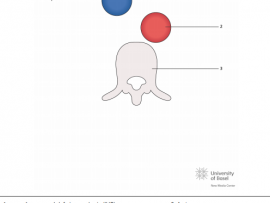
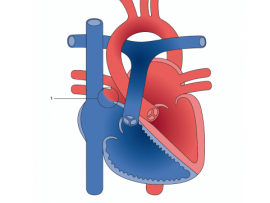
Surgical repair of sinus venosus defect (SVD) with partial anomalous pulmonary venous connection (PAPVC) to the superior vena cava (SVC) or the right atrium (RA) should avoid long term complications like permanent sinus node dysfunction (SND) or obstruction of superior vena cava (SVC). We retrospectively reviewed our single center experience..
Read More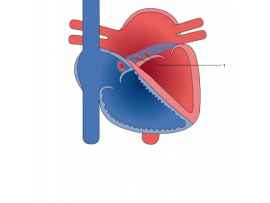
Sinus venosus defects (SVDs), originally described in 1858, represent about 2%–10% of all atrial septal defects. The remainder is composed of ostium secundum (70%), ostium primum (20%) and unroofed coronary sinus (<1%) defects. Approximately 90% of SVDs are associated with partial anomalous pulmonary venous return (PAPVR). The superior SVD (SSVD) variant results from communication..
Read More
The unroofed coronary sinus is a spectrum of cardiac anomalies in which part or all of the common wall between the coronary sinus and the left atrium is absent. Most cases are associated with anomalous systemic venous return, such as persistent left superior vena cava. The diagnosis of this lesion..
Read More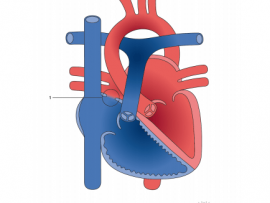
What is it? A "hole" in the wall that separates the top two chambers of the heart. This defect allows oxygen-rich blood to leak into the oxygen-poor blood chambers in the heart. ASD is a defect in the septum between the heart's two upper chambers (atria). The septum is a..
Read More
Educational video. Axillary approach has many advantages in congenital heart surgery - cosmetical, physical, psychological benefits for children.
Read More