
Discover our section specialized in congenital heart disease pathologies, where you can find more than 200 pathologies.
Collaboration with Prof. Daniel Tobler and University of Basel
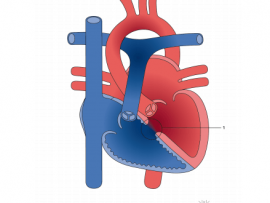

Perimembranous ventricular septal defects (VSDs) are located in the left ventricle outflow tract beneath the aortic valve. They are the most common VSD subtype in the United States, occurring in 75-80% of cases. Defects may extend into adjacent portions of the ventricular septum
Read More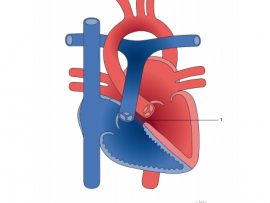
Doubly committed subarterial ventricular septal defect (VSD) is a unique type of VSD, located beneath the aortic and pulmonary valves, accounting for about 5–7% of all VSD autopsy findings. It is also called supracristal or infundibular VSD
Read More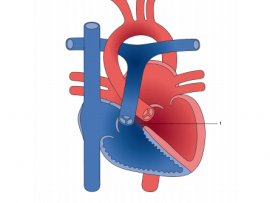
Background: The morphology of ventricular septal defects (VSDs) that are doubly committed and juxtaarterial places the patient at risk for aortic valvar prolapse and aortic valvar insufficiency (AI). Surgical repair of this type of defect often involves placing sutures through the base of one or more of the leaflets of the..
Read More
Atrioventricular septal defects (AVSD) are a relatively common family of congenital heart defects. Also known as atrioventricular canal defects or endocardial cushion defects, they account for about 5 percent of all congenital heart disease, and are most common in infants with Down syndrome. (About 15 percent to 20 percent of..
Read More
Female infant; born on term with 2.6 kg, normal delivery. Mother; fourth pregnancy, denied the use of medication during pregnancy. Presented respiratory discomfort at birth, evolving with neonatal infection and use of antibiotic therapy for 29 days.At two months, she was referred to our Service for evaluation with use of..
Read More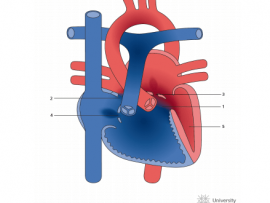
Background: Management of right-dominant atrioventricular septal defect (AVSD) remains a challenge given the spectrum of ventricular hypoplasia. The purpose of this study was to assess whether reported echocardiographic indices and additional measurements were associated with operative strategy in right-dominant AVSD. Methods: A blinded observer retrospectively reviewed preoperative echocardiograms of patients who underwent..
Read More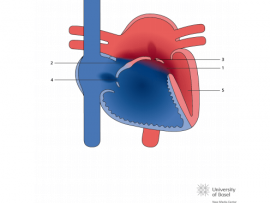
Unbalance in atrioventricular septal defect can be found in more than one anatomic level and in different degrees at each level. The definition of “unbalance” has historically been focused in comparing the dimensions of main cardiac structures, such as the atrioventricular valve and the ventricles. However, the hemodynamic aspects of..
Read More
Repair for tetralogy of Fallot (TOF) with complete atrioventricular septal defect (CAVSD) has been reported with good early and intermediate outcomes. Morbidity, however, remains significantly high. To date, repair of CAVSD/TOF using a pulmonary valve-sparing technique (PVS) and freedom from valve reoperation are not well defined. A study was undertaken..
Read More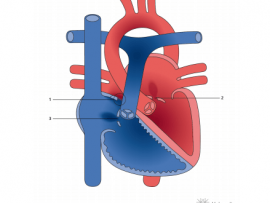
Atrioventricular (AV) septal defect consists of an ostium primum type atrial septal defect and a common AV valve, with or without an associated inlet (AV septal type) ventricular septal defect (VSD). These defects result from maldevelopment of the endocardial cushions. Patients with no VSD component or a small VSD and..
Read More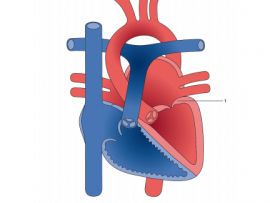
syndrome is a unique form of left-sided heart disease characterized by aortic outflow , dilated , dysplastic/incompetent mitral valve, and a restrictive/intact . Patients with this constellation of abnormalities have been managed in a variety of ways with overall poor outcomes. Methods We performed a retrospective review of all patients with mitral valve..
Read More