


Abstract Objectives To evaluate whether an activated clotting time (ACT)-guided, formula-based anticoagulation strategy supported by viscoelastic coagulation monitoring (ROTEM) improves perioperative coagulation management and reduces bleeding compared with standard weight-based..
Read More
Abstract Background Extracorporeal membrane oxygenation, although lifesaving, is invasive. Complications affecting all body systems mandate reevaluation of goals of care. When extracorporeal membrane oxygenation is nonbeneficial, planning for de-escalation/decannulation to..
Read More
Abstract Objectives To map the use of patient-reported outcome measures (PROMs) and patient-reported experience measures (PREMs) in adult follow-up after extracorporeal membrane oxygenation (ECMO), and to identify measurement gaps relevant..
Read More
Abstract In this single-center retrospective cohort study, we compared extracorporeal membrane oxygenation (ECMO) cannulation and early management performed in the emergency resuscitation room (ERR) versus the intensive care unit (ICU)...
Read More
Abstract Objectives Cardiopulmonary bypass is necessary for surgical repair of complex congenital heart disease. We studied whether whole blood use in circuit prime and for initial intraoperative transfusion needs improved..
Read More
Abstract Cerebral injury remains a major contributor to morbidity and mortality in VA‑ECMO patients. Disruption of cerebral autoregulation during extracorporeal support may predispose to neurological damage. This prospective study evaluated..
Read More
Abstract An obese female patient with ischemic cardiomyopathy was placed on venoarterial extracorporeal membrane oxygenation (VA-ECMO) for cardiogenic shock after in-hospital cardiac arrest. Despite biventricular recovery by day 3, VA-ECMO..
Read More
Abstract Objectives To determine whether preoperative intestinal microbiome characteristics are associated with the development of systemic inflammatory response syndrome (SIRS) after cardiac surgery. Design Single-center prospective observational cohort study. Setting..
Read More
Abstract Efficient and selective gas transport across soft and nonporous interfaces remains a pivotal challenge for biomimetic membrane design, particularly in extracorporeal membrane oxygenation (ECMO) systems. Here, we report a..
Read More
Abstract In this retrospective cohort study at a quaternary referral hospital, 829 adult patients supported by extracorporeal membrane oxygenation (ECMO) between January 1, 2014, and October 31, 2024, were screened..
Read More
Abstract Extracorporeal membrane oxygenation (ECMO) is a life-saving intervention for critically ill children. However, decisions regarding discontinuation due to poor prognosis remain ethically complex. While outcomes after successful weaning are..
Read More
Abstract Atrial fibrillation (AF) is a highly prevalent arrhythmia and a major cause of morbidity and mortality. Although AF is not a primarily immunologic disorder, increasing clinical, translational, and experimental..
Read More
Abstract Extracorporeal membrane oxygenation (ECMO) cannulation during refractory cardiac arrest has become a key therapeutic option in contemporary critical care medicine. When initiated in a timely manner, extracorporeal cardiopulmonary resuscitation..
Read More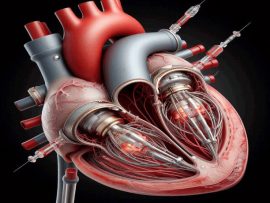
Abstract Post–myocardial infarction (PMI) ventricular septal defect (VSD) repair is associated with high mortality., The pathophysiology varies based on the size of the infarction and the VSD, which results in..
Read More
Abstract To optimize and evaluate the hydrodynamic performance and gas exchange efficiency of a newly developed centrifugal blood pump and membrane oxygenator for extracorporeal membrane oxygenation (ECMO) support, blood pump..
Read More
Abstract Objective(s): Mean arterial pressure (MAP) after cardiac surgery may contribute to acute kidney injury (AKI). We sought to identify threshold MAP values during the first 24 hours (h) postoperatively..
Read More
Learn ECMO, ECPR, and Bleeding Edge Resuscitation A sim lab, a procedure lab, and one-on-one teaching so you can initiate ECMO and perform the most advanced hemodynamic resuscitation on your..
Read More
This course is designed for learners who have completed the ELSO Virtual ECMO Training Course, ELSO Foundations: Adult ECMO Training Course, or for practitioners with a strong foundational knowledge of..
Read More
Abstract Objectives Extracorporeal cardiopulmonary resuscitation (ECPR) is increasingly employed for patients with refractory cardiac arrest, yet optimal criteria for patient selection remain poorly understood. Pre-cannulation lactate and pH values are..
Read More
Abstract Platelets play a fundamental role in hemostasis; however, their phenotype, reactivity, and function vary across the pediatric age spectrum. While developmental differences in plasma coagulation proteins have been well-characterized..
Read More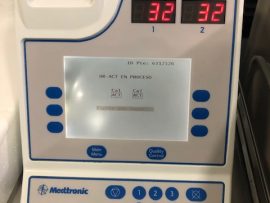
Abstract The International Society on Thrombosis and Haemostasis (ISTH) recently published a survey on the management of unfractionated heparin (UFH), which revealed substantial heterogeneity in practice and highlighted the need..
Read More
Dr.Sam Zeraatian Nejad Davani, Cardiovascular and Thoracic Surgeon, Transplant and Thoracic Organs Recovery Surgeon. Director of Georgia Atlanta Procure on Demand Thoracic Organs Transplant and Procurement Surgery. ..
Read More
In Thoracoabdominal Normothermic Regional Perfusion (TA-NRP) for Donation after Circulatory Death (DCD), initiating central cannulation with a venous-first approach serves as a critical step to decompress an acutely..
Read More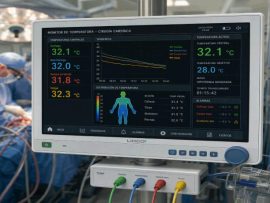
Abstract Aim Early downward temperature drift is a common event of pre-hospital extracorporeal cardiopulmonary resuscitation (e-CPR), since prehospital extracorporeal membrane oxygenation (VA-ECMO) circuits often lack heat-exchangers. However, whether this core..
Read More
Abstract Background Despite advances in patient blood management, the optimal hemoglobin threshold for Red Blood Cell (RBC) transfusion remains controversial. This observational study evaluated the association between the relative decline..
Read More
Abstract Aims Acute kidney injury (AKI) is common in patients treated with microaxial flow pumps (mAFP). Plasma-free haemoglobin (PFHb) due to haemolysis is known to increase kidney injury in a..
Read More
Abstract Background: Cardiac‑surgery‑associated acute kidney injury (CSA‑AKI) is a frequent postoperative complication worldwide and is associated with increased mortality, prolonged intensive care unit stay, and substantial resource utilization. While reported..
Read More
Abstract Background Hemolysis is a recognized complication of mechanical circulatory support and may contribute to acute kidney injury in patients with cardiogenic shock. Early hemolysis during Impella support, particularly compared..
Read More
Abstract In managing ECMO, preventing thrombus formation and hemolysis is crucial. While centrifugal pumps are increasingly used in pediatric ECMO, pumps designed for low flow range are not approved in..
Read More
Abstract Objectives Low haematocrit during cardiopulmonary bypass is a known risk factor for acute kidney injury, but it is unclear whether high haematocrit also increases acute kidney injury risk. We..
Read More