


Take part in an intensive and interactive course designed for a small group of participants. Maximum 40 participants with 10 simulation stations. The course will be the same as used..
Read More
Join up to 400 healthcare professionals for an international congress featuring an engaging scientific programme, inspiring speakers and opportunities to meet and exchange experiences with colleagues. Lunch on both days..
Read More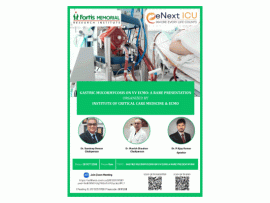
We are pleased to announce an upcoming academic session on “Gastric Mucormycosis on VV ECMO: A Rare Presentation”, organized by the Institute of Critical Care Medicine & ECMO, in..
Read More
Abstract Background Postcardiopulmonary bypass (CPB) bleeding is partly driven by impaired thrombin generation. Recent trials suggest differing clinical effects of fresh frozen plasma (FFP) and prothrombin complex concentrate (PCC), but..
Read More
Abstract Extracorporeal membrane oxygenation (ECMO) is an invaluable tool in cardiac surgery. In pediatric patients, it is almost exclusively deployed by congenital cardiac surgeons who are sufficiently trained. Pediatric ECMO..
Read More
Abstract Support with veno-venous extracorporeal membrane oxygenation (VV-ECMO) can be considered for patients with severe (combined) hypoxemia and hypercapnia. By adjusting sweep gas flow (SGF), blood oxygenation and correction of..
Read More
Abstract Background Venoarterial extracorporeal membrane oxygenation (VA-ECMO) is often combined with other temporary mechanical circulatory support (tMCS) in cardiogenic shock, yet combination-specific outcomes remain poorly defined. We compared temporal trends,..
Read More
Abstract Donation following the confirmation of death based on circulatory criteria has proven to be a valuable strategy for increasing the availability of organs for transplantation. However, the standard super-rapid..
Read More
Abstract Background: Myocardial ischemia–reperfusion during cardiac surgery is associated with complex metabolic alterations that reflect both myocardial injury and recovery. This prospective study aimed to characterize intraoperative lactate, pH, and..
Read More
Abstract Background Veno-venous extracorporeal membrane oxygenation (VV ECMO) candidacy decisions are made under substantial uncertainty and are inconsistent. With a team including economist decision-scientists, we applied Regret Theory to hypothesize..
Read More
Abstract Background Survivors of extracorporeal membrane oxygenation (ECMO) may experience persistent physical, cognitive, psychological, social, and quality-of-life impairments after intensive care unit (ICU) discharge. However, the core components of early..
Read More
Abstract Objectives To compare clinical outcomes of venoarterial (VA) extracorporeal membrane oxygenation (ECMO) combined with mechanical thrombectomy (MT) versus VA-ECMO alone in high-risk pulmonary embolism (PE). Design Systematic review and..
Read More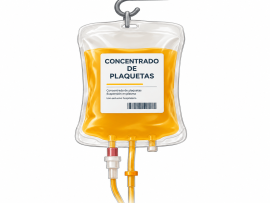
Abstract Background/Objectives: Postoperative bleeding remains a major complication following coronary artery bypass grafting (CABG), contributing to transfusion requirements, reintervention, and morbidity. The objective of this study was to assess the..
Read More
Abstract Extracorporeal life support provides temporary cardiorespiratory support for patients with severe, potentially reversible cardiac and/or respiratory failure refractory to conventional measures. Its application has broadened across a wide spectrum..
Read More
Abstract Objective To determine whether colloid choice within the cardiopulmonary bypass (CPB) priming strategy independently modifies the perioperative acid-base trajectory. Design Preplanned analysis of a single-center, double-blind, 3-arm randomized controlled..
Read More
Abstract Plastics serve multiple functions in an industrialized society, including major applications in all aspects of healthcare such as single use syringes, coatings and implantable devices. Plastics break down into..
Read More
Abstract Unmeasured anions are commonly detected in critically ill patients, yet their nature remains unclear. We examined whether endothelial glycocalyx degradation may be related to this unexplained anionic burden through..
Read More
Abstract A 37-year-old patient (gravida 10, para 0–1–8-0) with class III obesity, obstructive sleep apnoea requiring continuous positive airway pressure and previous pulmonary emboli presented at 19 + 6 weeks' gestation with severe..
Read More
Abstract Objectives To evaluate whether furosemide administration before cardiopulmonary bypass (CPB) is associated with altered intraoperative urinary oxygen tension (PuO₂) and early postoperative renal outcomes in patients undergoing elective on-pump..
Read More
Abstract Background Veno-venous extracorporeal membrane oxygenation (VV-ECMO) is an established therapy for severe respiratory failure; however, few studies have examined the validity of and prognostic factors for VV-ECMO implementation in..
Read More
Abstract Increasingly, more neonatal respiratory extracorporeal membrane oxygenation (ECMO) patients in the Extracorporeal Life Support Organization (ELSO) registry have a primary diagnosis of Other. These patients, in addition to those..
Read More
Abstract Objective: To evaluate the response of various oxygenation indices to the oxygen challenge test (OCT), prior to decannulation, in neonates supported with VA ECMO for respiratory indications, and to..
Read More
Abstract Background Pulmonary complications occur frequently after cardiac surgery. Various intraoperative and perioperative mechanical ventilation strategies were investigated to reduce postoperative lung injury. Evidence of their benefits remains inconclusive. Methods..
Read More
Abstract The application of cardiopulmonary bypass (CPB) has significantly advanced cardiovascular surgery. However, CPB-associated brain injury remains a critical complication that affects patient prognosis and quality of life. Overt stroke..
Read More
Abstract The optimal timing for transitioning from noninvasive respiratory support to invasive mechanical ventilation and extracorporeal membrane oxygenation (ECMO) in severe acute respiratory distress syndrome (ARDS) remains controversial. PubMed and..
Read More
Abstract Objective: The aim of this study was to assess the cost-effectiveness of early versus late initiation of extracorporeal membrane oxygenation (ECMO) in pediatric patients with acute respiratory distress syndrome..
Read More
Abstract Objectives To determine whether low pre- or post-bypass antithrombin (AT) activity identifies adult cardiac surgery patients at increased risk of adverse outcomes in settings where plasma transfusion is rare...
Read More
Abstract Background Chronic respiratory diseases are the third leading global cause of death. As lung transplantation is a definitive treatment for highly selected candidates, extracorporeal membrane oxygenation (ECMO) can be..
Read More
Abstract Extracorporeal membrane oxygenation is increasingly used in the early postoperative period after lung transplantation, mainly to support patients with primary graft dysfunction and severe right ventricular failure. Recipients with..
Read More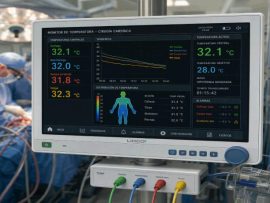
Abstract Deep hypothermic circulatory arrest (DHCA) is widely used during complex aortic arch surgery to reduce metabolic demand and protect vital organs. Conventional temperature management assumes that restoration of core..
Read More