


Abstract Background Current adult cardiac surgery guidelines recommend against the routine use of prophylactic intravenous corticosteroids during cardiopulmonary bypass (CPB) due to concerns about myocardial injury, despite their potential to..
Read More
Abstract Purpose Cardiac surgery requiring cardiopulmonary bypass (CPB) is frequently complicated by excessive bleeding because of coagulopathy. Contact of blood with the CPB circuit is a major contributor. While several..
Read More
Abstract Study design Prospective Clinical Study. Objective Allogeneic blood transfusion (ABT) is the current standard of blood replenishment for metastatic spine tumour surgery (MSTS) despite known complications. Salvaged blood transfusion..
Read More
Abstract Objective Industry payments, as sources of revenue and prestige, may contribute to gender implicit bias. We examined industry payments to cardiothoracic surgeons to determine differences with respect to gender..
Read More
Abstract Enhanced Recovery After Cardiac Surgery (ERACS) programs have grown from their humble beginnings as a ‘Fast-track recovery’ pathway which was first described in 1994, and have now evolved into..
Read More
Abstract Introduction: Risk prevention protocols related to patient care have been developed to reduce the incidence of adverse events in health care services. Cardiopulmonary bypass (CPB) can trigger several complications,..
Read More
Abstract Context Ischemic heart disease (IHD) due to coronary atherosclerosis constitutes the leading cause of morbidity and mortality worldwide. This review was undertaken to document the historical basis for our..
Read More
Abstract Bleeding is a well-known and severe complication of cardiac surgery. Cardiopulmonary bypass, along with heparinization and hemodilution, is thought to affect all pathways of the hemostatic process, leading to..
Read More
Abstract Electrocardiogram (ECG)—synchronized pulsatile veno-arterial extracorporeal membrane oxygenation (V-A ECMO) is a recent development in extracorporeal therapy for patients with severe cardiogenic shock. Although preclinical studies have shown benefits of..
Read More
Abstract Hemolysis induces tissue damage by releasing cellular contents into the plasma. It is widely accepted that hemolysis-derived toxic molecules are cleared by macrophages or metabolized in hepatocytes. In zebrafish,..
Read More
Minimally invasive mitral valve repair (MICS) with neochords combines a precise surgical technique with an advanced perfusion strategy to optimize outcomes. The minimally invasive approach can be performed routinely, delivering..
Read More
Introduction Cardiopulmonary bypass (CPB) is a cornerstone of modern cardiac surgery, facilitating a bloodless and motionless field for surgeons. Traditionally, hyperoxia—elevated levels of arterial oxygen tension (PaO₂)—has been employed during..
Read More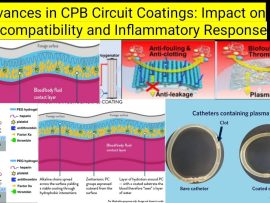
Introduction Cardiopulmonary bypass (CPB) is a lifesaving technology in cardiac surgery, but it introduces blood-material interactions that trigger inflammatory and coagulative responses. To address these issues, advancements in biocompatible CPB..
Read More
Introduction Cardiopulmonary bypass (CPB) has transformed cardiac surgery, allowing for safe and controlled procedures on the arrested heart. However, a long-standing debate in perfusion science is whether CPB should be..
Read More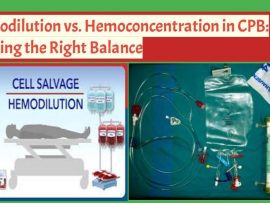
Introduction Cardiopulmonary bypass (CPB) introduces significant alterations in blood composition due to the priming solution, fluid shifts, and extracorporeal circulation. Hemodilution and hemoconcentration represent two opposing strategies, each with distinct..
Read More
Abstract Introduction Contemporary rates of survival after pediatric in-hospital CPR events and trends in survival over the last 20 years have not been compared based on illness category. We hypothesized that..
Read More
Abstract Although extracorporeal membrane oxygenation (ECMO) systems have been used to provide temporary support for patients with severe respiratory or cardiac failure, they are often bedridden, in part because of..
Read More
Abstract The increased accessibility of extracorporeal membrane oxygenation following the COVID‐19 pandemic and the publication of the first randomized trial of extracorporeal cardiopulmonary resuscitation (ECPR) prompted the National Heart, Lung,..
Read More
Abstract Controlled donation after the circulatory determination of death (cDCDD) has emerged as a strategy to increase the availability of organs for clinical use. Traditionally, organs from cDCDD donors have..
Read More
Abstract Background Bleeding is a common and sometimes fatal complication of venovenous extracorporeal membrane oxygenation (ECMO). Whether lowering the intensity of anticoagulation during venovenous ECMO is safe or effective is..
Read More
Abstract The 2021 Adult and Pediatric Anticoagulation Guidelines for patients on extracorporeal membrane oxygenation (ECMO) recommend a target partial thromboplastin time (PTT) between 60 and 85 seconds when unfractionated heparin..
Read More
Introduction Extracorporeal circulation (ECC), used in cardiopulmonary bypass (CPB) and extracorporeal membrane oxygenation (ECMO), serves as a temporary replacement for the heart and lungs. It maintains tissue perfusion and gas..
Read More
Introduction Extracorporeal Membrane Oxygenation (ECMO) is a life-saving intervention for patients with severe cardiac and/or respiratory failure. Unlike cardiopulmonary bypass (CPB), ECMO can run for days to weeks, requiring meticulous..
Read More
Extracorporeal Membrane Oxygenation (ECMO) is a life-saving intervention for patients with severe cardiac or respiratory failure. A thorough understanding of ECMO physiology, particularly oxygen transport dynamics, is essential for optimizing..
Read More
Introduction Cardiopulmonary bypass (CPB) has been the cornerstone of modern cardiac surgery, allowing for safe cardiac arrest while maintaining systemic perfusion. However, the debate between pulsatile and non-pulsatile flow during..
Read More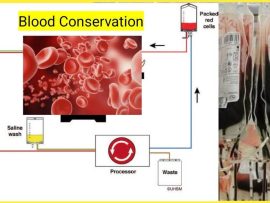
Introduction Cardiopulmonary bypass (CPB) is a vital component of cardiac surgery, allowing surgeons to perform complex procedures on a still, bloodless heart. However, CPB is associated with significant hemodilution, coagulopathy,..
Read More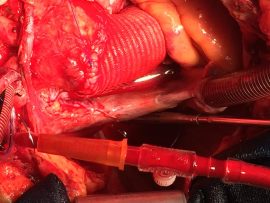
Abstract OBJECTIVES To assess the effects of unilateral versus bilateral antegrade cerebral perfusion (u-ACP vs. b-ACP) on postoperative complications and mid-term follow-up results in Asian patients with acute type A..
Read More
Abstract To investigate the relationship between platelet counts within the first 24 hours of veno-arterial extracorporeal membrane oxygenation (V-A ECMO) support and in-hospital mortality in postcardiotomy ECMO patients. Adult patients..
Read More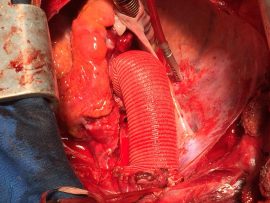
Abstract Introduction Without surgical intervention, type A aortic dissection (TAAD) carries a high risk of life-threatening complications and mortality. Due to the low incidence of aortic dissection, case numbers vary..
Read More