
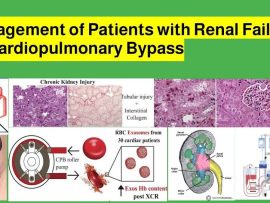

Abstract Renal failure presents a significant challenge in patients undergoing cardiopulmonary bypass (CPB), as they are at high risk for acute kidney injury (AKI), electrolyte imbalances, and fluid overload. The..
Read More
Abstract Normothermic regional perfusion (NRP) is a surgical technique that can improve the quality and number of organs recovered for donation after the determination of death by circulatory criteria. Despite..
Read More
Abstract Background/Objectives: Septic shock remains a significant clinical challenge with consistently high mortality rates. Recent investigations have focused on the efficacy of CytoSorb® (CytoSorbents Corporation, Monmouth Junction, NJ, USA), an extracorporeal..
Read More
Abstract The impact of race on extracorporeal life support (ECLS) availability, morbidity, and mortality remains poorly defined. We sought to define the impact of race/ethnicity, sex, and location on ECLS..
Read More
Abstract Background: We used machine learning models incorporating rich electronic medical record (EMR) data to predict neurological outcomes after venoarterial extracorporeal membrane oxygenation (VA‑ECMO). Methods: This was a retrospective..
Read More
Abstract Critically ill patients that require kidney replacement therapy (KRT) are among the most ill and complex patients routinely encountered in the intensive care unit (ICU). Continuous KRT (CKRT) is..
Read More
Abstract Background The use of extracorporeal membrane oxygenation (ECMO) has expanded and is now widely applied to perioperative care in lung transplant. Respiratory failure after lung transplant is a clinical..
Read More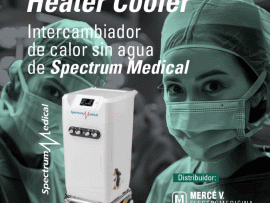
Sistema de intercambio de calor cuya principal característica es que en lugar de agua utiliza glicol como fluido, evitando la aparición de microorganismos en el sistema como la Mycrobacterium..
Read More
Abstract Background The impact of intra-aortic balloon pump (IABP) on survival and successful bridging to heart replacement therapies (HRT) in patients with heart failure–cardiogenic shock (HF-CS) remains unclear. Objectives The..
Read More
Abstract OBJECTIVES: In patients with acute hypoxemic respiratory failure (AHRF), the use of lower tidal volume ventilation facilitated by veno-venous extracorporeal CO2 removal (vv-ECCO2R) does not improve clinical outcomes. The primary..
Read More
Abstract Background Extracorporeal membrane oxygenation (ECMO) serves as a critical intervention for patients with severe cardiac and pulmonary dysfunction. Given the high rates of mortality and morbidity, as well as..
Read More
Abstract Background: Venoarterial extracorporeal membrane oxygenation (VA-ECMO) is increasingly used to treat cardiogenic shock. However, VA-ECMO might hamper myocardial recovery. The Impella unloads the left ventricle. This study aimed to..
Read More
Abstract This report presents a case series that introduces differential venous drainage (DVD) as an underrated complication arising from the hemodynamic impact of the extracorporeal life support (ECLS) circuit on..
Read More
Abstract The American Society of ExtraCorporeal Technology (AmSECT) has created the following document based on clinical evidence and currently accepted perfusion practices. Perfusionists are allied healthcare professionals formally trained and..
Read More
Peripheral cannulation for initiation of neonatal venoarterial extracorporeal membrane oxygenation is an essential technical skill in the armamentarium of every congenital cardiac surgeon and is necessary for the care of..
Read More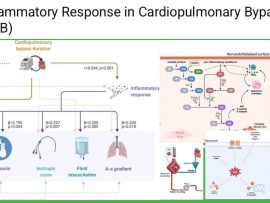
Introduction Cardiopulmonary bypass (CPB) is a life-saving technology used in cardiac surgery; however, it triggers a systemic inflammatory response (SIRS) due to blood contact with non-endothelial surfaces, ischemia-reperfusion injury, and..
Read More
Venoarterial extracorporeal membrane oxygenation weaning strategies are not standardized. When dealing with patients with complex physiologies and borderline haemodynamics, it is prudent to have a fail-safe method of approaching decannulation..
Read More
Join the Guidelines Roundtable – a unique webinar bringing together EACTS, EACTAIC, and EBCP to discuss the 2024 updated guidelines. Each society will share their perspective on the guidelines and reflect on what these updates have brought..
Read More
Abstract Introduction: The use of extracorporeal membrane oxygenation (ECMO) for cardiopulmonary failure is increasing. ECMO transport teams are needed to expand patient access. Our goal was to design and implement a..
Read More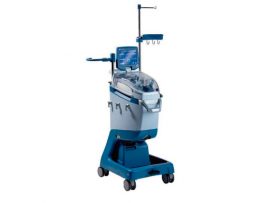
Abstract Introduction Major perioperative blood loss often necessitates allogeneic blood transfusions, leading to adverse outcomes and straining healthcare resources. Intraoperative cell salvage (ICS) offers benefits like reduced adverse reactions, optimised blood..
Read More
Abstract Objective: Axillary artery cannulation techniques continue to improve and find application throughout cardiac surgery. Yet, early outcomes are poorly documented versus femoral or central arterial cannulation in right minithoracotomy..
Read More
Abstract Background/Objectives: Secure large-bore cannula insertion is critical for effective extracorporeal membrane oxygenation (ECMO), as inadequate fixation can lead to complications such as infection, dislodgment, and life-threatening events. With inconsistent..
Read More
Volatile anaesthetics and PFAS forever chemicals: A critical gap in environmental impact assessments
Abstract The environmental impact of volatile anaesthetics has traditionally been evaluated primarily in terms of their greenhouse gas contributions. This review broadens the discourse by exploring the ecological ramifications of..
Read More
Abstract Foramen ovale plays a key role in foetal circulation, however it may remain patent after birth throughout the life. Its patency is so frequent in healthy people (27-35 %),..
Read More
Abstract Currently, autologous platelet concentrates (APCs) are frequently used for soft- and hard-tissue regeneration, not only within the oral cavity, but also extra-orally including chronic wounds, burns, joints, dermatological conditions,..
Read More
Abstract BACKGROUND: This study’s purpose was to assess whether larger volumes of reinfused unwashed shed autologous blood (SAB) were associated with adverse events within 30 days for patients undergoing open..
Read More
Abstract Purpose Postoperative Delirium (POD) has an incidence of up to 65% in older patients undergoing cardiac surgery. We aimed to develop two dynamic nomograms to predict the risk of..
Read More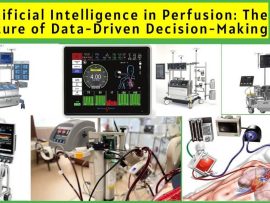
Introduction Artificial Intelligence (AI) is rapidly transforming perfusion, particularly in cardiopulmonary bypass (CPB) and extracorporeal membrane oxygenation (ECMO). By leveraging machine learning (ML) and real-time data analysis, AI enhances decision-making,..
Read More
Introduction Extracorporeal Membrane Oxygenation (ECMO) is a life-support technology used in patients with severe cardiac and/or respiratory failure. The two primary ECMO configurations are Veno-Venous (VV) ECMO and Veno-Arterial (VA)..
Read More
Introduction Extracorporeal Membrane Oxygenation (ECMO) has become a vital intervention in cardiac surgery, offering temporary mechanical support for patients experiencing severe cardiac dysfunction. It stabilizes hemodynamics, allowing time for myocardial..
Read More