
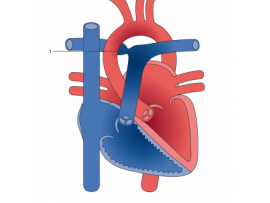

Pulmonary artery stenosis is a heart defect that causes a narrowing of the pulmonary artery, the large blood vessel that takes blood from the right ventricle of the heart to..
Read More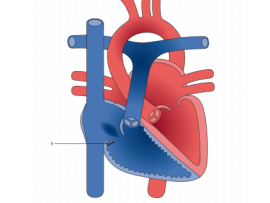

Very little is known about tricuspid valve when compared to other valves, and tricuspid stenosis is rarely described. It most often co-exists with mitral valve pathology especially in patients with..
Read More
Uhl's Anomaly is a rare cardiac condition in which there is total absence of right ventricular myocardium resulting in apposition of the endocardium and epicardium. We report a case of..
Read More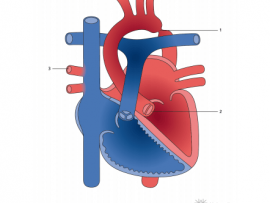
Turner syndrome, a condition that affects only females, results when one of the X chromosomes (sex chromosomes) is missing or partially missing. Turner syndrome can cause a variety of medical..
Read More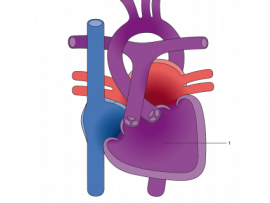
A single ventricle is an uncommon occurrence in embryogenesis, which results in the anatomical or functional loss of a ventricular cavity. These malformations are life-threatening and necessitate quick revision to..
Read More
Shone syndrome is a collection of eight left-sided obstructive heart lesions. These affect blood flow to and from the left ventricle, or lower left heart chamber. Shone syndrome was identified..
Read More
Cervical aortic arches are a rare characterized by an elongated, high-lying aortic arch extending at or above the level of the medial ends of the .
Read More
Right aortic arch anomalies occur in approximately 0.01 to 0.1 percent of the general population. In general, these anomalies do not directly cause any cardiovascular problems. However, in some patients,..
Read More
Right aortic arch is an uncommon anatomic anomaly, which occurs in approximately 0.05% to 0.1% of the population. “Mirror-image” right aortic arch is by itself generally asymptomatic, but it is usually..
Read More

The surgical management of pulmonary atresia with ventricular septal defect (VSD), extreme hypoplasia of the pulmonary arteries (PA), major aorto–pulmonary collaterals (MAPCAS) represents a major challenge. Two main basic concepts..
Read More


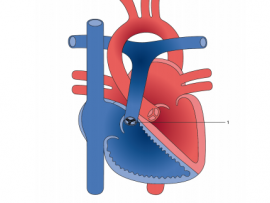
Pulmonary valve stenosis is a condition in which a deformity on or near your pulmonary valve narrows the pulmonary valve opening and slows the blood flow. The pulmonary valve is..
Read More
Persistent left superior vena cava (PLSVC) is the most common congenital malformation of thoracic venous return and is present in 0.3 to 0.5% of individuals in the general population. This..
Read More
Persistent left superior vena cava (PLSVC) is the most common congenital malformation of thoracic venous return and is present in 0.3 to 0.5% of individuals in the general population. This..
Read More
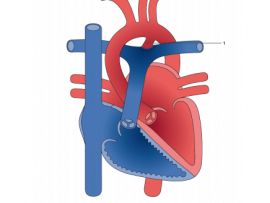
The ductus arteriosus is a normal fetal artery connecting the main body artery (aorta) and the main lung artery (pulmonary artery). The ductus allows blood to detour away from the..
Read More
Cor Triatriatum Sinister is a rare congenital abnormality, usually diagnosed in childhood; few cases remain asymptomatic and are diagnosed in adulthood. In this review article we focus on classification and..
Read More
Cor Triatriatum Sinister is a rare congenital abnormality, usually diagnosed in childhood; few cases remain asymptomatic and are diagnosed in adulthood. In this review article we focus on classification and..
Read More
Cor Triatriatum Sinister is a rare congenital abnormality, usually diagnosed in childhood; few cases remain asymptomatic and are diagnosed in adulthood. In this review article we focus on classification and..
Read More
[gallery ids="15187,15193,15190"] Atrioventricular (AV) septal defect consists of an ostium primum type atrial septal defect and a common AV valve, with or without an associated inlet (AV septal type) ventricular..
Read More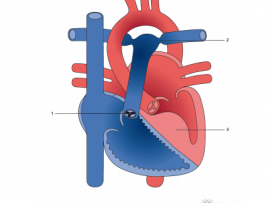
Most people with Noonan syndrome have some form of critical congenital heart disease. The most common heart defect in these individuals is a narrowing of the valve that controls blood flow..
Read More
Congenital Heart Academy
Read More
Transposition of the Great Arteries: Challenging Dogma Pedro Del Nido MD (Boston) – Complete AV Canal Defect James Tweddell (Cincinnati) – Complete AV Canal with Tetralogy of Fallot Yves D’Udekem..
Read More
AtrioVentricular Canal Defect Single Ventricle Double Outlet Right Ventricle The fate of the Neo-Aorta in CHD Transposition of the great arteries: Preoperative and postoperative echo assessment ..
Read More
Mitral valve prolapse, also called MVP, is a condition in which the two valve flaps of the mitral valve don't close smoothly or evenly, but bulge (prolapse) upward into the left atrium. Mitral valve prolapse is..
Read More
Although the first-stage Norwood procedure mostly has been used for hypoplastic left heart syndrome, there are other anomalies in which the Norwood procedure can be applied. Since 1991, 18 newborns..
Read More