


Tricuspid atresia is a birth defect of the tricuspid valve, which is the valve that controls blood flow from the right atrium (upper right chamber of the heart) to the..
Read More
Tricuspid atresia is a birth defect of the tricuspid valve, which is the valve that controls blood flow from the right atrium (upper right chamber of the heart) to the..
Read More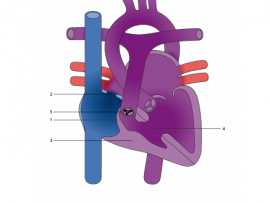
Tricuspid atresia is a birth defect of the tricuspid valve, which is the valve that controls blood flow from the right atrium (upper right chamber of the heart) to the..
Read More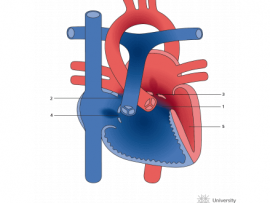
The term “unbalance” has been used for decades in atrioventricular septal defect (AVSD) to describe a lack of symmetry between left and right sides of the heart. Even though we..
Read More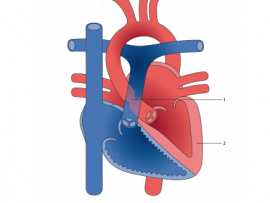
Supravalvular aortic stenosis(SVAS) is a congenital heart defect. As the name suggests, SVAS means the section of the aorta located just above the aortic valve is narrowed. SVAS accounts for..
Read More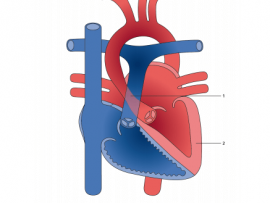
Supravalvular aortic stenosis(SVAS) is a congenital heart defect. As the name suggests, SVAS means the section of the aorta located just above the aortic valve is narrowed. SVAS accounts for..
Read More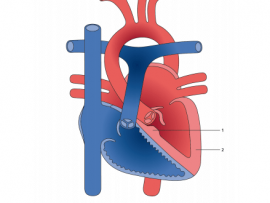
Subvalvular aortic stenosis (SAS) is the second most common type of aortic stenosis, accounting for 14% of left ventricular outflow tract (LVOT) obstruction, with valvular aortic stenosis being the most..
Read More
Subvalvular aortic stenosis (SAS) is the second most common type of aortic stenosis, accounting for 14% of left ventricular outflow tract (LVOT) obstruction, with valvular aortic stenosis being the most..
Read More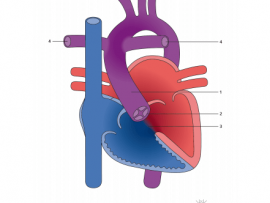
In patients with a TAC only one vessel originates from the heart chambers. Generally the common vessel (truncus) overrides a ventricular septal defect. Depending on the origin of the pulmonary..
Read More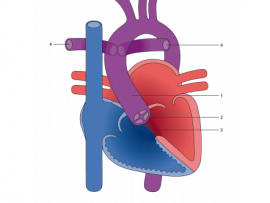
In patients with a TAC only one vessel originates from the heart chambers. Generally the common vessel (truncus) overrides a ventricular septal defect. Depending on the origin of the pulmonary..
Read More
In patients with a TAC only one vessel originates from the heart chambers. Generally the common vessel (truncus) overrides a ventricular septal defect. Depending on the origin of the pulmonary..
Read More

Situs inversus (also called situs transversus or oppositus) is a in which the major are reversed or from their normal positions. The normal arrangement of internal organs is known as . Although cardiac problems are more common, many..
Read More
Sinus of Valsalva aneurysm (SOVA) is an abnormal dilatation of the aortic root located between the aortic valve annulus and the sinotubular junction. This occurs as a consequence of the..
Read More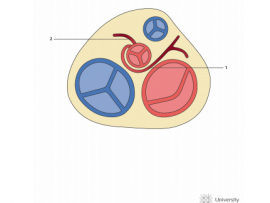
Single coronary artery is a rare congenital anomaly with a quoted incidence of 0.024% to 0.06% (), and may be associated with sudden cardiac death after exercise and angina. We..
Read More
Single coronary artery is a rare congenital anomaly with a quoted incidence of 0.024% to 0.06% (), and may be associated with sudden cardiac death after exercise and angina. We..
Read More
Single coronary artery is a rare congenital anomaly with a quoted incidence of 0.024% to 0.06% (), and may be associated with sudden cardiac death after exercise and angina. We..
Read More
Single coronary artery is a rare congenital anomaly with a quoted incidence of 0.024% to 0.06% (), and may be associated with sudden cardiac death after exercise and angina. We..
Read More
Single coronary artery is a rare congenital anomaly with a quoted incidence of 0.024% to 0.06% (), and may be associated with sudden cardiac death after exercise and angina. We..
Read More
Single coronary artery is a rare congenital anomaly with a quoted incidence of 0.024% to 0.06% (), and may be associated with sudden cardiac death after exercise and angina. We..
Read More
Single coronary artery is a rare congenital anomaly with a quoted incidence of 0.024% to 0.06% (), and may be associated with sudden cardiac death after exercise and angina. We..
Read More
Transposition is the condition in which the great arteries take origin from the ventricles in reverse position across (“trans”) the ventricular septum: the aorta from the right ventricle and the..
Read More
A sinus of valsalva aneurysm (SOVA) is an abnormal dilatation of the aortic root located between the aortic valve annulus and the sinotubular junction. It occurs as a consequence of..
Read More
Aneurysms of the sinus of Valsalva are extremely rare. Ruptured aneurysms of the sinus of Valsalva are frequently associated with other congenital defects, particularly with ventricular septal defect, aortic valve..
Read More
Congenital heart diseases that cause obstruction of the right ventricular outflow tract are often difficult to diagnose. We report the case of a 49-year-old man who presented with long-standing shortness..
Read More
Congenital heart diseases that cause obstruction of the right ventricular outflow tract are often difficult to diagnose. We report the case of a 49-year-old man who presented with long-standing shortness..
Read More

Partial anomalous pulmonary venous connection (PAPVC) is a rare congenital cardiac defect. As the name suggests, in PAPVC, the blood flow from a few of the pulmonary veins return to..
Read More
Background There is a high mortality in infants with right atrial isomerism (RAI). However, less is known about outcome in older children with RAI. This study sought to evaluate those..
Read More
The term “atrioventricular septal defect” (AVSD) covers a spectrum of congenital heart malformations characterised by a common atrioventricular junction coexisting with deficient atrioventricular septation. In ostium primum atrial septal defect..
Read More