


Abstract One theme worth emphasizing is that “ECMO prediction” is not a single task. Some models are intended to inform decisions before cannulation, whereas others incorporate variables such as ECMO..
Read More
Abstract Objective: Cardiac surgery carries a significant risk of complications and mortality. Artificial intelligence (AI), particularly machine learning (ML), is increasingly being explored to enhance perioperative risk prediction and support..
Read More
Abstract Debriefing is widely recognised as a central mechanism for learning within healthcare simulation, enabling learners to reflect on clinical actions, decision-making, and team interactions. However, high-quality debriefing is resource-intensive,..
Read More
Abstract Artificial intelligence (AI), predictive analytics, and digital health technologies are progressively reshaping extracorporeal circulation and perioperative cardiovascular care. In this evolving landscape, cardiopulmonary bypass management is transitioning from a..
Read More
Abstract This study describes the development and preliminary validation of an integrated clinical decision support application (Cardiac Critical Care Advisor Pro, CCA Pro v6.0) that combines viscoelastic coagulation analysis, arterial..
Read More
Abstract Background: Cardiopulmonary bypass (CPB) is a cornerstone of modern cardiac surgery, requiring continuous, high stakes decision making based on rapidly evolving physiological and technical parameters. Despite advances in perfusion..
Read More
Abstract The integration of artificial intelligence (AI) into medical training is accelerating faster than the educational frameworks designed to govern it. This Perspective identifies a risk that has received insufficient..
Read More
Abstract The integration of artificial intelligence (AI) into medical training is accelerating faster than the educational frameworks designed to govern it. This Perspective identifies a risk that has received insufficient..
Read More
Abstract Introduction Extracorporeal membrane oxygenation (ECMO) provides life support for patients with refractory cardiac or respiratory failure. The complexity of ECMO management and associated mortality necessitates high-accuracy clinical decision-making systems...
Read More
Abstract Artificial intelligence (AI) is rapidly reshaping adult cardiac surgery, enabling more accurate diagnostics, personalized risk assessment, advanced surgical planning, and proactive postoperative care. Preoperatively, deep-learning interpretation of ECGs, automated..
Read More
Abstract Artificial intelligence (AI) has rapidly emerged as a transformative force across multiple scientific and clinical domains, demonstrating remarkable capabilities in data analysis, pattern recognition, and predictive modeling. In the..
Read More
Abstract The applications of artificial intelligence (AI) in perioperative cardiothoracic and vascular practice continue to grow, given its multiple applications from discovery across translation and integration to delivery of clinical..
Read More
Abstract Extracorporeal membrane oxygenation (ECMO) is widely used in patients with severe cardiac or respiratory failure. ECMO is resource and cost intensive and carries the potential for significant complications; therefore,..
Read More
Abstract Background: Achieving safe glycemic targets in intensive care remains difficult due to rapidly changing physiology, treatment effects, and measurement noise. Objective: We systematically review artificial-intelligence (AI) methods for ICU..
Read More
Abstract OBJECTIVES Extracorporeal membrane oxygenation (ECMO) is a life-saving therapy for severe cardiopulmonary failure, but structured training remains constrained by costs, logistics, and the absence of validated high-fidelity simulators. This..
Read More
Abstract Background: Harlequin syndrome, also referred to as differential hypoxemia or North South syndrome, is a critical yet underrecognized complication of venoarterial extracorporeal membrane oxygenation and hybrid configurations such as ECpella...
Read More
Abstract Objectives To evaluate the effectiveness of Artificial Intelligence (AI) in improving clinical outcomes in Extracorporeal Membrane Oxygenation (ECMO) management, focusing on ECMO initiation, prognosis, and complications. Methods A meta-analysis following..
Read More
Abstract Introduction The increasing integration of Artificial Intelligence (AI) and Virtual Reality (VR) in healthcare education offers innovative ways to enhance collaborative learning and improve patient safety. This narrative review..
Read More
Abstract Assisted artificial intelligence (A-AI) has rapidly become a gold standard approach for conducting data analysis and medical writing []. From executing complex statistical tasks to extracting relevant information and..
Read More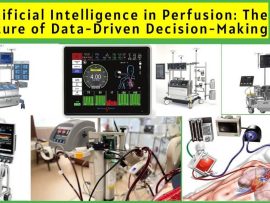
Introduction Artificial Intelligence (AI) is rapidly transforming perfusion, particularly in cardiopulmonary bypass (CPB) and extracorporeal membrane oxygenation (ECMO). By leveraging machine learning (ML) and real-time data analysis, AI enhances decision-making,..
Read More
Abstract Background Despite advancements in imaging technologies, including CT scans and MRI, these modalities may still fail to capture intricate details of congenital heart defects accurately. Virtual 3D models have..
Read More
Abstract Introduction On January 27, 2025, DeepSeek-R1, a new Generative AI model, was introduced and rapidly gained adoption, taking over the user market to become the No.1 downloaded AI app , , ...
Read More
Abstract Introduction Congenital heart disease (CHD) represents the most common group of congenital anomalies, constitutes a significant contributor to the burden of non-communicable diseases, highlighting the critical need for improved..
Read More
Abstract Background: Reading medical papers is a challenging and time-consuming task for doctors, especially when the papers are long and complex. A tool that can help doctors efficiently process and..
Read More
Abstract John McCarthy first used the term artificial intelligence (AI) in a conference at Dartmouth College in 1956. He discussed “the science and engineering of making intelligent machines.” This paved..
Read More
Abstract Artificial intelligence (AI) is rapidly emerging in healthcare, yet applications in surgery remain relatively nascent. Here we review the integration of AI in the field of surgery, centering our..
Read More
Abstract Artificial intelligence (AI) is a transformative technology with many benefits, but also risks when applied to healthcare and cardiac surgery in particular. Surgeons must be aware of AI and..
Read More
Abstract The recent introduction of ChatGPT, an advanced, easy-to-use, and freely available artificial intelligence (AI) program, created new possibilities across many industries and professions including healthcare simulation. ChatGPT has the..
Read More
Abstract What are AI, Machine Learning, and Artificial Neural Networks? Medical publishing in AI has increased exponentially over the last few years.7 Artificial intelligence is a broad term that represents the..
Read More
Abstract Artificial intelligence has the potential to improve the care that is given to patients; however, the predictive models created are only as good as the base data used in..
Read More