
Normoxic versus hyperoxic reperfusion: A retrospective study of ischemia–reperfusion injury in patients undergoing on-pump coronary artery bypass grafting

Abstract
Background
Blood oxygen content and management during cardiopulmonary bypass (CPB), particularly during reperfusion phase after cross-clamping related ischemia, may influence systemic oxygen utilization, oxidative stress, and organ ischemia/reperfusion injury. These conditions may be highly relevant in patients undergoing coronary artery bypass grafting (CABG) due to coronary artery disease. The impact of a hyperoxia/normoxia strategy on metabolic efficiency, myocardial injury, and early clinical outcomes remains incompletely defined.
Materials and methods
We conducted a retrospective study including 50 patients undergoing isolated elective CABG with CPB. Patients were stratified into a normoxia (N) group (PaO2 90–130 mmHg; n = 25) and a hyperoxia (H) group (PaO2 >200 mmHg; n = 25). CPB trend parameters including PaO2, mixed venous oxygen saturation (SvO2), indexed oxygen extraction ratio, and lactate levels were analyzed intraoperatively. Myocardial injury was assessed by serial troponin measurements. Early postoperative left ventricular ejection fraction (LVEF), need for inotropic support, ICU and hospital length of stay, as well as biomarkers of oxidative stress and hypoxia-related pathways, were evaluated. Exploratory outcomes included lactate kinetics (0, 6, 12, and 24 h), acute kidney injury (KDIGO criteria), new-onset atrial fibrillation within 48 h, duration of mechanical ventilation, and 30-days major adverse cardiac events (MACEs).
Results
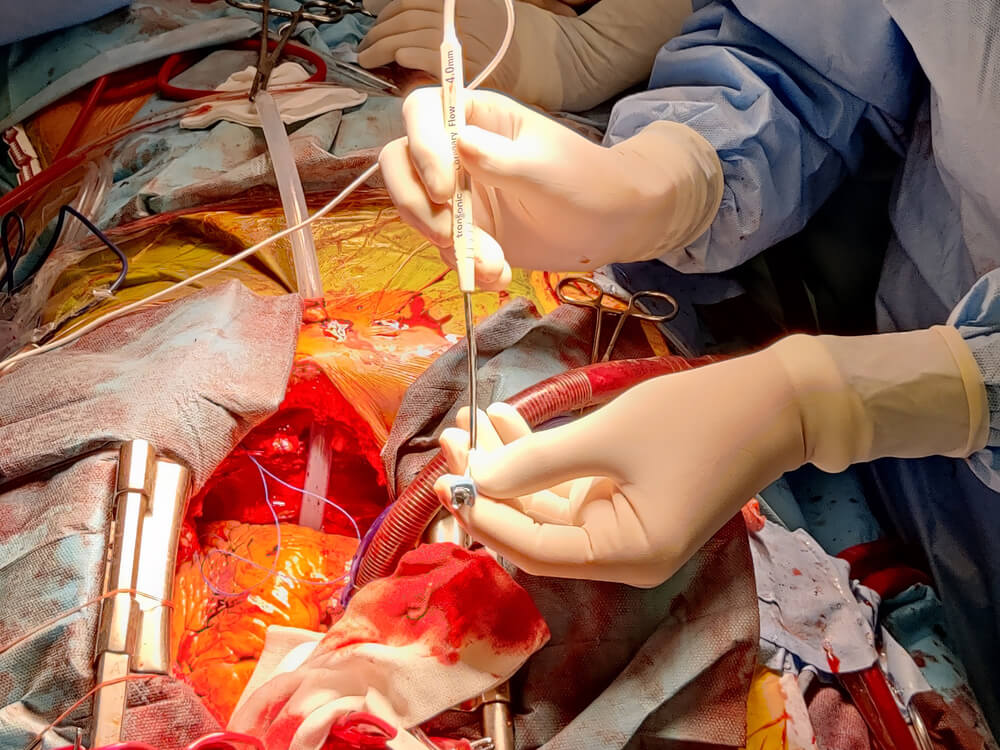
Baseline, including preoperative LVEF, as well as operative characteristics, including types of grafts, modalities of revascularization (single vs jumpgraft) as well as cardiopulmonary bypass and aortic cross-clamp durations, were similar between groups. All grafts underwent flow assessment at the end of the operation to confirm the quality and appropriateness of perfusion. During CPB, indexed oxygen delivery was comparable; however, the hyperoxia group showed significantly higher arterial and mixed venous oxygen partial pressures, associated with a lower oxygen extraction ratio and higher lactate concentrations, indicating reduced metabolic efficiency. Troponin levels were significantly lower in the normoxia group during CPB and at 6, 12, and 24 h postoperatively, reflecting attenuated myocardial injury. Post-CPB LVEF was higher in the normoxia group (51.8 ± 8.9 vs 46.3 ± 10.1%, p = 0.041), accompanied by a reduced need for inotropic support (24% vs 56%, p = 0.021). Intensive care unit and hospital length of stay were significantly shorter in normoxic patients. Hyperoxic oxygenation was associated with significantly higher perioperative levels of hypoxia-inducible factor-1α, total oxidant status, and oxidative stress index, along with reduced total antioxidant status.
Conclusions
In patients undergoing CABG with CPB, normoxia was associated with more efficient oxygen utilization, reduced oxidative stress, attenuated perioperative myocardial injury, improved early postoperative ventricular function, and shorter ICU and hospital stay compared with hyperoxic oxygenation. These findings support a physiology-guided oxygenation strategy during cardiac surgery.