


Abstract Background TeamSTEPPS® (Team Strategies and Tools to Enhance Performance and Patient Safety) is an evidence-based program developed to train healthcare professionals working in any environment where communication and teamwork are..
Read More
Abstract Introduction Lung transplantation has been evolving since its inception in 1963. Over recent years, literature has suggested a shift in the perioperative strategy of mechanical support toward extracorporeal membrane..
Read More
Abstract OBJECTIVES A best evidence topic was written according to a structured protocol described in ICVTS. The question addressed was ‘In patients with vasoplegic syndrome following cardiac surgery with cardiopulmonary bypass,..
Read More
Abstract Background Extracorporeal membrane oxygenation (ECMO) provides effective support for respiratory and circulatory functions and stands as an essential means in the management of life-threatening conditions. This study aimed to..
Read More
Abstract Neutrophil extracellular traps (NETs) were detected in blood samples and in cellular deposits of oxygenator membranes during extracorporeal membrane oxygenation (ECMO) therapy and may be responsible for thrombogenesis. The..
Read More
Abstract Extracorporeal membrane oxygenation (ECMO), the key component of which is a membrane oxygenator, known as the artificial lung, could provide irreplaceable respiratory support for patients with cardiopulmonary failure. The..
Read More
Abstract Introduction During extracorporeal membrane oxygenation (ECMO) systemic anticoagulation with unfractionated heparin (UFH) is standard-of-care. However, there is uncertainty regarding optimal anticoagulation monitoring strategies. Methods We retrospectively investigated venovenous and..
Read More
Abstract Introduction On January 27, 2025, DeepSeek-R1, a new Generative AI model, was introduced and rapidly gained adoption, taking over the user market to become the No.1 downloaded AI app , , ...
Read More
Abstract Objective: Diagnosing bloodstream infections (BSIs) in patients on extracorporeal membrane oxygenation (ECMO) can be challenging due to circuit-controlled temperature, altered hemodynamics, and questionable reliability of inflammatory markers in critically..
Read More
Abstract OBJECTIVES Extracorporeal membrane oxygenation (ECMO) can act as a bridge to recovery in both pre- and postoperative patients with transposition of the great arteries (TGA). However, literature on its..
Read More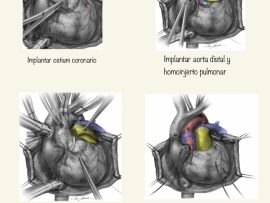
Left ventricular outflow tract obstruction in neonates and infants encompasses a variety of anatomical defects, ranging from isolated aortic valve stenosis or discrete subaortic stenosis to the more complex tunnel..
Read More
Introduction Extracorporeal Membrane Oxygenation (ECMO) has revolutionized the management of patients with severe cardiac and respiratory failure. Once considered a last-resort therapy, ECMO is now an integral part of critical..
Read More
Introduction Cardiopulmonary bypass (CPB) is essential in cardiac surgery, but high-risk patients—such as pediatric, geriatric, and renal-compromised individuals—require specialized priming strategies to optimize outcomes. A one-size-fits-all approach can lead to..
Read More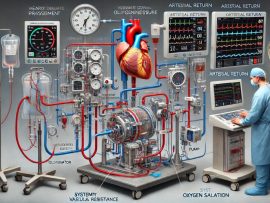
Introduction Cardiopulmonary bypass (CPB) is a critical component of cardiac surgery, allowing the heart to be temporarily stopped while maintaining circulation and oxygenation. Proper hemodynamic management during CPB is essential..
Read More
Introduction Cardiopulmonary bypass (CPB) is a life-saving technology that temporarily replaces the heart and lungs during cardiac surgery. The choice of priming solution plays a crucial role in maintaining hemodynamic..
Read More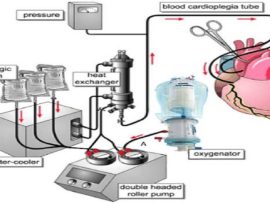
1. Introduction Cardioplegia plays a crucial role in myocardial protection during cardiac surgery by inducing controlled cardiac arrest and minimizing ischemic injury. Over the years, various cardioplegia strategies have evolved,..
Read More
Introduction Isolated Limb Perfusion (ILP) is a targeted chemotherapy technique used primarily for treating locally advanced limb malignancies, such as soft tissue sarcomas and melanoma. By isolating the limb’s vascular..
Read More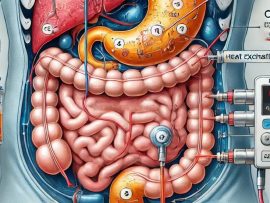
Introduction Hyperthermic Intraperitoneal Chemotherapy (HIPEC) is an advanced oncologic perfusion technique designed to treat peritoneal carcinomatosis, a condition where cancer spreads within the peritoneal cavity (Sugarbaker, 1995). This innovative approach..
Read More
Left Heart Bypass: An Overview Introduction Left Heart Bypass (LHB) is a surgical technique used to temporarily divert blood from the left side of the heart to maintain distal perfusion..
Read More
Introduction The history of cardiac surgery in Pakistan is often credited to various institutions, but a lesser-known and largely undocumented fact is that the first open-heart surgery in Pakistan was..
Read More
Cardiopulmonary bypass (CPB) is a cornerstone of modern cardiac surgery, enabling complex procedures by temporarily taking over the heart and lung functions. However, one of the most critical aspects of..
Read More
Introduction Extracorporeal Membrane Oxygenation (ECMO) is a critical intervention for patients with severe cardiac and respiratory failure. Although ECMO provides life-saving support, its management, particularly in conjunction with mechanical ventilation,..
Read More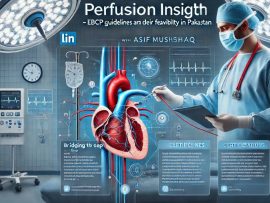
Introduction The European Board of Cardiovascular Perfusion (EBCP) establishes standardized guidelines to ensure quality and safety in perfusion practices across Europe. These guidelines provide a framework for clinical protocols, training,..
Read More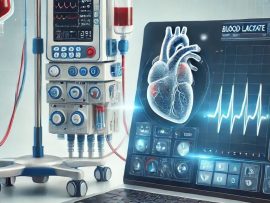
Serum lactate is a critical biomarker in cardiac surgery, offering insights into tissue oxygenation and metabolic status. Elevated lactate levels during cardiopulmonary bypass (CPB) can indicate inadequate perfusion, hypoxia, or..
Read More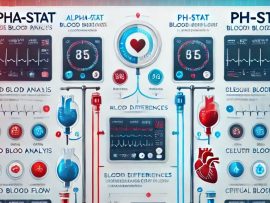
Introduction Blood gas management during cardiopulmonary bypass (CPB) is crucial for optimizing oxygen delivery and cerebral perfusion, especially in temperature-regulated surgeries such as deep hypothermic circulatory arrest (DHCA). Two primary..
Read More
Perfusionists play a critical role in cardiac surgery and extracorporeal support, ensuring optimal oxygenation and circulation during procedures. However, given the complexity of the field, even experienced professionals can make..
Read More
Abstract Venovenous (VV) extracorporeal membrane oxygenation (ECMO) supports end-organ oxygen delivery in patients with refractory respiratory failure. Physical therapy (PT) while on ECMO provides conceptual benefits of strength and conditioning...
Read More
Abstract We aimed to compare recirculation of venovenous extracorporeal membrane oxygenation (V-V ECMO) administered with various cannula placements for femoro-femoral (F-F) and femoro-jugular (F-J) configurations in patients with respiratory failure...
Read More
Abstract The mechanical circulatory support (MCS) for pediatric patients with severe acute heart failure and poor pulmonary conditions is challenging. Herein, we report the first pediatric case of successfully treated..
Read More
Abstract The use of extracorporeal membrane oxygenation (ECMO) to support the pregnant patient and fetus requires a complex decision-making process. Peripartum ECMO requires coordinated and informed decision-making between an interdisciplinary..
Read More