


Ebstein’s anomaly is a rare congenital heart disorder occurring in ≈1 per 200 000 live births and accounting for <1% of all cases of congenital heart disease. This anomaly was described..
Read More
Mitral valve dysplasia syndrome is a unique form of congenital heart disease with severe aortic stenosis but normal or enlarged left ventricle secondary to primary mitral valve disease. Increased left..
Read More
Transposition of the great arteries (TGA) is a pediatric cardiac congenital defect arising from an embryological discordance between the aorta and pulmonary trunk. During cardiac development, the conotruncal septum spirals..
Read More
Taussig-Bing anomaly is a rare congenital heart malformation that was first described in 1949 by Helen B. Taussig (1898–1986) and Richard J. Bing (1909–). Although substantial improvement has since been..
Read More

Double outlet right ventricle (DORV) is a heterogeneous group of abnormal ventriculoarterial connections where, by definition, both great arteries (pulmonary artery and aorta) arise primarily from the morphologically right ventricle...
Read More
Double-outlet right ventricle (DORV) and subaortic ventricular septal defect (VSD) is defined anatomically as a defect where the entire pulmonary trunk and at least half of the aorta arises from..
Read More
The clinical, hemodynamic, angiocardiographic and pathologic findings are presented in an infrequent but surgically correctable type of double outlet right ventricle. This study is based on six cases, one with..
Read More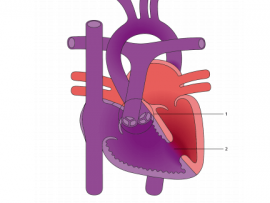
Since Kirklin described the first successful correction of double-outlet right ventricle (DORV), surgical repair has been extended to more complex forms of the malformation . In 1972, Lev and Bharati introduced..
Read More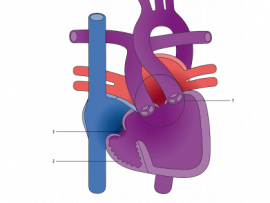
Double-outlet left ventricle (DOLV) is a rare congenital cardiac malformation in which both great arteries originate entirely or predominantly from the morphologic left ventricle. DOLV occurs most commonly in the..
Read More
Double outlet right ventricle (DORV) is a rare congenital heart defect, meaning it’s a condition a baby is born with. In DORV, the pulmonary artery and the aorta — the..
Read More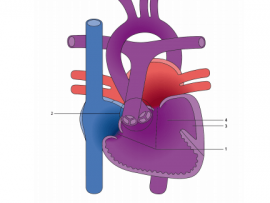
Double outlet right ventricle (DORV) is a . There is a malformation of the fetus heart in the womb leading to the right ventricle that has the two major arteries, namely..
Read More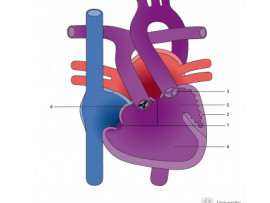
Double inlet left ventricle (DILV) is a heart defect that is present from birth (congenital). It affects the valves and chambers of the heart. Babies born with this condition have..
Read More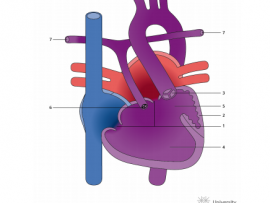


Double inlet left ventricle (DILV) is a form of functionally univentricular heart where both the left and the right atrium are connected to the morphologically left ventricle. Usually, the morphologically..
Read More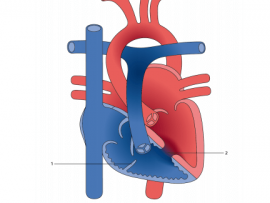
Double-chambered right ventricle (DCRV) was first described in 1858 by TB Peacock, but it is now understood to be a form of congenital heart disease wherein there is a mid-cavitary..
Read More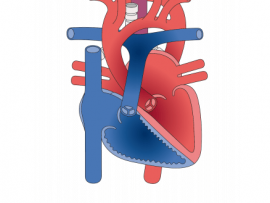
Introduction Double aortic arch is the most common type of vascular ring malformation. It involves the complete encirclement and compression of the trachea and/or esophagus by the aortic arch, its..
Read More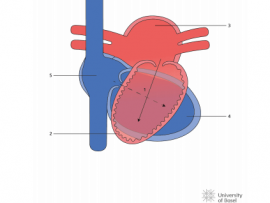
A heart with a criss-cross atrioventricular (AV) connection is a cardiopathy in which the ventricles are positioned contralaterally to the atria to which they are connected; the ventricular inflow tracts..
Read More
A heart with a criss-cross atrioventricular (AV) connection is a cardiopathy in which the ventricles are positioned contralaterally to the atria to which they are connected; the ventricular inflow tracts..
Read More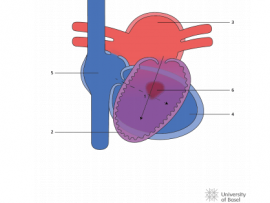
A heart with a criss-cross atrioventricular (AV) connection is a cardiopathy in which the ventricles are positioned contralaterally to the atria to which they are connected; the ventricular inflow tracts..
Read More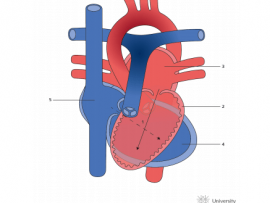
A heart with a criss-cross atrioventricular (AV) connection is a cardiopathy in which the ventricles are positioned contralaterally to the atria to which they are connected; the ventricular inflow tracts..
Read More
Thoracic outlet syndrome (TOS) is a term used to describe a group of disorders that occur when there is compression, injury, or irritation of the nerves and/or blood vessels (arteries..
Read More
Abstract Coagulation factor XII (fXII) is a plasma serine protease which belongs to the contact activation complex responsible for initiating the intrinsic coagulation pathway. fXII deficiency is a rare congenital..
Read More
This case reports on a 29-year-old previously healthy male patient, who was transferred from a small hospital to the Medical Intensive Care Unit (MICU) of the University Clinical Centre of..
Read More
We demonstrate our cannulation simulator, which is designed to hone skills in aortic, right atrial, left ventricular vent, and bicaval cannulation. The Multimedia Manual of Cardio-Thoracic Surgery (MMCTS) is..
Read More
We demonstrate how to build a modular cardiac surgery simulator and describe practice drills for use outside the operating room to hone skills in basic linear suturing, needle angles, and..
Read More
Abstract The role of extracorporeal membrane oxygenation (ECMO) in the management of severely ill patients with coronavirus disease 2019 (COVID-19) continues to evolve. The purpose of this study is to..
Read More
Abstract Currently, lactate (Lac) is used to evaluate (MP) of hearts, donated after circulatory death (DCD). We hypothesize that monitoring of myocardial (mLDP) by Laser-Doppler-Perfusion is superior to Lac to evaluate perfusion..
Read More
Abstract Extracorporeal membrane oxygenation is a life-saving intervention, but bleeding complications are frequent. Given that the combination of platelet loss and dysfunction is a major contributor to this acquired bleeding..
Read More