


The surgical management of pulmonary atresia with ventricular septal defect (VSD), extreme hypoplasia of the pulmonary arteries (PA), major aorto–pulmonary collaterals (MAPCAS) represents a major challenge. Two main basic concepts..
Read More


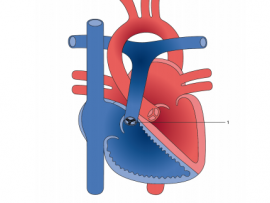
Pulmonary valve stenosis is a condition in which a deformity on or near your pulmonary valve narrows the pulmonary valve opening and slows the blood flow. The pulmonary valve is..
Read More
Persistent left superior vena cava (PLSVC) is the most common congenital malformation of thoracic venous return and is present in 0.3 to 0.5% of individuals in the general population. This..
Read More
Persistent left superior vena cava (PLSVC) is the most common congenital malformation of thoracic venous return and is present in 0.3 to 0.5% of individuals in the general population. This..
Read More
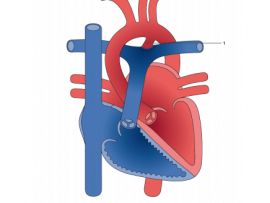
The ductus arteriosus is a normal fetal artery connecting the main body artery (aorta) and the main lung artery (pulmonary artery). The ductus allows blood to detour away from the..
Read More
Cor Triatriatum Sinister is a rare congenital abnormality, usually diagnosed in childhood; few cases remain asymptomatic and are diagnosed in adulthood. In this review article we focus on classification and..
Read More
Cor Triatriatum Sinister is a rare congenital abnormality, usually diagnosed in childhood; few cases remain asymptomatic and are diagnosed in adulthood. In this review article we focus on classification and..
Read More
Cor Triatriatum Sinister is a rare congenital abnormality, usually diagnosed in childhood; few cases remain asymptomatic and are diagnosed in adulthood. In this review article we focus on classification and..
Read More
[gallery ids="15187,15193,15190"] Atrioventricular (AV) septal defect consists of an ostium primum type atrial septal defect and a common AV valve, with or without an associated inlet (AV septal type) ventricular..
Read More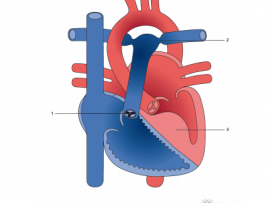
Most people with Noonan syndrome have some form of critical congenital heart disease. The most common heart defect in these individuals is a narrowing of the valve that controls blood flow..
Read More
Congenital Heart Academy
Read More
Transposition of the Great Arteries: Challenging Dogma Pedro Del Nido MD (Boston) – Complete AV Canal Defect James Tweddell (Cincinnati) – Complete AV Canal with Tetralogy of Fallot Yves D’Udekem..
Read More
AtrioVentricular Canal Defect Single Ventricle Double Outlet Right Ventricle The fate of the Neo-Aorta in CHD Transposition of the great arteries: Preoperative and postoperative echo assessment ..
Read More
Abstract The use of venovenous extracorporeal membrane oxygenation (VV ECMO) among adults is rapidly increasing worldwide. By 2020, the Extracorporeal Life Support Organization (ELSO) Registry had recorded >24,000 cases of..
Read More
Abstract In vitro hemolysis testing is commonly used to determine hemocompatibility of ExtraCorporeal Membrane Oxygenation (ECMO). However, poor reproducibility remains a challenging problem, due to several unidentified influencing factors. The..
Read More
Abstract A substantial part of COVID-19-patients suffers from multi-organ failure (MOF). We report on an 80-year old patient with pulmonary, renal, circulatory, and hepatic failure. We decided against the use..
Read More
Abstract Hemoadsorption was used in a 59-year-old patient with an acute type A aortic dissection, who was on rivaroxaban and dual antiplatelet therapy with clopidogrel and acetylsalicylic acid. Our aim..
Read More
Abstract Objectives: A new congenital heart surgery database (CKCV) with real-time online reporting function was recently developed in Turkey. All standard international parameters were used, but Aristotle Comprehensive Complexity score..
Read More
Aim The aim of this study was to compare (MI) and (MS) in terms of post-procedure health-related quality of life (HRQoL) and functional outcome. Method We conducted a multicentre prospective cohort study..
Read More
Abstract Despite increasing improvement in extracorporeal membrane oxygenation (ECMO) technology and knowledge, thrombocytopenia and impaired platelet function are usual findings in ECMO patients and the underlying mechanisms are only partially..
Read More
Abstract Study objective To describe and compare patient blood management (PBM) practices in cardiac surgery in nine European countries and identify the main risk factors for bleeding or transfusion according..
Read More
Abstract Background: Extracorporeal cardiopulmonary resuscitation (ECPR) for refractory cardiac arrest has improved mortality in post-cardiac surgery patients; however, loss of neurologic function remains one of the main and devastating complications...
Read More
Abstract Objectives: The Japan Cardiovascular Surgery Database–Congenital section (JCVSD-Congenital) and the European Congenital Heart Surgeons Association (ECHSA) Congenital Heart Surgery Database (CHSD) share the same nomenclature. We aimed at comparing..
Read More
Takotsubo cardiomyopathy, also known as stress cardiomyopathy and "broken heart syndrome," is a sudden, transient cardiac syndrome that involves dramatic left ventricular apical akinesis and mimics acute coronary syndrome (ACS). It was..
Read More
[audio ogg="https://perfusfind.com/wp-content/uploads/2021/06/WhatsApp-Ptt-2021-06-03-at-19.45.34.ogg"][/audio] Dr.Sam Zeraatian Nejad Davani, CEO of rockingham medical research ADKWA center as well as Head of IUMS transplant and cardiovascular surgery department. ..
Read More
BACKGROUND Patients with acute hypoxemic respiratory failure in the intensive care unit (ICU) are treated with supplemental oxygen, but the benefits and harms of different oxygenation targets are unclear. We..
Read More