


Abstract Background Several aquatic organisms such as loaches have evolved unique intestinal breathing mechanisms to survive under extensive hypoxia. To date, it is highly controversial whether such capability can be..
Read More
Abstract Objective Timing and causes of hospital mortality in adult patients undergoing veno-arterial extracorporeal membrane oxygenation (V-A ECMO) have been poorly described. Aim of the current review was to investigate..
Read More
Abstract Objectives: Cardiac surgery using cardiopulmonary bypass frequently provokes a systemic inflammatory response syndrome. This can lead to the development of low cardiac output syndrome (LCOS). Both of these can..
Read More
Abstract Introduction Cardiopulmonary bypass (CPB) is a common procedure to maintain body perfusion during cardiac surgery. It is associated with a systemic inflammatory response, hemostasis and circulatory dysfunction that can..
Read More
Abstract Background: Due to the substantial improvement in survival among pediatric patients undergoing congenital heart surgery, reducing early and long-term morbidity is becoming the major focus of care. Blood transfusion is..
Read More
Abstract The outbreak of the novel coronavirus pandemic (COVID-19) has resulted in dramatic changes to the conduct of surgery both from a patient management perspective and in protecting healthcare providers...
Read More
Abstract Background We sought to determine differences in the circulating metabolic profile of infants with or without acute kidney injury (AKI) following cardiothoracic surgery with cardiopulmonary bypass (CPB). Methods We..
Read More
Abstract Background Cerebral autoregulation mechanisms help maintain adequate cerebral blood flow (CBF) despite changes in cerebral perfusion pressure. Impairment of cerebral autoregulation, during and after cardiopulmonary bypass (CPB), may increase..
Read More
Abstract The importance of teamwork in health care delivery and patient safety is increasingly being recognized and has benefitted substantially by adopting a human factors' perspective and approach. The scientific..
Read More
Abstract Objectives: Cardiopulmonary bypass surgery is complicated by metabolic acidosis, microvascular dysfunction, and capillary leak. The glycocalyx—a layer of proteins and sugars lining the vascular endothelium—is degraded during cardiopulmonary bypass...
Read More
Abstract Background Recurrent observation of clot in the cardiopulmonary bypass circuit after the administration of a protamine test dose (PTD) prompted concern over the effects of PTDs on patient activated..
Read More
Abstract Systemic hypertension (HTN) is a recognized complication of veno-venous (VV) extracorporeal membrane oxygenation (ECMO) in children. We sought to determine the prevalence and associated features of HTN in a..
Read More
Abstract A prospective, observational single-center study was carried out. Pediatric patients undergoing congenital heart defect surgery were evaluated before, during, and after surgery. At each time point, sublingual microcirculation and..
Read More
Abstract Introduction: Neurologic complications of open thoracic aortic surgery are devastating problems in patients with severely diseased aortas. This study aimed to clarify whether directing the aortic cannula tip toward..
Read More
Abstract Objective Custodiol-HTK (Custodiol-HTK Koheler Chemie, GmbH, Bensheim, Germany) causes fluctuations in serum sodium levels, , and is associated with postoperative seizures. We investigated the influence of scavenging right atrial effluent during..
Read More
Abstract Objective: The aim of this study was to evaluate outcome measures between our standard multidose cardioplegia protocol and a del Nido cardioplegia protocol in congenital heart surgery patients. Methods:..
Read More
Abstract Objective after cardiac surgery can be difficult to assess, often requiring invasive measurements. Bioelectrical impedance vector analysis (BIVA) is based on patterns of resistance (R) and reactance (Xc), corrected..
Read More
Abstract Introduction: Minimally invasive aortic valve replacement (MIAVR) requires changes in cannulation strategy and cardiopulmonary bypass (CPB) management when compared to the conventional approach (CAVR). We aimed at evaluating if..
Read More
Aula sobre fisiologia cardíaca. A nossa primeira aula de uma série para falar do coração. Prof. Elio Carvalho é Biomédico, Microbiologista e Perfusionista pela Unicamp, CLAP e SBCEC. É perfusionista..
Read More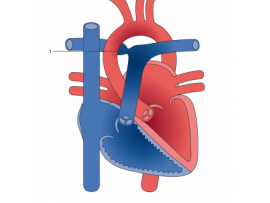
Pulmonary artery stenosis is a heart defect that causes a narrowing of the pulmonary artery, the large blood vessel that takes blood from the right ventricle of the heart to..
Read More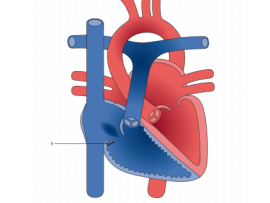

Very little is known about tricuspid valve when compared to other valves, and tricuspid stenosis is rarely described. It most often co-exists with mitral valve pathology especially in patients with..
Read More
Uhl's Anomaly is a rare cardiac condition in which there is total absence of right ventricular myocardium resulting in apposition of the endocardium and epicardium. We report a case of..
Read More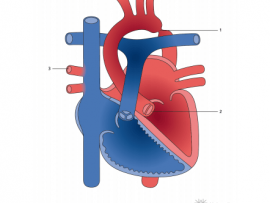
Turner syndrome, a condition that affects only females, results when one of the X chromosomes (sex chromosomes) is missing or partially missing. Turner syndrome can cause a variety of medical..
Read More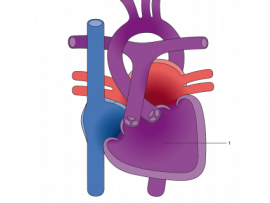
A single ventricle is an uncommon occurrence in embryogenesis, which results in the anatomical or functional loss of a ventricular cavity. These malformations are life-threatening and necessitate quick revision to..
Read More
Shone syndrome is a collection of eight left-sided obstructive heart lesions. These affect blood flow to and from the left ventricle, or lower left heart chamber. Shone syndrome was identified..
Read More
Cervical aortic arches are a rare characterized by an elongated, high-lying aortic arch extending at or above the level of the medial ends of the .
Read More
Right aortic arch anomalies occur in approximately 0.01 to 0.1 percent of the general population. In general, these anomalies do not directly cause any cardiovascular problems. However, in some patients,..
Read More
Right aortic arch is an uncommon anatomic anomaly, which occurs in approximately 0.05% to 0.1% of the population. “Mirror-image” right aortic arch is by itself generally asymptomatic, but it is usually..
Read More
