


Abstract Quality indicators are ubiquitous in healthcare and serve a variety of purposes for many different stakeholders. Few would question the value of monitoring the quality of care, but the..
Read More
Abstract Background: Electronic health records (EHRs) are a promising approach to document and map (complex) health information gathered in health care worldwide. However, possible unintended consequences during use, which can..
Read More
Abstract Acute bioprosthetic valve thrombosis (BPVT) is considered a rare complication and has seldom been described. Moreover, acute intraoperative BPVT is exceedingly rare, and its management remains a major clinical..
Read More
Abstract Extracorporeal membrane oxygenation (ECMO) is a last resort therapy for patients with respiratory failure where the gas exchange capacity of the lung is compromised. Venous blood is pumped through..
Read More
Abstract Background Postoperative delirium in intensive care is common and associated with mortality, cognitive impairment, prolonged hospital stays and high costs. We evaluate whether a nurse-led orientation program could reduce..
Read More
Abstract The central aortic pressure waveform, while simple in form, is complex in its physiological interpretation. Although general agreement has been reached on the contour and mechanisms responsible for pressure..
Read More
Abstract Introduction Brain injury is common following open heart valve surgery. Carbon dioxide insufflation (CDI) has been proposed to reduce the incidence of brain injury by reducing the number of air..
Read More
Abstract Objective: Extracorporeal membrane oxygenation (ECMO) utilization is increasing on a global scale, and despite technological advances, minimal standardized approaches to pharmacotherapeutic management exist. This objective was to create a..
Read More
Abstract Objective Heparin resistance is often encountered during cardiopulmonary bypass. Heparin dose and activated clotting time target values for the initiation of cardiopulmonary bypass are not yet universally standardized; further..
Read More
Abstract Background Increasing socioeconomic distress has been associated with worse cardiac surgery outcomes. The extent to which the pandemic affected cardiac surgical access and outcomes remains unknown. We sought to..
Read More
Abstract The present study aimed to assess the changes in the immunological parameters of patients undergoing cardiac surgery with cardiopulmonary bypass (CPB). The serum or plasma samples of patients were..
Read More
Abstract Background Postoperative morbidity and mortality after cardiac surgery with (CPB) remain high despite recent advances in both anesthesia and perioperative management. Among modifiable risk factors for , optimal during and after surgery..
Read More
Abstract Objective There are no reports from Japan showing the effects of using the thromboelastography algorithm on transfusion requirements after Intensive Care Unit (ICU) admission, and post-implementation knowledge regarding the..
Read More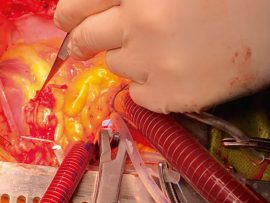
Abstract A hypoxic–hyperoxic preconditioning (HHP) may be associated with cardioprotection by reducing endothelial damage and a beneficial effect on postoperative outcome in patients undergoing cardiac surgery with cardiopulmonary bypass (CPB)...
Read More
Abstract Background Extracorporeal membrane oxygenation (ECMO) is a recognized method of support in patients with severe and refractory acute respiratory distress syndrome (ARDS) caused by SARS-CoV-2 infection. While veno-venous (VV)..
Read More
Abstract Background The Society of Thoracic Surgeons risk scores are widely used to assess risk of morbidity and mortality in specific cardiac surgeries but may not perform optimally in all..
Read More
Abstract Sickle cell disease (SCD) is a collection of inherited hemoglobin disorders that results in chronic hemolytic anemia, vaso-occlusion, pain, and end organ damage. Surgery in the SCD population requires..
Read More
Abstract Objectives To evaluate sodium-glucose cotransporter 2 inhibitors (SGLT2i) use and complications (euglycemic diabetic ketoacidosis [eDKA] rate, mortality, infection, hospital, and cardiovascular intensive care unit [CVICU] length of stay [LOS])..
Read More
Abstract Purpose: Venoarterial extracorporeal membrane oxygenation (VA-ECMO) is a complex and high-risk life support modality used in severe cardiorespiratory failure. ECMO survival scores are used clinically for patient prognostication and..
Read More
What’s new in neonatal and pediatric extracorporeal membrane oxygenation in 2022–2023? Insights from the EuroELSO congress 2023
Read More
Abstract Patients with respiratory failure may remain hypoxemic despite treatment with venovenous extracorporeal membrane oxygenation (VV-ECMO). Therapeutic hypothermia is a potential treatment for such hypoxia as it reduces cardiac output (�˙�) and oxygen consumption. We modified a previously..
Read More
Abstract This article has no abstract. The Society of Thoracic Surgeons requests that this article be cited as: Brown JR, Baker RA, Shore-Lesserson L, et al. The Society of Thoracic..
Read More
Abstract The use of mechanical circulatory support using percutaneous ventricular assist devices (pVAD) has increased rapidly during the last decade without substantial new evidence for their effect on outcome. In..
Read More
Abstract Background: The charity organization Kinderherzen retten e.V. (KHR) enables humanitarian congenital heart surgery for pediatric patients from low- and middle-income countries at the University Heart Center Freiburg, Germany. The aim of this..
Read More
Abstract Perfluorocarbons (PFCs) are organic liquids derived from hydrocarbons in which some of the hydrogen atoms have been replaced by fluorine atoms. They are chemically and biologically inert substances with..
Read More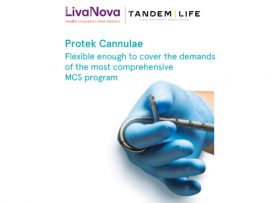
Abstract We are developing a clinically practical percutaneous double lumen cannula (DLC)–based cavopulmonary assist (CPA) system to support failing Fontan patients. In this study, our CPA DLC was redesigned for even blood flow, minimal recirculation, and..
Read More
Abstract Objectives This study aimed to describe the outcome of Jehovah's Witnesses (JWs) undergoing cardiac surgery at the authors’ center. Design A single-center . Setting At a cardiovascular center with a..
Read More
Abstract Simulation based learning is becoming a crucial part in ECMO education. Simulation can provide a safe but also very realistic learning experience depending on simulation fidelity. In our institution..
Read More
Abstract The vital status of patients who are a part of controlled donation after circulatory death (cDCD) is widely debated in bioethical literature. Opponents to currently applied cDCD protocols argue..
Read More
Abstract Objective This study aimed to investigate the blood protective effect of autologous platelet-rich plasma in aortic root reconstruction under longtime cardiopulmonary bypass. Method Patients who underwent aortic root reconstruction..
Read More