
Flow Control and Oxygenation of Preservation Solution in Circulatory Determined Death Donors Undergoing Abdominal Normothermic Regional Perfusion

Abstract
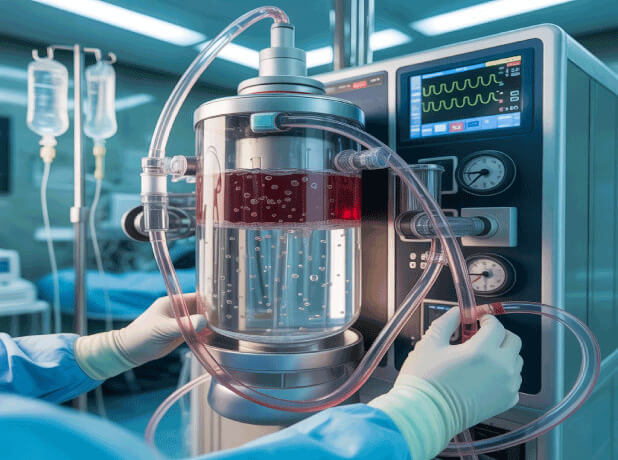
Normothermic regional perfusion (NRP) is increasingly implemented to optimize the outcome of transplantation from donors undergoing circulatory determination of death. NRP shortens the duration of warm ischemia, allowing splanchnic reperfusion with oxygenated blood. This supports the abdominal organs throughout recovery, allowing for their thorough assessment, avoids the need for rapid recovery, and restores a near physiological environment. However, after NRP, the grafts are exposed to a period of cold ischemia preceding further evaluation and reconditioning through ex situ machine perfusion or direct transplantation. The duration of cold ischemic time may be extremely variable. During cold ischemic time, the liver and the kidneys are indirectly protected by a decrease in metabolic demands induced by deep hypothermia. To optimize protection, the hypothermic state is initiated in situ, immediately after extracorporeal blood flow interruption, via topical cooling with sterile ice and intravascular cooling. The latter is usually induced by the administration of cold preservation solution (CPS) by gravity. We performed an observational study to assess the feasibility, safety, and effectiveness of a controlled strategy of CPS administration and oxygenation employing the NRP circuit and cannulae in controlled circulatory determination of death undergoing abdominal NRP. This approach provided a controlled, fast, and consistent flow, ensuring a prompt induction of hypothermia. Moreover, during CPS administration, the delivery of a fresh gas flow through the membrane lung resulted effective in significantly increasing the oxygen tension in the CPS. The hyperoxygenation of the blood-free perfusate might provide a metabolic substrate to the cells, preconditioning the grafts before cold ischemia.