
ECMO and CRRT «All in One!» in COVID-19 Era
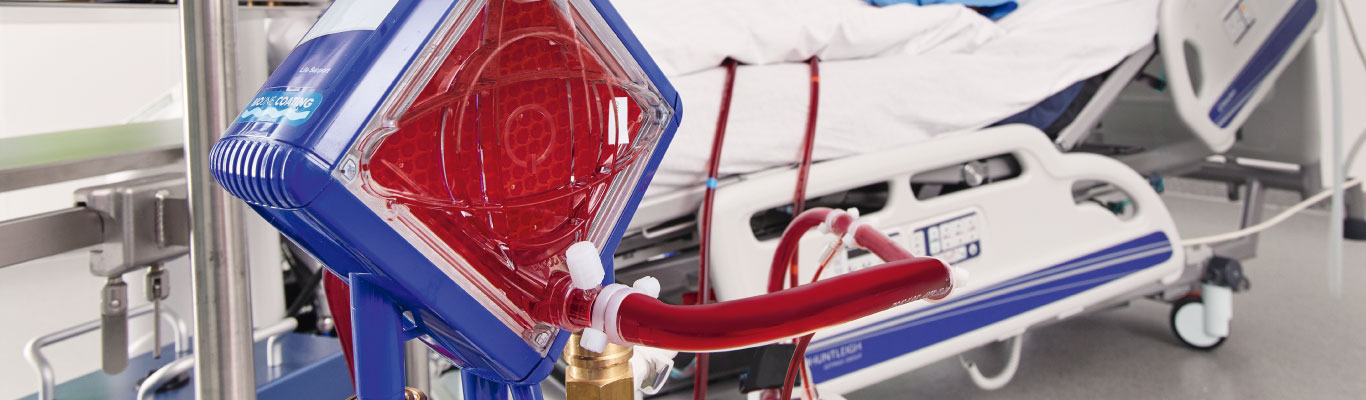

Extracorporeal membrane oxygenation (ECMO) is used in critically ill patients presenting acute cardiac and/or pulmonary dysfunctions, who are at high risk of developing acute kidney injury and fluid overload.
Continuous renal replacement therapy (CRRT) is commonly used in intensive care units (ICU) to provide renal replacement and fluid management. Renal replacement therapy (RRT) consists of a broad range of techniques. A distinction can be made based on membrane permeability, method of molecular clearance (diffusion or convection or a combination of both) and the duration of treatment and equipment used [1]. When utilizing ECMO as a bridge to recovery of the lungs, ECMO provides pulmonary support, during which time lung recovery is dependent upon
regenerative functions and may occur in a setting of minimally traumatic mechanical ventilation or even in the absence of mechanical ventilation.
We read with great interest the article: “Multiinstitutional Analysis of 505 COVID-19 Patients Supported with ECMO: Predictors of Survival” by Celeste A.Hall et al. The authors reviewed 505 patients with confirmed COVID-19 supported with ECMO at 45 hospitals and estimated risk factors for mortality and concluded that ECMO facilitates salvage and survival of select critically ill patients with COVID-19 [2]. International registries tracking ECMO in COVID-19 patients reveal a 21%–70% incidence of acute renal injury requiring renal replacement therapy (RRT) during ECMO support. The indications for initiating RRT in patients on ECMO are similar to those for patients not requiring ECMO. RRT can be administered during ECMO via a temporary dialysis catheter, placement of a circuit in-line hemofilter, or direct connection of continuous RRT in-line with the ECMO circuit [1].
We propose a conceptual device scheme that allows to manage the CRRT and ECMO in an integrated way, dialoguing avoiding the insertion of additional introducers on the patient for CRRT. Today there aren’t integrated software
systems for these two technologies, we think it could be interesting to develop them in the near future through the use of smart pumps integrated with ECMO device.