
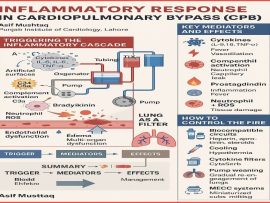

Abstract: Cardiopulmonary bypass (CPB) induces a multifactorial systemic inflammatory response that significantly contributes to postoperative complications such as acute lung injury, renal dysfunction, and increased morbidity. This response is initiated..
Read More
Abstract Over 10% of children develop thrombosis after cardiac surgery for congenital heart disease. Children with a single ventricle physiology have the highest risk of thrombosis associated with increased length..
Read More
Cardiopulmonary Bypass (CPB) is one of the most critical advancements in cardiac surgery. It allows the surgical team to operate on a non-beating heart by temporarily taking over the functions..
Read More
Abstract In massive pulmonary embolism (PE), endovascular therapies and extracorporeal membrane oxygenation (ECMO) are increasingly utilised. However, the impact of combining endovascular therapies with ECMO on shock resolution and clinical recovery remains..
Read More
Abstract Introduction Thromboelastography (TEG), which indicates hemostatic ability, is useful for monitoring coagulation during extracorporeal circulation (ECC). However, the extent to which TEG levels are independently affected by ECC exposure..
Read More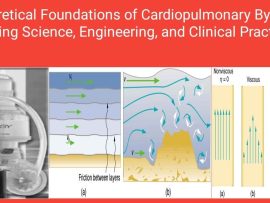
Introduction: A Heart That Pauses, A Circuit That Lives When the heart is arrested during cardiac surgery, life continues—thanks to cardiopulmonary bypass (CPB). The theoretical underpinnings of CPB stem from..
Read More
Abstract Extracorporeal carbon dioxide removal (ECCO2R) is an emerging technique designed to reduce carbon dioxide (CO2) levels in venous blood while enabling lung-protective ventilation or alleviating the work of breathing...
Read More
Abstract Rapid hemodynamic stabilization and restoration of pulmonary perfusion are the cornerstones of treatment for high-risk pulmonary embolism (PE). While all current guidelines recommend systemic thrombolysis (SYS) as the first-line..
Read More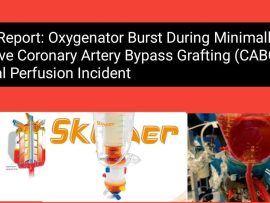
Abstract This case report discusses a rare and critical perfusion accident during a minimally invasive coronary artery bypass grafting (CAGB) procedure, where a Eurosets Skipper oxygenator burst 3 minutes after..
Read More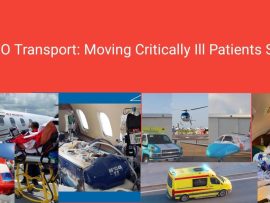
Introduction Extracorporeal Membrane Oxygenation (ECMO) is a life-saving intervention for patients with severe cardiac and respiratory failure. However, the need for specialized ECMO care often necessitates the transport of critically..
Read More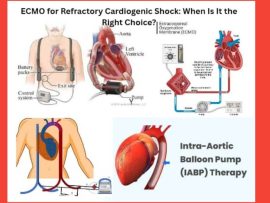
Introduction Refractory cardiogenic shock (RCS) is a life-threatening condition where the heart fails to supply adequate blood flow to the body's organs, despite maximal medical therapy. It is a major..
Read More
Abstract Critically ill patients that require kidney replacement therapy (KRT) are among the most ill and complex patients routinely encountered in the intensive care unit (ICU). Continuous KRT (CKRT) is..
Read More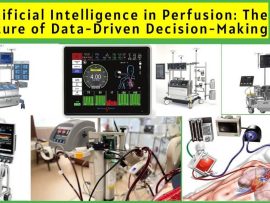
Introduction Artificial Intelligence (AI) is rapidly transforming perfusion, particularly in cardiopulmonary bypass (CPB) and extracorporeal membrane oxygenation (ECMO). By leveraging machine learning (ML) and real-time data analysis, AI enhances decision-making,..
Read More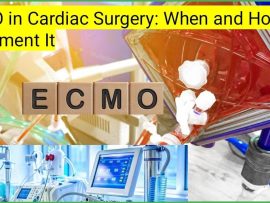
Introduction Extracorporeal Membrane Oxygenation (ECMO) has become a vital intervention in cardiac surgery, offering temporary mechanical support for patients experiencing severe cardiac dysfunction. It stabilizes hemodynamics, allowing time for myocardial..
Read More
Abstract Purpose Cardiac surgery requiring cardiopulmonary bypass (CPB) is frequently complicated by excessive bleeding because of coagulopathy. Contact of blood with the CPB circuit is a major contributor. While several..
Read More
Abstract Bleeding is a well-known and severe complication of cardiac surgery. Cardiopulmonary bypass, along with heparinization and hemodilution, is thought to affect all pathways of the hemostatic process, leading to..
Read More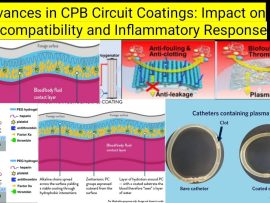
Introduction Cardiopulmonary bypass (CPB) is a lifesaving technology in cardiac surgery, but it introduces blood-material interactions that trigger inflammatory and coagulative responses. To address these issues, advancements in biocompatible CPB..
Read More
Abstract Background Bleeding is a common and sometimes fatal complication of venovenous extracorporeal membrane oxygenation (ECMO). Whether lowering the intensity of anticoagulation during venovenous ECMO is safe or effective is..
Read More
Abstract The 2021 Adult and Pediatric Anticoagulation Guidelines for patients on extracorporeal membrane oxygenation (ECMO) recommend a target partial thromboplastin time (PTT) between 60 and 85 seconds when unfractionated heparin..
Read More
Abstract Artificial organs, such as extracorporeal membrane oxygenators, dialyzers, and hemoadsorber cartridges, face persistent challenges related to the flow distribution within the cartridge. This uneven flow distribution leads to clot..
Read More
Abstract Introduction Lung transplantation has been evolving since its inception in 1963. Over recent years, literature has suggested a shift in the perioperative strategy of mechanical support toward extracorporeal membrane..
Read More
Abstract Extracorporeal membrane oxygenation (ECMO), the key component of which is a membrane oxygenator, known as the artificial lung, could provide irreplaceable respiratory support for patients with cardiopulmonary failure. The..
Read More
Abstract Introduction During extracorporeal membrane oxygenation (ECMO) systemic anticoagulation with unfractionated heparin (UFH) is standard-of-care. However, there is uncertainty regarding optimal anticoagulation monitoring strategies. Methods We retrospectively investigated venovenous and..
Read More
Introduction Extracorporeal Membrane Oxygenation (ECMO) has revolutionized the management of patients with severe cardiac and respiratory failure. Once considered a last-resort therapy, ECMO is now an integral part of critical..
Read More
Introduction Cardiopulmonary bypass (CPB) is a life-saving technology that temporarily replaces the heart and lungs during cardiac surgery. The choice of priming solution plays a crucial role in maintaining hemodynamic..
Read More
Introduction Isolated Limb Perfusion (ILP) is a targeted chemotherapy technique used primarily for treating locally advanced limb malignancies, such as soft tissue sarcomas and melanoma. By isolating the limb’s vascular..
Read More
Left Heart Bypass: An Overview Introduction Left Heart Bypass (LHB) is a surgical technique used to temporarily divert blood from the left side of the heart to maintain distal perfusion..
Read More
Cardiopulmonary bypass (CPB) is a cornerstone of modern cardiac surgery, enabling complex procedures by temporarily taking over the heart and lung functions. However, one of the most critical aspects of..
Read More
Perfusionists play a critical role in cardiac surgery and extracorporeal support, ensuring optimal oxygenation and circulation during procedures. However, given the complexity of the field, even experienced professionals can make..
Read More
Abstract Extracorporeal perfusion systems utilized in open-heart surgeries with cardiopulmonary bypass can affect multiple body systems. The primary adverse effects of Extracorporeal Perfusion Systems (EPS) on the hematological system include..
Read More