


Abstract Objectives Coronary heart disease remains the leading cause of cardiovascular morbidity and mortality. The relationship between perioperative blood glucose variability (BGV), microcirculatory changes, and subsequent organ dysfunction after coronary..
Read More
Abstract Background The impact of perioperative red blood cell transfusion on long-term outcomes after cardiovascular surgery remains controversial. This meta-analysis of reconstructed time-to-event data aimed to evaluate the association between..
Read More
Abstract Debriefing is widely recognised as a central mechanism for learning within healthcare simulation, enabling learners to reflect on clinical actions, decision-making, and team interactions. However, high-quality debriefing is resource-intensive,..
Read More
Abstract Objectives Activated clotting time (ACT) is widely used to monitor intraoperative anticoagulation with unfractionated heparin (UFH) during vascular surgery, but the most informative ACT-derived metric and the optimal approach..
Read More
Abstract This essay addresses the fundamental mechanism underlying the precise regulation of PaCO2 during steady states of air-breathing eupnea and hyperpnea. First, an argument is made for CO2/H+ chemoreception as an important compensatory..
Read More
Abstract Background Continuous oxygen extraction ratio (O2ER) monitoring during cardiopulmonary bypass is an emerging strategy to support goal-directed perfusion (GDP) during heart transplantation (HT). Because donation after circulatory death (DCD)..
Read More
Abstract Pulmonary capillary endothelial cells (ECs) form a highly specialized vascular interface that sustains gas exchange and organismal survival across species. Recent advances in single-cell transcriptomics and lineage tracing have..
Read More
Abstract Background Inadequate oxygen perfusion during cardiac surgery increases risk of postoperative complications. In order to optimize perfusion strategies, the aim of this exploratory study was to investigate oxygen delivery,..
Read More
Abstract The intrinsic cardiac nervous system (ICNS) is a key node in heart-brain communication and an emerging target for cardiac therapy, yet its physiological importance and functional organization remain poorly..
Read More
Abstract BACKGROUND: Validation of the Quantra QPlus sonorheometry cartridge (Hemosonics Corporation) in cardiac surgical patients is limited. The primary aim of our study was to quantify the accuracy of the..
Read More
Abstract Introduction Congenital Heart Disease (CHD) remains a major health challenge globally, with surgical interventions being the primary treatment modality for many defects. While advancements in cardiac surgery have improved..
Read More
Abstract Introduction Pre-operative anaemia is associated with adverse outcomes following cardiac surgery. However, the prognostic impact of postoperative anaemia is characterised incompletely. We examined whether anaemia at hospital discharge independently..
Read More
Abstract Background This study aimed to evaluate in-hospital mortality and to identify predictors of mortality in coronary artery bypass grafting (CABG) patients receiving veno-arterial extracorporeal membrane oxygenation (VA-ECMO) support. Methods..
Read More
Abstract Objectives To describe perioperative transfusion rates, hospital variability, temporal trends, and the association between red blood cell (RBC) transfusion and predefined risk factors in Dutch cardiac surgery. Design Nationwide..
Read More
Abstract Background Postoperative bleeding is a common and potentially life-threatening complication following cardiac surgery, often exacerbated by multifactorial coagulopathy from cardiopulmonary bypass, hypothermia, and platelet dysfunction. While fresh frozen plasma..
Read More
Abstract Extracorporeal cardiopulmonary resuscitation for refractory out‐of‐hospital cardiac arrest is increasingly used, with survival rates up to ≈30% reported in select highly organized systems, although outcomes vary widely across programs...
Read More
Abstract Objective: To explore the predictive value of intraoperative oxygen delivery (DO2) and renal regional oxygen saturation (rSO2 ) during cardiopulmonary bypass (CPB) for cardiac surgery-associated acute kidney injury (CS-AKI)..
Read More
Abstract Patients undergoing salvage cardiac surgery experience markedly elevated mortality, often exceeding the risk predicted by the Society of Thoracic Surgeons Predicted Risk of Mortality score. These patients are typically..
Read More
Abstract Background Pulmonary complications after coronary artery bypass surgery continue to be a significant problem, affecting 5–20% of patients, prolonging hospital stays and increasing costs. In this study, we investigated..
Read More
Abstract Acute kidney injury (AKI) is one of the most common serious complications after cardiac surgery. Although many causes and risk factors have been identified, effective measures to prevent AKI..
Read More
Abstract Objective To describe postoperative outcomes with the use of partial CPB for thoracoabdominal aortic repair. Methods We included all the patients who underwent programmed thoracoabdominal aortic procedures in which..
Read More
Abstract Background Readiness for venoarterial-extracorporeal membrane oxygenation (VA-ECMO) decannulation after extracorporeal cardiopulmonary resuscitation (ECPR) for out-of-hospital cardiac arrest (OHCA) remains poorly defined. Objectives The objective of the study was to..
Read More
Abstract Background There is limited clinical data to guide surgical decisions for ACC with extensive carinal involvement in the left main bronchus. In this case, it is shown that median..
Read More
Abstract Background Determination of brain death/death by neurologic criteria (BD/DNC) in patients supported with extracorporeal membrane oxygenation (ECMO) is particularly challenging due to extracorporeal carbon dioxide clearance, which may interfere..
Read More
Abstract Left ventricular (LV) overload is a recognized complication of venoarterial extracorporeal membrane oxygenation (VA-ECMO), but pediatric decompression remains technically challenging and poorly standardized. The atrial flow regulator (AFR) (Occlutech) is..
Read More
Abstract Topic Importance Extracorporeal membrane oxygenation (ECMO) is a relatively novel, intensive medical intervention. It is known to raise important yet unsettled ethical concerns. Overview We established the ECMO Ethics..
Read More
Abstract Background Deep hypothermic circulatory arrest (DHCA) is widely used in proximal thoracic aortic surgery; however, its association with subclinical cerebral ischemic changes remains poorly understood. Diffusion-weighted magnetic resonance imaging..
Read More
Abstract Purpose: Recirculation is a critical issue in veno-venous extracorporeal membrane oxygenation (VV ECMO). We propose a novel method for estimating the recirculation ratio using temporary sweep-gas control. Methods: A circuit simulating..
Read More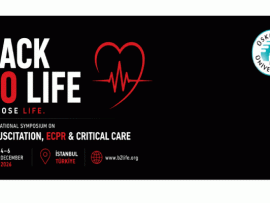
Hayatı Geri Getirmek Bir Ekip İşidir Her yıl milyonlarca insan ani kardiyak arrest, ağır travma, şok ve kritik hastalık nedeniyle yaşam mücadelesi veriyor. Bugün biliyoruz ki başarılı resüsitasyon; tek bir..
Read More
Abstract Artificial intelligence (AI), predictive analytics, and digital health technologies are progressively reshaping extracorporeal circulation and perioperative cardiovascular care. In this evolving landscape, cardiopulmonary bypass management is transitioning from a..
Read More