


How can we turn the heart into a success with confidence if the patient´s heart has hypoplasia Dr.Sam Zeraatian Nejad Davani, Cardiovascular and Thoracic Surgeon Transplant and..
Read More
Dr.Sam Zeraatian Nejad Davani, Cardiovascular and Thoracic Surgeon Transplant and Thoracic Organs Recovery Surgeon. Director of Georgia Atlanta Procure on Demand Thoracic Organs Transplant and Procurement Surgery. ..
Read More
Dr.Sam Zeraatian Nejad Davani, Cardiovascular and Thoracic Surgeon Transplant and Thoracic Organs Recovery Surgeon. Director of Georgia Atlanta Procure on Demand Thoracic Organs Transplant and Procurement Surgery. ..
Read More
Abstract Background Extracorporeal membrane oxygenation (ECMO) is increasingly used in adults with severe respiratory and/or cardiac failure. Because ECMO may alter drug pharmacokinetics (PK), optimizing antimicrobial dosing in this population..
Read More
Abstract Objectives Comparing clinical outcomes after cardiopulmonary bypass with hemodsorption (HA) versus cardiopulmonary bypass without HA in patients undergoing cardiac surgery in terms of mortality and major complications. Methods PubMed,..
Read More
Abstract Objectives To explore the superiority of fibrinogen concentrate (FC) versus cryoprecipitate for bleeding after cardiac surgery. Design Secondary analysis of the FIBRES randomized trial. Setting Eleven Canadian hospitals, February..
Read More
Abstract Background Acute myocardial infarction complicated by cardiogenic shock (AMI-CS) carries a high risk of in-hospital death. Randomized evidence does not support routine VA-ECMO use in unselected AMI-CS populations. Objective..
Read More
Abstract Extracorporeal membrane oxygenation (ECMO) is a life-saving modality, yet it carries inherent risks of device-related adverse events. This manuscript is a focused review of ECMO circuit mechanics, monitoring, and..
Read More
Abstract Cardiac surgery-associated acute kidney injury (CSA-AKI) is a prevalent complication subsequent to cardiopulmonary bypass (CPB) surgery. Timely diagnosis is essential for enhancing patient outcomes. Traditional diagnostic approaches that depend..
Read More
Abstract Background In mitral valve surgery, cardioplegia is commonly dosed by body weight or body surface area (BSA), which may not reflect true cardiac mass. We evaluated whether indexing the..
Read More
Abstract Background Severe hyperoxia during venoarterial extracorporeal membrane oxygenation (VA-ECMO) has been associated with adverse clinical outcomes in observational studies. However, causal evidence and optimal oxygen targets remain uncertain. Hyperoxia..
Read More
Abstract Background: Cardiopulmonary bypass (CPB) during cardiac surgery poses physiological challenges such as altered drug pharmacokinetics. Sevoflurane, a commonly used volatile agent, provides favorable myocardial protection; however, precise dosing during..
Read More
Abstract Background Veno-arterial extracorporeal membrane oxygenation (VA ECMO) provides temporary mechanical circulatory support, primarily for patients with compromised cardiac function. In individuals supported on femoral VA ECMO with concurrent pulmonary..
Read More
Abstract Background The efficiency of venovenous extracorporeal membrane oxygenation (VV ECMO) may be influenced by cannula configuration, potentially affecting oxygenation and the ability to apply ultra-protective ventilation in severe ARDS...
Read More
Abstract Failure to wean from cardiopulmonary bypass (CPB) is a rare but critical intraoperative challenge. Common causes include residual structural defects (causing intracardiac shunting, prosthetic valve leaks), left ventricle outflow..
Read More
Abstract Background Optimal timing of venoarterial extracorporeal membrane oxygenation (VA-ECMO) decannulation in pediatric patients with congenital or acquired heart disease remains challenging, particularly when myocardial recovery is uncertain. Some centers..
Read More
Abstract Background Cardiac arrest impacts more than 500,000 people in the United States annually. Overall, cardiac arrest, particularly when it occurs outside of a hospital, is associated with low rates..
Read More
Abstract Factor XIII (FXIII) is the final enzyme in the coagulation cascade that cross-links the fibrin monomers, thereby enhancing the clot strength. Congenital FXIII deficiency is rare and is inherited..
Read More
Abstract INTRODUCTION: Femoral venous cannulation is widely used to establish cardiopulmonary bypass (CPB) during minimally invasive cardiac surgery (MICS). Although transesophageal echocardiography (TEE) is commonly used to guide cannula placement, cannula..
Read More
Abstract Objective Acute kidney injury (AKI) complicates pediatric cardiac surgery, particularly in single-ventricle palliation. While retrograde lower body perfusion (LBP) has been associated with a renal-protective signal during aortic arch..
Read More
Abstract In recent years, artificial placenta systems have been developed for the clinical treatment of infant respiratory distress syndrome (RDS). Their use requires systemic anticoagulation to prevent clotting during treatment...
Read More
Abstract Background: Hemolytic complications remain a major limitation of membrane oxygenators in clinical support. Compared with human lungs, most commercial oxygenators generate substantial pressure drops and high shear stress, increasing..
Read More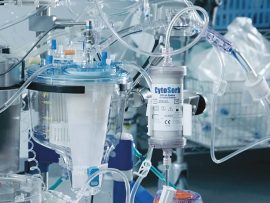
Abstract Background Patients receiving clopidogrel who undergo urgent CABG before the recommended 5-day washout period are at increased risk of perioperative bleeding. This study evaluated whether intraoperative hemoadsorption can reduce..
Read More
Abstract Objective: Cardiac surgery carries a significant risk of complications and mortality. Artificial intelligence (AI), particularly machine learning (ML), is increasingly being explored to enhance perioperative risk prediction and support..
Read More
Abstract Background Heart transplant recipients often face the clinical dilemma of coexisting bleeding and thrombotic risks postoperatively. Conventional anticoagulation monitoring parameters (e.g., platelet count, fibrinogen, D‑dimer, and anti‑Xa activity) frequently..
Read More
Abstract Objectives Coronary heart disease remains the leading cause of cardiovascular morbidity and mortality. The relationship between perioperative blood glucose variability (BGV), microcirculatory changes, and subsequent organ dysfunction after coronary..
Read More
Abstract Background The impact of perioperative red blood cell transfusion on long-term outcomes after cardiovascular surgery remains controversial. This meta-analysis of reconstructed time-to-event data aimed to evaluate the association between..
Read More
Abstract Debriefing is widely recognised as a central mechanism for learning within healthcare simulation, enabling learners to reflect on clinical actions, decision-making, and team interactions. However, high-quality debriefing is resource-intensive,..
Read More
Abstract Objectives Activated clotting time (ACT) is widely used to monitor intraoperative anticoagulation with unfractionated heparin (UFH) during vascular surgery, but the most informative ACT-derived metric and the optimal approach..
Read More
Abstract This essay addresses the fundamental mechanism underlying the precise regulation of PaCO2 during steady states of air-breathing eupnea and hyperpnea. First, an argument is made for CO2/H+ chemoreception as an important compensatory..
Read More