


Abstract Aims To evaluate the roles of intraoperative changes in plasma osmolarity and pump time as predictor factors on postoperative hemodynamic instability and mid-term clinical outcomes, in adults undergoing cardiovascular..
Read More
Abstract Background and Aims Innovative advancements in cardiopulmonary bypass (CPB) configurations, such as surface coating, blood filtration, and miniaturization, aim to reduce gaseous microemboli (GME) that contribute to embolic organ..
Read More
Abstract Objectives: This study aimed to compare short-term outcomes in patients extubated in the operating room (ORE) vs those extubated in the intensive care unit (ICUE) following cardiac surgery. Methods: A..
Read More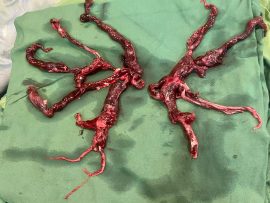
Abstract Rapid hemodynamic stabilization and restoration of pulmonary perfusion are the cornerstones of treatment for high-risk pulmonary embolism (PE). While all current guidelines recommend systemic thrombolysis (SYS) as the first-line..
Read More
Abstract Background We undertook this study to evaluate the efficacy of an on-table extubation protocol and to assess the magnitude of benefits when implemented as a routine practice in a..
Read More
Abstract Necrotizing pneumonia is a severe complication of bacterial or viral pneumonia that can lead to refractory respiratory failure in children. Extracorporeal membrane oxygenation (ECMO) has emerged as a vital..
Read More
Abstract PULMONARY EMBOLISM (PE) remains a significant healthcare challenge, ranking as the third leading cause of mortality worldwide, following coronary artery disease and stroke. In the United States, mortality rates among..
Read More
Abstract Objectives To describe longer-term survival and morbidity outcomes after hospital discharge in a binational cohort of children who required extracorporeal membrane oxygenation after cardiac surgery. Methods This was a..
Read More
Abstract OBJECTIVES Peripheral cannula selection in minimally invasive cardiac surgery (MICS) is crucial, as venous drainage limitations during cardiopulmonary bypass (CPB) can impair end-organ perfusion and overall outcomes. This study..
Read More
Abstract Objective To report differences between 2 anticoagulation protocols during venoarterial extracorporeal membrane oxygenation (VA-ECMO) intraoperative support and their effects on outcomes after lung transplantation. Methods We performed a retrospective..
Read More
Abstract Objective To compare the utility of a saline-based modified del Nido (mDN) cardioplegia solution with a conventional institutional technique (multidose St. Thomas blood cardioplegia) for mitral valve repair (MVR)..
Read More
Abstract Background Coagulopathy frequently complicates venovenous extracorporeal membrane oxygenation (VV ECMO) procedures, yet its underlying mechanism remains elusive. This retrospective study aimed to identify factors contributing to coagulopathy during VV..
Read More
Abstract A 54-year-old male presented after a suicide attempt, suffering severe cardiac and extracardiac injuries from firing a nail gun into both temples () and his chest. Imaging showed six..
Read More
Abstract Background Despite the extensive volume of research published on checklists in the intensive care unit (ICU), no review has been published on the broader role of checklists within the..
Read More
Abstract Vasoplegic syndrome (VS) is a common and potentially life-threatening complication of cardiac surgery with cardiopulmonary bypass (CPB). It presents a significant haemodynamic challenge that is often difficult to manage..
Read More
Abstract Background Extracorporeal membrane oxygenation (ECMO) is increasingly used in patients after cardiac surgery; however, anticoagulation management has consistently been challenging. This study aimed to explore the feasibility of a..
Read More
Abstract Background In refractory cardiac arrest, extracorporeal cardiopulmonary resuscitation may increase the survival chance. However, in cases of unsuccessful treatment, extracorporeal cardiopulmonary resuscitation may additionally provide an important source of organ donors...
Read More
Abstract Cardiogenic shock (CS) in acute myocardial infarction (AMI) is a life-threatening syndrome characterized by systemic hypoperfusion that can quickly progress to multiorgan failure and death. Various devices and configurations..
Read More
Abstract Superior vena cava drainage during venoarterial extracorporeal membrane oxygenation (ECMO) may reduce access insufficiency and differential oxygenation and is typically achieved via the femoral approach. Direct multistage jugular cannulation may be..
Read More
Abstract OBJECTIVES It has been suggested that long-term risk for incident cancer is increased in patients operated with cardiopulmonary bypass. We compared the risk for incident cancer and cancer-specific death..
Read More
IABP Physiology and normal function Intraaortic balloon counter pulsation (IABP) Frequency&timing IABP indication contrindication troubleshooting 1 IABP Troubleshooting 3 Management of Patient having IABP Management of patient in IABP..
Read More
Faten Farid Awdallah: [gallery ids="49616"] Critical care consultants at king Abdullah medical city, holly capital. Critical care ass professor at national heart institute, Egypt
Read More
Faten Farid Awdallah: [gallery ids="49616"] Critical care consultants at king Abdullah medical city, holly capital. Critical care ass professor at national heart institute, Egypt
Read More
Faten Farid Awdallah: [gallery ids="49616"] Critical care consultants at king Abdullah medical city, holly capital. Critical care ass professor at national heart institute, Egypt
Read More
Faten Farid Awdallah: [gallery ids="49616"] Critical care consultants at king Abdullah medical city, holly capital. Critical care ass professor at national heart institute, Egypt
Read More
Perfusión regional normotérmica (PRN) para la obtención de órganos en donación en asistolia controlada. Ponente: Dr. Juan Blanco (España) Enfermero. Máster y Posgrado en Técnicas de perfusión y oxigenación..
Read More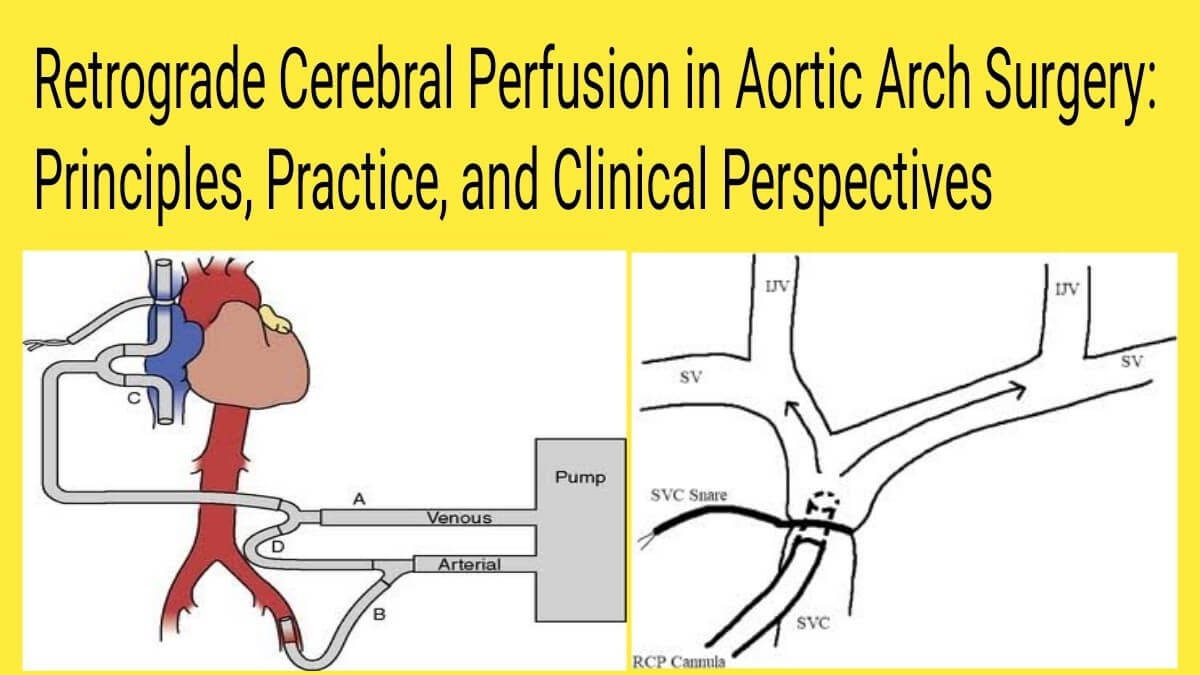
1. Introduction Cerebral protection is a cornerstone of successful aortic arch surgery, where the brain is highly vulnerable during periods of circulatory arrest. While deep hypothermic circulatory arrest (DHCA) alone..
Read More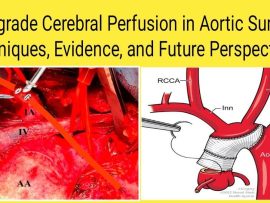
1. Introduction Aortic arch surgery presents significant neurologic risks due to the potential for cerebral ischemia during circulatory arrest. Traditional methods such as deep hypothermic circulatory arrest (DHCA) provided limited..
Read More
Introduction: More Than Just a Tube In the world of cardiopulmonary bypass (CPB), the arterial cannula is far more than a simple conduit for blood flow. Every feature—from the shape..
Read More