
Reversed Valved Potts shunt


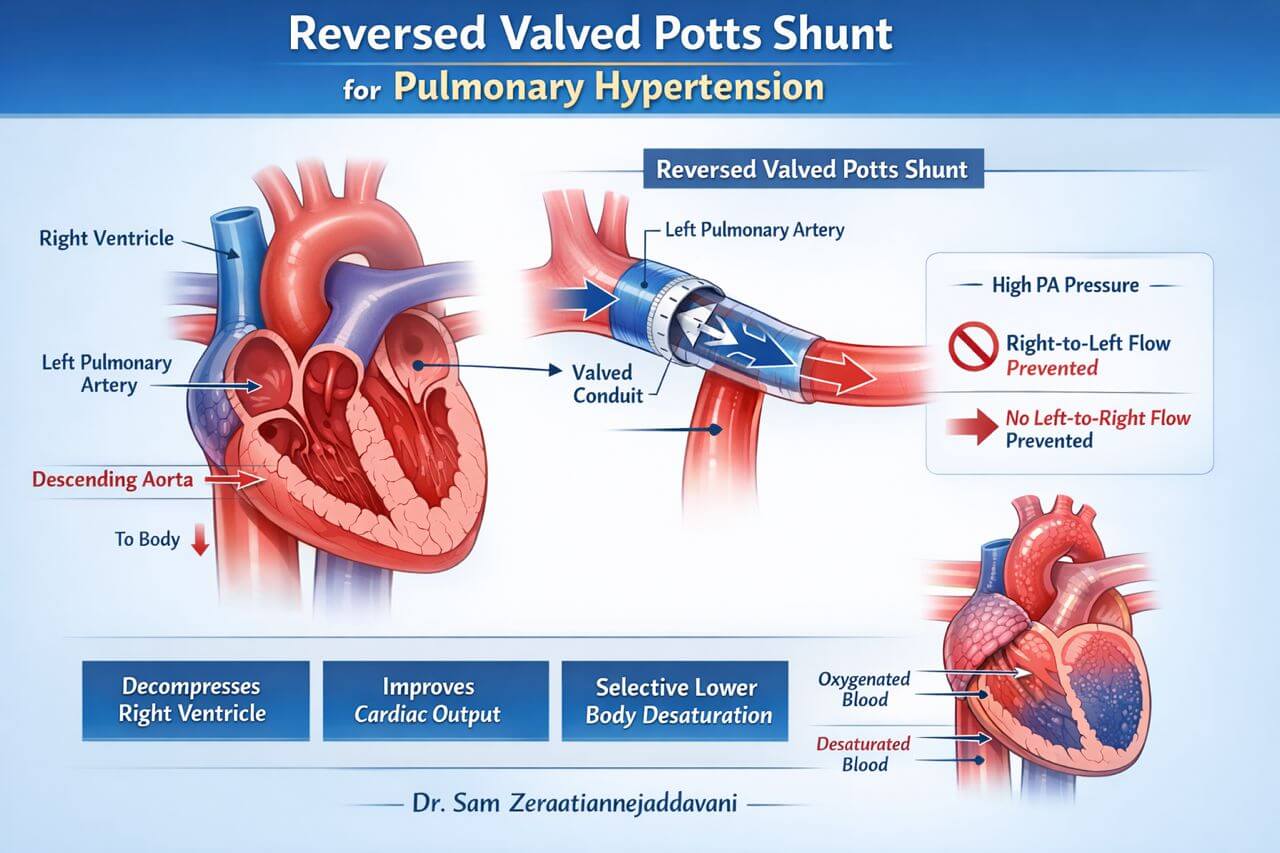
The reversed valved Potts shunt is an advanced surgical strategy for patients with severe Pulmonary Hypertension, designed to create a controlled extracardiac communication between the left pulmonary artery and descending aorta using a unidirectional valved conduit. Its mechanism relies on suprasystemic pulmonary artery pressures, which drive right-to-left shunting from the pulmonary circulation into the systemic circulation, thereby decompressing the failing right ventricle and reducing afterload. The key innovation is the reversed orientation of the valve, which permits flow only from the pulmonary artery to the aorta while preventing any deleterious left-to-right shunting that could worsen pulmonary vascular disease. This selective decompression mimics the protective physiology of Eisenmenger Syndrome, allowing preservation of oxygenation to the coronary and cerebral circulations while accepting mild desaturation in the lower body. Hemodynamically, it improves cardiac output, stabilizes right ventricular function, and serves as an effective bridge to transplantation or destination palliation in end-stage disease.
Dr.Sam Zeraatian Nejad Davani, Cardiovascular and Transplant surgeon. Advanced Fellow of Thoracic Organs Transplantation Chicago Illinois.