
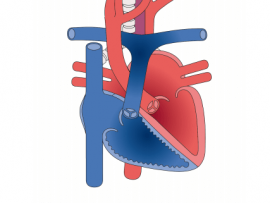

Medical genetics. Aberrant subclavian artery, or aberrant subclavian artery syndrome, is a rare anatomical variant of the origin of the right or left subclavian artery. This abnormality is the most common congenital vascular anomaly of the..
Read More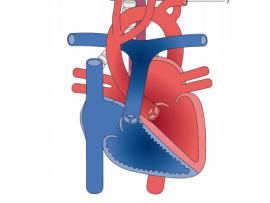
Aberrant right subclavian artery (ARSA) is a rare anomaly, in which the right subclavian artery arises directly from the aortic arch instead of originating from the brachiocephalic artery. This anomaly should be taken into..
Read More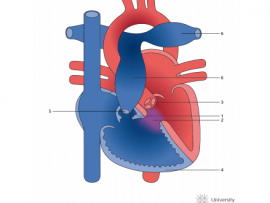
Absent pulmonary valve syndrome (APVS) also known as congenital absence of pulmonary valve or pulmonary valve agenesis is a rare outflow tract anomaly of heart. It is defined as absent..
Read More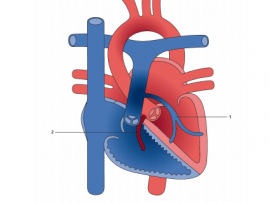
Anomalous left coronary artery from the pulmonary artery (ALCAPA) is a congenital (present at birth) heart defect in which the left coronary artery arises abnormally from the pulmonary artery. Normally, the left and right coronary arteries arise from the aorta..
Read More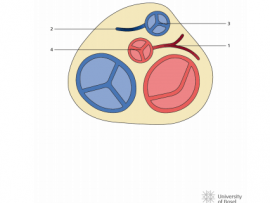
Anomalous right coronary artery (RCA) from pulmonary artery is a rare congenital coronary anomaly. The prevalence is about 0.002% of general population. Anomaly such as aortopulmonary window, tetralogy of Fallot,..
Read More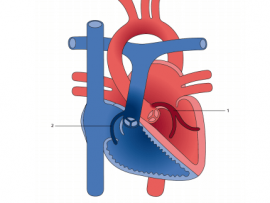
Anomalous right coronary artery (RCA) from pulmonary artery is a rare congenital coronary anomaly. The prevalence is about 0.002% of general population. Anomaly such as aortopulmonary window, tetralogy of Fallot,..
Read More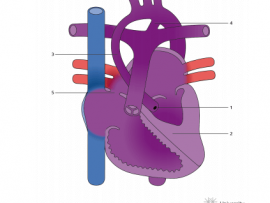
The spectrum of hypoplastic left heart syndrome spans a continuum from borderline hypoplasia to extreme forms with retrograde blood flow from the ductus arteriosus to the cerebral and coronary arteries...
Read More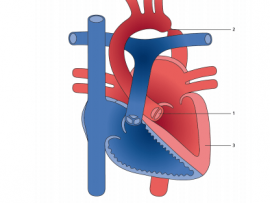
Prevalence of congenital heart disease (CHD) is constantly increasing during the last decades in line with the treatment options for patients ranging from the surgical as well to the interventional..
Read More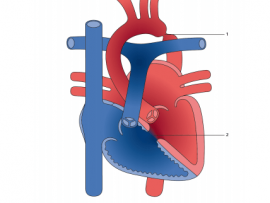
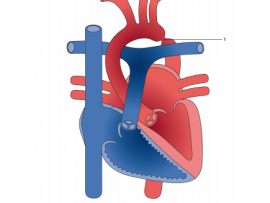
Coarctation of aorta (CoA) can be simply defined as cardiac abnormality resulting in obstruction to the blood flow in the aorta. CoA can occur at any region in the thoracic..
Read More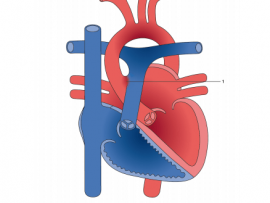
Aortopulmonary window (APW) or aortopulmonary septal defect, first described by Elliotson in third decade of last century,[] is a cardiac abnormality that results from abnormal communication between the proximal aorta..
Read More
Lipomatous hypertrophy of the interatrial septum (LHIS) is a benign cardiac mass characterised as a non-encapsulated mass of fatty tissue that infiltrates the atrial septum. ⠀ Although once described as..
Read More
Spontaneous echocardiographic contrast (SEC): is a phenomenon of discrete reflections appearing in the blood inside the cardiac chambers, cavities or vessels without previous injection of echocontrast media or fluids containing..
Read More
Lambl's excrescences are usually described as filiform (threadlike) fronds. They were first described by Vilem Dusan Lambl, a Bohemian physician. They occur, by definition, along valve closure lines, where minor..
Read More
Ehlers-Danlos syndromes (EDS) are a group of rare inherited conditions that affect connective tissue. There are several types of EDS that may share some symptoms, these include joint hypermobility, stretchy..
Read More
Abstract Hyperthermic intraperitoneal chemotherapy (HIPEC) has been shown to be an effective treatment for peritoneal tumors; whether preventive HIPEC after radical resection for T4 stage colon adenocarcinoma could decrease peritoneal..
Read More
Abstract Total anomalous pulmonary venous connection (TAPVC) is a rare congenital cardiac malformation, and prenatal detection of TAPVC malformation remains a challenging. TAPVC can be easily missed or misdiagnosed in..
Read More
Aula sobre fisiologia da CEC. Os principais pontos que diferenciam o paciente em CEC de outros pacientes! Prof. Elio Carvalho é Biomédico, Microbiologista e Perfusionista pela Unicamp, CLAP e SBCEC...
Read More
CONGENITAL CARDIAC ANESTHESIA : UPDATE 2020 Description WORLDWIDE WEBINAR - in Collaboration with Congenital Cardiac Anesthesia Society. Congenital Heart Academy
Read More
TRANSPOSITION OF THE GREAT ARTERIES: UPDATE 2020 Congenital Heart Academy
Read More
TRUNCUS ARTERIOSUS: dall'anatomia all'età adulta. RELATORI: Aspetti Anatomici Dott. Paola Francalanci Ospedale Pediatrico Bambino Gesù - Roma Diagnosi clinico strumentale Dott. Elio Caruso Centro Cardiologico Pediatrico del Mediterraneo..
Read More
Abstract This review provides a comprehensive overview of the past 25+ years of research into the development of left ventricular assist device (LVAD) to improve clinical outcomes in patients with..
Read More
Abstract Congenital long QT syndrome (LQTS) is characterised by heart rate corrected QT interval prolongation and life-threatening arrhythmias, leading to syncope and sudden death. Variations in genes encoding for cardiac..
Read More
[pdf-embedder url="https://perfusfind.com/wp-content/uploads/2021/05/CribSheet-PE-1.91_compressed.pdf" title="CribSheet PE 1.91_compressed"] Pulmonary Embolism Treatment Overview
Read More
Abstract A wide QRS complex tachycardia (WCT) is defined as a tachycardia with QRS duration of >120 ms. Distinguishing between the different potential causes of a WCT can have important..
Read More
Abnormal aortic valve development is one of the most threatening congenital heart diseases. Like a thief in the night, the patient might be struck by endocarditis after a visit to..
Read More
Aortic stenosis refers to a condition that causes obstruction to blood flow between the left ventricle and the aorta. There are a variety of causes, including muscular obstruction below the..
Read More
Bicuspid aortic valve (BAV) is the most common congenital cardiac abnormality, affecting approximately 1%-2% of the general population. (1,2) Adverse cardiac outcomes related to the valve and/or root (3) put..
Read More