


Abstract Delirium is an important public health problem. It is independently associated with worse clinical outcomes, including persistent cognitive impairment, increased mortality, and greater risk of institutionalization [1]. The prevalence..
Read More
Abstract Background has become accepted as a rescue therapy for cardiopulmonary shock, and there have been over 100,000 (ECMO) cases since 1987. Rapid growth has presented ethical challenges and concerns. Here, we discuss..
Read More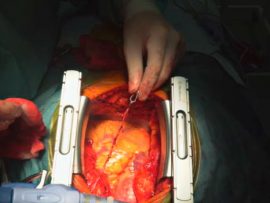
Abstract Background is an unrecognized risk factor for after cardiac surgery. We sought to study the prevalence of preoperative hyponatremia and its impact on short-term and long-term outcomes after cardiac surgery...
Read More
Abstract Since the outbreak of the coronavirus disease 2019 (COVID-19) pandemic, more than 153 million cases have been confirmed, and more than 3.20 million individuals have died worldwide. The strategies..
Read More
Abstract Objective: Exposure to cerebral emboli is ubiquitous and may be harmful in cardiac surgery utilizing cardiopulmonary bypass. This was a prospective observational study aiming to compare emboli exposure in..
Read More
Abstract Objective: To study the correlation between the mean arterial pressure (MAP) level in the first 6 hours of extracorporeal cardiopulmonary resuscitation (ECPR) and patients’ neurological outcomes. Methods: Sex, age, basic..
Read More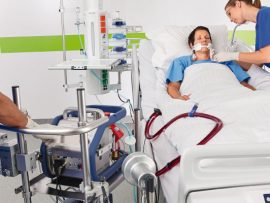
Abstract Purpose: Extracorporeal membrane oxygenation (ECMO) use for severe coronavirus disease 2019 (COVID‑19) patients has increased during the course of the pandemic. As uncertainty existed regarding patient’s outcomes, early guidelines..
Read More
Abstract Introduction Multiple studies have shown a decrease in the inflammatory response with minimized bypass circuits leading to less complications and mortality rate. On the other hand, some other studies..
Read More
Abstract Background Aortic arch repair for aortic dissection is still associated with a high mortality rate. Providing adequate means of neuromonitoring to guide cerebral hemodynamics is advantageous, especially during selective anterior..
Read More
Abstract Postcardiotomy shock (PCS) has historically been associated with substantial morbidity and mortality. Mortality at discharge is reportedly more than 60%. We investigated the outcomes of our standardized approach to..
Read More
Abstract Background: Cardiac surgery with extracorporeal circulation (ECC) requires the administration of anticoagulant drugs to maintain ACT ranges 400–600 seconds, which requires exhaustive coagulation monitoring for which various point-of-care devices..
Read More
Abstract Background The dose of protamine required following cardiopulmonary bypass (CPB) is often determined by the dose of heparin required pre-CPB, expressed as a fixed ratio. Dosing based on mathematical..
Read More
Abstract Objectives after cardiac surgery remains of uncertain clinical significance. Therefore, we investigated the relationship of severity across urine output and creatinine domains with the risk for major adverse kidney events..
Read More
Abstract Cardioplegic solutions are used in cardiac surgery to achieve controlled cardiac arrest during operations, making surgery safer. Cardioplegia can either be blood or crystalloid based, with perceived pros and..
Read More
[playlist ids="16864"] Dr.Sam Zeraatian Nejad Davani, CEO of rockingham medical research ADKWA center as well as Head of IUMS transplant and cardiovascular surgery department. ..
Read More
Congenital Heart Academy
Read More
Vanderbilt University Medical Center; Department of CV Surgery: Faculty Forum: Understanding alpha stat and pH stat Faculty: Katie Faella CCP, LCP, FPP, J. Hoffman, MD, Matt Warhoover, CCP, A. Lepore,..
Read More
This case reports on a 14-year-old previously healthy girl who was referred to the Pediatric Intensive Care Unit (PICU) with a suspicion of multisystem inflammatory syndrome in children (MIS-C) and..
Read More
This case reports on a 54-year-old male patient who was treated in the medical intensive care unit at Aachen University Hospital following a generalized tonic-clonic seizure with subsequent postictal vigilance..
Read More
[gallery ids="16735,16738,16741,16744,16747,16750"] [playlist ids="16791"] Dr.Sam Zeraatian Nejad Davani, CEO of rockingham medical research ADKWA center as well as Head of IUMS transplant and cardiovascular surgery department. ..
Read More
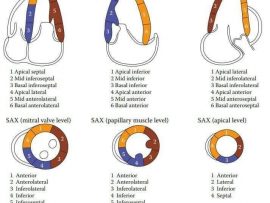


[gallery ids="16672,16675,16678,16681"] Mohamed Gibreel , FEBR (Fellowship of Egyptian Board of Radiology ) Cardiac imaging consultant at Aswan heart center -Magdi Yacoub Foundation , Egypt
Read More
Superdominant LAD , Extremely rare coronary artery anomaly Low resolution snapshot as the case could be published [gallery ids="16668"] Mohamed Gibreel , FEBR (Fellowship of Egyptian Board of Radiology..
Read More
[gallery ids="16664"] Mohamed Gibreel , FEBR (Fellowship of Egyptian Board of Radiology ) Cardiac imaging consultant at Aswan heart center -Magdi Yacoub Foundation , Egypt
Read More
19m baby post trans-catheter PDA closure. [gallery ids="16649,16652"] Echo >>aliasing across LPA. these two images can tell alot Mohamed Gibreel , FEBR (Fellowship of Egyptian Board of Radiology ) Cardiac..
Read More
20Y male with: Criss-cross heart which is: Supero-inferior relationship of ventricles (cranial RV & caudal LV) with loss of normal parallel axes of ventricular inlets i.e. crossed AV connections. DORV/VSD..
Read More
30 Y F dilated RT side. Echo : ASD,PAPVD CT : Sinus venous defect IVC / inferior type. Red line represents the SV defect. Sinus venosus defects (SVD) better..
Read More