
The Critical Role of Retrograde Flush in Lung Procurement and Thromboembolic Mitigation


The scarcity of viable donor organs remains a restrictive bottleneck in thoracic transplantation. To expand the donor pool, transplant networks increasingly utilize «extended-criteria» or marginal donor lungs. However, brain-dead or circulatory-death donors exist in a hypercoagulable, prothrombotic state due to systemic inflammation, prolonged immobilization, and invasive central venous access.
Studies indicate that macro- or microscopic pulmonary embolism (PE) is incidentally detected in 35% to 38% of donor lungs. When a donor lung containing unrecognized thromboemboli is implanted, the consequences for the recipient can be catastrophic. The primary defense against this surgical complication is the retrograde flush (backflush) performed during organ procurement and back-table preparation.
The Pathophysiological Threat of Donor Thromboembolism
Antegrade preservation flush—administered via the main pulmonary artery trunk—is highly effective at cooling the pulmonary parenchyma and clearing mobile blood elements. However, if an organized or semi-adherent thrombus is lodged in the pulmonary arterial tree, antegrade pressure acts like a piston, driving the clot deeper into the narrowing subsegmental branches and capillaries.
Upon implantation and reperfusion in the recipient, these trapped clots lead to severe graft injury:
Mechanical Occlusion: Blocked microvasculature forces the recipient’s entire right ventricular output through a restricted vascular bed, sparking acute pulmonary hypertension and right heart strain.
Ischemia-Reperfusion Injury (IRI): Areas distal to the emboli experience profound ischemia. Reperfusion induces a massive inflammatory cascade characterized by oxygen free-radical generation, endothelial cellular swelling, and capillary leak.
Primary Graft Dysfunction (PGD): Microvascular plugging is a leading trigger for severe PGD (Grade 3), presenting as severe hypoxemia, diffuse alveolar infiltrates, and a high risk of early mortality.
Long-Term Allograft Loss: Trapped thromboemboli accelerate endothelial injury, which is strongly associated with acute cellular rejection and the subsequent development of Chronic Lung Allograft Dysfunction (CLAD).
Mechanics of the Retrograde Flush
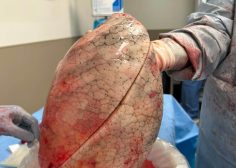
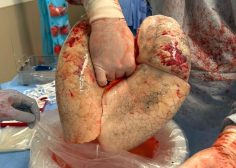
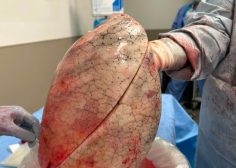
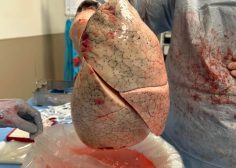
The retrograde flush reverses the hydrodynamic vector of the preservation solution. Instead of entering the arterial system, cold preservation fluid (e.g., extracellular low-potassium dextran solution) is instilled under controlled pressure directly into the pulmonary veins via the left atrial cuff or individual venous orifices.
Studies indicate that macro- or microscopic pulmonary embolism (PE) is incidentally detected in 35% to 38% of donor lungs. When a donor lung containing unrecognized thromboemboli is implanted, the consequences for the recipient can be catastrophic. The primary defense against this surgical complication is the retrograde flush (backflush) performed during organ procurement and back-table preparation.
The Pathophysiological Threat of Donor Thromboembolism
Antegrade preservation flush—administered via the main pulmonary artery trunk—is highly effective at cooling the pulmonary parenchyma and clearing mobile blood elements. However, if an organized or semi-adherent thrombus is lodged in the pulmonary arterial tree, antegrade pressure acts like a piston, driving the clot deeper into the narrowing subsegmental branches and capillaries.
Upon implantation and reperfusion in the recipient, these trapped clots lead to severe graft injury:
Mechanical Occlusion: Blocked microvasculature forces the recipient’s entire right ventricular output through a restricted vascular bed, sparking acute pulmonary hypertension and right heart strain.
Ischemia-Reperfusion Injury (IRI): Areas distal to the emboli experience profound ischemia. Reperfusion induces a massive inflammatory cascade characterized by oxygen free-radical generation, endothelial cellular swelling, and capillary leak.
Primary Graft Dysfunction (PGD): Microvascular plugging is a leading trigger for severe PGD (Grade 3), presenting as severe hypoxemia, diffuse alveolar infiltrates, and a high risk of early mortality.
Long-Term Allograft Loss: Trapped thromboemboli accelerate endothelial injury, which is strongly associated with acute cellular rejection and the subsequent development of Chronic Lung Allograft Dysfunction (CLAD).
Mechanics of the Retrograde Flush
The retrograde flush reverses the hydrodynamic vector of the preservation solution. Instead of entering the arterial system, cold preservation fluid (e.g., extracellular low-potassium dextran solution) is instilled under controlled pressure directly into the pulmonary veins via the left atrial cuff or individual venous orifices.
Comparative cohort studies demonstrate that when only antegrade flushing is performed in donors with unexpected PE, recipients suffer significantly higher rates of prolonged intubation, severe PGD, and 1-year mortality. Conversely, implementing a routine, rigorous retrograde backflush normalizes post-transplant outcomes, rendering donor PE cohorts statistically comparable to clot-free cohorts regarding early graft function.
Summary
The retrograde flush is not merely a secondary cleaning step; it is a critical safety mechanism in modern transplant surgery. By effectively evacuating hidden donor-derived thromboemboli, backflushing protects the microvasculature from immediate reperfusion failure, reduces the incidence of primary graft dysfunction, and successfully maximizes the utilization of marginal donor organs without compromising recipient survival.
The retrograde flush is not merely a secondary cleaning step; it is a critical safety mechanism in modern transplant surgery. By effectively evacuating hidden donor-derived thromboemboli, backflushing protects the microvasculature from immediate reperfusion failure, reduces the incidence of primary graft dysfunction, and successfully maximizes the utilization of marginal donor organs without compromising recipient survival.

Dr.Sam Zeraatian Nejad Davani, Cardiovascular and Thoracic Surgeon Transplant and Thoracic Organs Recovery Surgeon Director of Georgia Atlanta Procure on Demand Thoracic Organs Transplant and Procurement Surgery.