


Abstract When native blood flow through the aorta from the adult heart and lungs meets retrograde blood flow from an artificial heart and lung during venoarterial extracorporeal membrane oxygenation (VA-ECMO),..
Read More
Abstract With advancements in (ECLS) technologies, venoarterial (VA-ECMO) has emerged as a crucial cardiopulmonary support mechanism. This review explores the significance of VA-ECMO system configuration, strategies, and timing of initiation. Through an analysis..
Read More
Abstract In recent decades, the use of veno-arterial extracorporeal membrane oxygenation (VA-ECMO) has increased. In acute cardiogenic shock, VA-ECMO implantation can serve as a bridging solution to facilitate recovery, provide..
Read More
Abstract Background: Veno-Arterial Extracorporeal membrane oxygenation (VA-ECMO) provides temporary cardiopulmonary support in the setting of refractory cardiogenic shock. Mechanical ventilation and sedation often accompanies VA-ECMO support and carry the increased risk..
Read More
Abstract Transthoracic echocardiography is an essential tool for the management of venoarterial extracorporeal membrane oxygenation (VA-ECMO). Its ease of access makes it ideally suited for routine daily bedside assessments, which..
Read More
Abstract Background: Extracorporeal membrane oxygenation is an effective life support technology in treating patients with cardiorespiratory failure. It could be used as a bridge to recovery, potentially improving patient outcomes due..
Read More
Abstract Introduction: Acute pulmonary embolism (PE) leads to increased pulmonary vascular resistance and right ventricular afterload, resulting in right ventricular dysfunction (RVD). Stratification is crucial to early identify patients with elevated..
Read More
Abstract Endothelial injury is usually considered as a major com-ponent of the systemic inflammatory response observed during veno-arterial extracorporeal membrane oxygena-tion (VA-ECMO) support. Yet, few data are avail-able to support..
Read More
Abstract Introduction: Amniotic fluid embolism (AFE) is a catastrophic complication of pregnancy with high mortality rate. It is an inflammatory response leading to cardiovascular collapse. We present a case of successful..
Read More
Abstract Background: Left atrial veno-arterial extracorporeal membrane oxygenation (LAVA-ECMO) is a novel mechanical cardiocirculatory support strategy that provides robust cardiocirculatory support and simultaneous left and right atrial venting via a multi-fenestrated..
Read More
Abstract Background: Patient selection for extracorporeal membrane oxygenation (ECMO) support is complex and associated with variability between clinicians. Disparities exist in ECMO use, with lower utilization in patients who are female,..
Read More
Abstract Background Central venoarterial extracorporeal membrane oxygenation (VA-ECMO) is a commonly employed strategy to support patients in refractory postcardiotomy cardiogenic shock (RPCS). This support can be provided using either indirect..
Read More
Abstract Purpose: Patients receiving venoarterial extracorporeal membrane oxygenation (VA‑ECMO) frequently develop arte‑rial hyperoxaemia, which may be harmful. However, lower oxygen saturation targets may also lead to harmful episodes of hypoxaemia...
Read MoreAbstract Endothelial injury is usually considered as a major com-ponent of the systemic inflammatory response observed during veno-arterial extracorporeal membrane oxygena-tion (VA-ECMO) support [1, 2]. Yet, few data are avail-able..
Read More
Abstract Extracorporeal membrane oxygenation (ECMO) is a technology that can temporarily take over the functions of the heart and lungs. Acute kidney injury is a common issue in patients receiving..
Read More
Abstract Purpose of Review To present an abridged overview of the literature and pathophysiological background of adjunct interventional left ventricular unloading strategies during veno-arterial extracorporeal membrane oxygenation (V-A ECMO). From..
Read More
Abstract Aims Veno-arterial extracorporeal membrane oxygenation (VA-ECMO) is a life-saving procedure for supporting patients with cardiogenic shock after cardiac surgery. This work aimed to analyse the impact of changes in..
Read More
Abstract Low pulse pressure (PP) in venoarterial-extracorporeal membrane oxygenation (VA-ECMO) is a marker of cardiac dysfunction and has been associated with acute brain injury (ABI) as continuous-flow centrifugal pump may..
Read More
Abstract Venoarterial extracorporeal membrane oxygenation (VA-ECMO) support is a lifesaving tool in cardiovascular care, providing excellent hemodynamic assistance for numerous indications, such as cardiogenic shock or periprocedural support in patients..
Read More
Abstract Purpose Veno-arterial extracorporeal life support (ECLS) is increasingly used in patients during cardiac arrest and cardiogenic shock, to support both cardiac and pulmonary function. We performed a systematic review..
Read More
Abstract Acute myocardial infarction-related cardiogenic shock (AMI-CS) carries a dismal prognosis. Short-term mortality is in the range of 40–50% []. Until recently, only treatment of the culprit lesion by percutaneous..
Read More
Abstract Background: Post-cardiotomy cardiogenic shock (PCCS) remains a life-threatening complication after cardiac surgery. Extracorporeal membrane oxygenation (ECMO) represents the mainstay of mechanical circulatory support for PCCS; however, its availability..
Read More
Abstract Introduction Pump-controlled retrograde trial off (PCRTO) is described as an effective weaning strategy for veno-arterial extracorporeal membrane oxygenation (ECMO) in the guidelines. Contrastingly, there is no established weaning strategy..
Read More
Abstract Purpose: The outcomes of immunocompromised patients with cardiogenic shock treated with venoarterial extra‑corporeal membrane oxygenation (VA‑ECMO) are seldom documented, making ECMO candidacy decisions challeng‑ing. This study aims (1) to..
Read More
Abstract In a recent issue of Intensive Care Medicine, we read with great interest the article by Moyon et al. [1] who retro-spectively studied the outcomes of immunocompromised patients with..
Read More
Abstract Although current studies support the use of prophylactic distal perfusion catheters (DPCs) to decrease limb ischemia in patients on venoarterial extracorporeal membrane oxygenation (VA ECMO), methods for monitoring limb..
Read More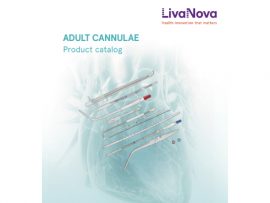
Abstract Background Large cannulae can increase cannula-related complications during venoarterial extracorporeal membrane oxygenation (VA ECMO). Conversely, the ability for small cannulae to provide adequate support is poorly understood. Therefore, we..
Read More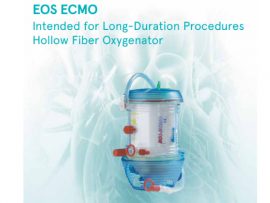
Abstract Predictive survival models have been proposed to esti-mate survival rates in patients with refractory cardio-genic shock considered for veno-arterial extracorporeal membrane oxygenation (VA-ECMO) [1, 2]. Notably, the Survival after..
Read More
Abstract Acute myocardial infarction-related cardiogenic shock (AMI-CS) carries a dismal prognosis. Short-term mortality is in the range of 40–50% [1]. Until recently, only treatment of the culprit lesion by percutaneous..
Read More
Abstract Purpose of review This article offers an overview of recent randomized controlled trials (RCTs) testing the efficacy of veno-arterial extracorporeal membrane oxygenation (VA ECMO) and microaxial flow pump (mAFP)..
Read More