
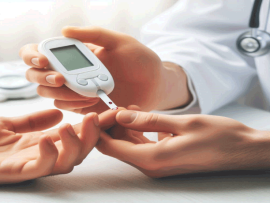

Abstract Background: Perioperative hyperglycemia is associated with adverse patient outcomes including surgical site infections. This study examined whether an automated insulin dosing reminder is associated with a lower risk for..
Read More
Abstract Background Perioperative hyperglycemia is common during cardiac surgery and has been linked to an increased risk of surgical site infections (SSIs). However, the benefits of perioperative tight glucose control..
Read More
Abstract Perioperative impairment of glycaemic control significantly increases the risk of major postoperative complications. The use of continuous glucose monitoring (CGM) has demonstrated benefits in glycaemic control, but its use..
Read More
Abstract Chen et al. used a rat model of cardiopulmonary bypass followed by 30-min ischemia (induced by ascending aorta blockage) and 15-min reperfusion []. They reported that pyruvate dehydrogenase E1α..
Read More
Intraoperative Glucose and Kidney Injury After On-Pump Cardiac Surgery: A Retrospective Cohort Study
Abstract Introduction Acute kidney injury (AKI) is a common complication after on-pump cardiac surgery, and previous studies have suggested that blood glucose is associated with postoperative AKI. However, limited evidence..
Read More
Abstract Background: Glucose–insulin–potassium (GIK) administration during cardiac surgery inconsistently improves myocardial function, perhaps because hyperglycemia negates the beneficial effects of GIK. The hyperinsulinemic normoglycemic clamp (HNC) technique may better enhance..
Read More
Abstract Background: Cardiopulmonary bypass and postoperative cardiac dysfunction cause splanchnic hypoperfusion resulting in intra-abdominal anaerobic metabolism and risk for gastrointestinal complications. The intra-abdominal metabolism can be monitored by intraperitoneal measurement..
Read More