
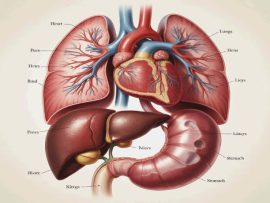

Early colonoscopy for detection of colon ischemia after extracorporeal cardiopulmonary resuscitation
Abstract Dear Editor, Extracorporeal cardiopulmonary resuscitation (ECPR) refers to the initiation of venoarterial extracorporeal membrane oxygenation (VA ECMO) during cardiac arrest to restore systemic perfusion with oxygenated blood []. Prolonged..
Read More
Abstract Extracorporeal membrane oxygenation (ECMO) is increasingly being utilized for life-threatening cardiac and/or respiratory failure refractory to conventional treatment. Acute kidney injury (AKI) and fluid balance disorders commonly occur both..
Read More
Abstract Background Despite advances in cardiopulmonary resuscitation (CPR), survival after out-of-hospital cardiac arrest (OHCA) remains low. Use of veno-arterial extracorporeal membrane oxygenation (VA ECMO) as extracorporeal CPR (ECPR) may improve..
Read More
Abstract Extracorporeal membrane oxygenation (ECMO) provides lifesaving support for patients with cardiopulmonary failure but poses complex ethical challenges that may generate moral distress for clinicians, patients, and families. We convened..
Read More
Abstract Extracorporeal membrane oxygenation (ECMO) is widely used in patients with severe cardiac or respiratory failure. ECMO is resource and cost intensive and carries the potential for significant complications; therefore,..
Read More
ECMO + NRP Complete Clinical Library — 2026 Edition Two field manuals covering the two most critical service lines in extracorporeal and transplant support. Built by a certified clinical..
Read More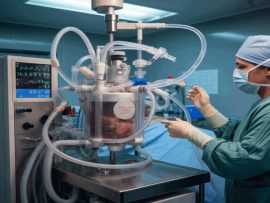
Abstract Veno-venous extracorporeal membrane oxygenation (V-V ECMO) is a complex and invasive intervention used increasingly in the management of severe respiratory failure. Once established, the management of prolonged V-V ECMO..
Read More
Sim ECMO Virtual ECMO Troubleshooting Session Faten Farid Awdallah: Critical care consultants at king Abdullah medical city, holly capital. Critical care ass professor at national heart institute, Egypt
Read More
Abstract Importance Underweight and obesity represent opposite ends of the nutritional risk spectrum that negatively affect children’s health worldwide. Both conditions have been associated with increased mortality in pediatric patients receiving..
Read More
Abstract Ventricular septal rupture (VSR) is a rare but often fatal complication of acute myocardial infarction (AMI), with a high mortality largely driven by resultant cardiogenic shock. Venoarterial extracorporeal membrane..
Read More
Abstract Background This study evaluates the outcomes and management considerations associated with using extracorporeal membrane oxygenation (ECMO) in patients with traumatic brain injury (TBI), including those requiring neurosurgical intervention. It..
Read More
Abstract Intractable bleeding during cardiac surgery is a rare but life-threatening complication. We describe a novel management approach in which the patient was supported with venoarterial extracorporeal membrane oxygenation until..
Read More
Conceptual Framework: Bilateral Pneumonectomy + Lung Transplant with Dynamic ECMO Support (DREAM-style strategy) 1. Clinical Context & Rationale This scenario typically applies to: * End-stage bilateral lung malignancy confined..
Read More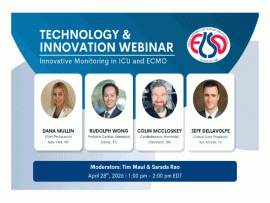
Innovative Monitoring in ICU and ECMO. Speakers will discuss the technical aspects of creating monitoring systems and algorithms for to identify patients that might need ECMO and to monitor progress..
Read More
Abstract Differential oxygenation may complicate extracorporeal cardiopulmonary resuscitation (ECPR) either due to the initial pathology or subsequent lung injury. The dual circulation phenomenon inherent to peripheral venoarterial extracorporeal membrane oxygenation..
Read More
Abstract Introduction Veno-venous extracorporeal membrane oxygenation (VV-ECMO) supports oxygenation and carbon dioxide (CO2) clearance in the short- or mid-term, and is traditionally utilized in severe, refractory respiratory failure. There is..
Read More
Abstract Background Extracorporeal Membrane Oxygenation (ECMO) is a critical rescue therapy complicated by high rates of nosocomial infections (NIs). While Western data abound, evidence from the Middle East remains limited...
Read More
Abstract Acute postoperative bioprosthetic valve thrombosis is a rare complication with challenging treatment. We present two consecutive cases of patients with myocardial infarction and papillary muscle rupture requiring urgent surgical..
Read More
Abstract Introduction Brain infarction (BI) is a severe complication of extracorporeal membrane oxygenation (ECMO) with high morbidity and mortality. We aimed to determine the incidence of BI and identify predictors..
Read More
Abstract BACKGROUND: Mortality prognostication in adult patients requiring extracorporeal membrane oxygenation (ECMO) is not accurate or established. We hypothesized that composite lactate-based metrics and machine-learning models would improve in-hospital mortality..
Read More
Abstract Introduction: In cardiogenic shock (CS), persistent microcirculatory impairment despite improved macrocirculatory parameters is associated with poor outcomes. Therapeutic strategies must therefore address both macro- and micro-circulation. Conventional microcirculatory measures..
Read More
Abstract Obesity poses technical challenges during veno-venous extracorporeal membrane oxygenation (VV-ECMO) cannulation because of thick subcutaneous tissue and increased insertion resistance. While patient-related factors are well recognized, the impact of..
Read More
Abstract Background: The standard method for transporting tissues during limb transplantation and replantation is cold ischemic transport (CIT). However, CIT cannot completely prevent ischemia-reperfusion injury (IRI). As an alternative, extracorporeal..
Read More
Abstract Veno-arterial extracorporeal membrane oxygenation (VA-ECMO) is a life-saving intervention for individuals with refractory cardiopulmonary failure and is associated with several complications. Differential hypercapnia, also known as RIDDLER syndrome or..
Read More
Abstract Objectives The objective of this survey is to assess current practices in anticoagulation management, laboratory monitoring, and hematology involvement in extracorporeal membrane oxygenation (ECMO) patients. Methods A cross-sectional international..
Read More
Abstract Background To gain insight into the role and relevance of inflammatory and immunological markers in the comprehensive assessment of a patient's immune response to surgical procedures. This study focused..
Read More
Abstract Background The use of extracorporeal membrane oxygenation (ECMO) has expanded significantly, especially during the COVID-19 pandemic, but membrane lung (ML) function at high altitudes remains unexplored. This study aimed..
Read More
Abstract Background Major bleeding is a common and serious complication of veno-arterial extracorporeal membrane oxygenation (VA ECMO). Current perspectives on bleeding risk fail to reflect dynamic changes over time in..
Read More
Abstract Background and Objective Venoarterial extracorporeal membrane oxygenation (VA ECMO) circuits typically utilise a continuous flow (CF) of blood to support patients suffering from refractory cardiorespiratory dysfunction. Pulsatile flow (PF)..
Read More
Abstract Despite increasing clinical interest in ambulatory extracorporeal membrane oxygenation (ECMO), its equipment is not optimally designed for portability. Blood pumps are too heavy for ambulation, as the lightest system..
Read More