


Abstract We have read the review article entitled “Controversies in ECMO: Immediate versus Watchful Waiting for VA-ECMO Venting” by Cavayas and colleagues, published in the Special Issue of Invited Presentations:..
Read More
Abstract Introduction After cardiac surgery, patients on venoarterial extracorporeal membrane oxygenation (VA-ECMO) have a higher risk of nosocomial infection in the intensive care unit (ICU). We aimed to establish an..
Read More
Abstract Background: Veno-arterial extracorporeal membrane oxygenation (VA-ECMO) is increasingly being used for circulatory support in cardiogenic shock patients, although the evidence supporting its use in this context remains insufficient. The aim..
Read More
Abstract Venovenous extracorporeal membrane oxygenation (ECMO) is recommended in adult patients with refractory acute respiratory failure (ARF), but there is limited evidence for its use in patients with less severe..
Read More
Abstract Background Neurologic complications can occur during neonatal Veno-Venous (VV) ECMO. The addition of a cephalad drainage cannula (i.e., VVDL+V) to dual lumen cannulation (i.e., VVDL) has been advocated to..
Read More
Abstract Background Extracorporeal membrane oxygenation (ECMO) has salvaged many people's life during global pandemics. However, ECMO is associated with a high incidence of hemostatic complications. This study aims to explore..
Read More
Abstract The primary objective was to investigate the association between partial pressure of carbon dioxide (PaCO2) change after extracorporeal membrane oxygenation (ECMO) initiation and neurologic outcome in neonates treated for respiratory..
Read More
Abstract Extracorporeal membrane oxygenation (ECMO), which can support gas exchange or hemodynamics in patients with severe respiratory or cardiac failure, has demonstrated considerable evolution over the last decade [], with..
Read More
Abstract Extracorporeal membrane oxygenation (ECMO) is becoming a common procedure to support patients with severe cardio-circulatory or respiratory failure as well as in case of combined compromise of the two..
Read More
Abstract Objectives Simultaneous mechanical (MCS) with intra-aortic balloon pump (IABP) to (ECMO) is common in postcardiotomy (PCS). This study aimed to analyse the effect of concomitant ECMO and IABP therapy on the short-term..
Read More
Abstract CentriMag® extracorporeal VAD support could represent a more physiological choice than conventional ECMO in primary cardiogenic shock. We therefore evaluated the outcome of patients with primary cardiogenic shock who were..
Read More
Abstract Background: Postcardiotomy cardiogenic shock (PCS) that is refractory to inotropic support remains a major concern in cardiac surgery and is almost universally fatal unless treated with mechanical support. While reported..
Read More
Abstract Purpose Preoptimizing the hemodynamics and volume status prior to heart transplant is essential for the outcome. Temporary mechanical circulatory support (MCS) has been expanding especially after recent changes to..
Read More
Abstract Importance Extracorporeal membrane oxygenation (ECMO) is used as temporary cardiorespiratory support in critically ill patients, but little is known regarding long-term psychiatric sequelae among survivors after ECMO. Objective To investigate the..
Read More
Abstract Background: The benefit of the combined use of an intra-aortic balloon pump (IABP) and venoarterial extracorporeal membrane oxygenation (VA-ECMO) for postcardiotomy shock remains unclear. We aimed to analyse the potential..
Read More
Abstract Adequate extracorporeal membrane oxygenation support in the adult requires cannulae permitting blood flows up to 6-8 L/minute. In accordance with Poiseuille's law, flow is proportional to the fourth power..
Read More
Abstract Venoarterial extracorporeal membrane oxygenation (VA ECMO) is an effective mechanical circulatory support for cardiopulmonary failure. Conventionally, an arterial cannula over 15 Fr is inserted for full circulatory support in..
Read More
Case A 55 year old female, no previous medical history, underwent out-of-hospital cardiac arrest. Advanced cardiac life support (ACLS) was initiated, with return of spontaneous circulation after 30’ of conventional..
Read More
Abstract Burns are among the leading causes of trauma worldwide, and acute respiratory distress syndrome (ARDS) is a common cause of death in burn patients. Some patients develop hypoxemia refractory..
Read More
Abstract We applied the Society for Cardiovascular Angiography and Interventions (SCAI) schema to cardiogenic shock (CS) patients treated with venoarterial extracorporeal membrane oxygenation (VA-ECMO) to assess performance in this high..
Read More
Abstract Background and purpose Extracorporeal membrane oxygenation (ECMO) continues to play an essential role in organ support in cardiogenic shock or acute respiratory distress syndrome and bridging to transplantation. The..
Read More
Abstract Rationale: Data are suggesting that altered antimicrobial concentrations are likely during extracorporeal membrane oxygenation (ECMO). Objectives: The primary aim of this analysis was to describe the pharmacokinetics of antimicrobials..
Read More
Abstract In September 2020, researchers from the University Heart and Vascular Center Hamburg, Department of Cardiovascular Surgery, and Department of Cardiology/Electrophysiology described their technique for laser lead extraction during VA-ECMO..
Read More
Abstract Objectives Refractory hypoxemia can occur in patients with acute respiratory distress syndrome from COVID-19 despite support with venovenous (VV) extracorporeal membrane oxygenation (ECMO). Parallel ECMO circuits can be used..
Read More
Abstract The Acute Respiratory Distress Syndrome (ARDS) is common in patients on the Intensive Care Unit and associated with significant mortality rates. In situations of severe respiratory insufficiency and failure..
Read More
Abstract Idiopathic inflammatory myopathies (IIM), including dermatomyositis (DM) and polymyositis (PM), have a reported mortality rate of 28.6% despite immunosuppressive therapies. IIMs are complicated by interstitial lung disease (ILD) in 41%..
Read More
Abstract Patients receiving extracorporeal membrane oxygenation (ECMO) often suffer from acute kidney injury (AKI), requiring continuous renal replacement therapy (CRRT). In our clinical practice, we connected the inlet line of..
Read More
Abstract Over the last several years, the use of extracorporeal membrane oxygenation (ECMO) has exponentially increased. As the technology advanced, the rate of devastating complications has decreased somewhat, and the..
Read More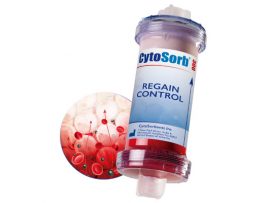
Abstract Acute respiratory distress syndrome (ARDS) is associated with high morbidity and mortality. Adjunct hemoadsorption is increasingly utilized to target underlying hyperinflammation derived from ARDS. This article aims to review..
Read More