


ECMO During COVID-19: A Society of Thoracic Surgeons/Extracorporeal Life Support Organization Survey
Abstract Background The Society of Thoracic Surgeons Workforce on Critical Care and the Extracorporeal Life Support Organization sought to identify how the coronavirus disease 2019 (COVID-19) pandemic has changed the..
Read More
Abstract Introduction There are no randomized controlled trials comparing low and high activated partial thromboplastin time (aPTT) targets in heparinized adult veno-arterial (VA) extracorporeal membrane oxygenation (ECMO) patients. Our systematic..
Read More
Abstract Oxigenación de membrana extracorpórea en pediatría. Una puesta al día INTRODUCCIÓN La ECMO o ECLS (Extracorporeal Life Support) es una terapia que utiliza un "bypass" cardiopulmonar parcial (ECMO veno..
Read More
Abstract Cardiac surgical patients requiring extracorporeal membrane oxygenation (ECMO) are at increased risk for hemorrhage due to necessary anticoagulation, in-situ cannulas, and disturbed hemostasis. We performed a retrospective, cross-sectional study..
Read More
Abstract Introduction There are no randomized controlled trials comparing low and high activated partial thromboplastin time (aPTT) targets in heparinized adult veno-arterial (VA) extracorporeal membrane oxygenation (ECMO) patients. Our systematic..
Read More
Abstract Background ECMO support is associated with the development of a systemic hyper-inflammatory response, which may become quite significant and extreme in some cases. We hypothesize that Cytosorb or Jafron..
Read More
Abstract Background In-hospital cardiac arrest during cardiac catheterization is not uncommon. The extent of variation in survival after cardiac arrest occurring in the cardiac catheterization laboratory (CCL) and underlying factors..
Read More
Abstract Background To inform future research and practice, we aimed to investigate the outcomes of patients who received extracorporeal membrane oxygenation (ECMO) for acute respiratory distress syndrome (ARDS) due to..
Read More
Abstract Venoarterial extracorporeal membrane oxygenation (VA ECMO) is a form of temporary mechanical circulatory support and simultaneous extracorporeal gas exchange for acute cardiorespiratory failure, including refractory cardiogenic shock (CS) and..
Read More
Abstract Fentanyl is commonly used in critically ill patients receiving extracorporeal membrane oxygenation (ECMO). Fentanyl’s lipophilicity and protein binding may contribute to a sequestration of the drug in the ECMO..
Read More
Abstract Objectives: To investigate changes in von Willebrand factor (VWF) concentration, function, and multimers during pediatric extracorporeal membrane oxygenation (ECMO) and determine whether routine monitoring of VWF during ECMO would be useful..
Read More
Abstract Purpose: To provide an overview and evaluate the performance of mortality prediction models for patients requiring extracorporeal membrane oxygenation (ECMO) support for refractory cardiocirculatory or respiratory failure. Methods: A..
Read More
Abstract Hemolysis usually happens instantly when red blood cells (RBCs) rupture under a high shear stress. However, it is also found to happen gradually in the extracorporeal membrane oxygenation (ECMO)..
Read More
Abstract OBJECTIVES: Children presenting with acute myocarditis may experience rapid clinical deterioration requiring extracorporeal membrane oxygenation (ECMO); however, our understanding of best practices and timing of ECMO initiation are lacking...
Read More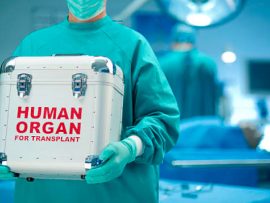
Abstract OBJECTIVES: To describe the clinical characteristics and organ donation rate of patients supported by extracorporeal membrane oxygenation (ECMO) at the time of death. DESIGN: Retrospective observational study. Pearson chi-square..
Read More
Abstract Objectives To determine in patients with acute respiratory distress syndrome (ARDS) on venovenous extracorporeal membrane oxygenation (VV ECMO) whether reducing driving pressure (ΔP) would decrease plasma biomarkers of inflammation..
Read More
Abstract The recirculation of venovenous extracorporeal membrane oxygenation (VV-ECMO) will decrease the efficiency of respiratory support. We report a patient with refractory severe acute respiratory distress syndrome (ARDS). Even with..
Read More
Abstract Background Patients who receive extracorporeal membrane oxygenation (ECMO) support require substantial transfusions. Red blood cell (RBC) and platelet (PLT) transfusions have been reported to be associated with adverse outcomes..
Read More
Abstract Objective There is a paucity of sex-specific data on patients’ postcardiotomy venoarterial extracorporeal membrane oxygenation (VA-ECMO). The present study sought to assess this issue in a multicenter study. Design..
Read More
Abstract The Extracorporeal Life Support Organisation (ELSO) recommends initiating veno-venous extracorporeal membrane oxygenation (ECMO) with sweep gas flow rate (V˙sweep) of 2 L/min and extracorporeal circuit blood flow (Q˙ec) of 2 L/min...
Read More
Abstract Rational. Long-term outcomes of patients with COVID-19-related acute respiratory distress syndrome (ARDS) treated with extracorporeal membrane oxygenation (ECMO) are unknown. Methods. Multicenter, prospective study in patients who received ECMO..
Read More
Abstract Introduction: Use of the ProtekDuo cannula has been described for right ventricular assist devices (RVADs) and extracorporeal membrane oxygenation (ECMO) systems. Case report: We describe remote cannulation and transport of two..
Read More
Abstract We describe the development, implementation, and outcomes of an intensivist-led adult extracorporeal life support (ECLS) program using intensivists both to perform venovenous (V-V), venoarterial (V-A), and extracorporeal cardiopulmonary resuscitation..
Read More
Abstract Introduction Respiratory extracorporeal membrane oxygenation (ECMO) is well established and its popularity has increased during coronavirus disease 2019 (COVID-19) time. The efficacy of ECMO has been proved in refractory..
Read More
Abstract OBJECTIVES: Prone positioning and venovenous extracorporeal membrane oxygenation (ECMO) are both useful interventions in acute respiratory distress syndrome (ARDS). Combining the two therapies is feasible and safe, but the..
Read More
Abstract Aim To elucidate the effectiveness of extracorporeal membrane oxygenation (ECMO) in accidental hypothermia (AH) patients with and without cardiac arrest (CA), including details of complications. Methods This study was..
Read More
Abstract Refractory hypoxemia during support on venovenous (VV) extracorporeal membrane oxygenation (ECMO) is a challenging clinical problem. Manipulating ventilator settings, prone positioning, optimizing cannula position, and ECMO flows, and the..
Read More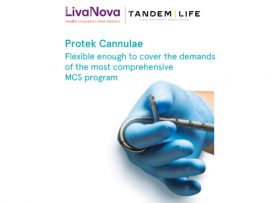
Abstract Objective: Assessment of the results of the ProtekDuo cannula applied for dedicated right ventricular support with oxygenator in ARDS secondary to COVID-19. Methods: Systematic literature search in NHS library,..
Read More
Abstract Background: Ultra‑lung‑protective ventilation may be useful during veno‑venous extracorporeal membraneoxygenation (vv‑ECMO) for severe acute respiratory distress syndrome (ARDS) to minimize ventilator‑induced lunginjury and to facilitate lung recovery. The objective..
Read More
Abstract Despite being vital in treating intensive-care patients with lung failure, especially COVID-19 patients, Veno-Venous Extra-Corporeal Membrane Oxygenation does not exploit its full potential, leaving ample room for improvement. The..
Read More