
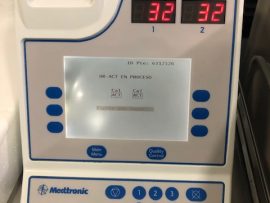

Abstract Objectives Antiphospholipid syndrome (APS) is an autoimmune prothrombotic disorder that complicates anticoagulation during cardiovascular surgery requiring cardiopulmonary bypass (CPB). This systematic review aimed to characterize the anticoagulation monitoring strategies..
Read More
Abstract The antiphospholipid syndrome (APS) is a complex autoimmune disease that causes a state of hypercoagulability that can result in recurrent venous and arterial thromboses. APS may lead to cardiac..
Read More
Abstract Background Antiphospholipid syndrome (APS) is an autoimmune prothrombotic disorder that is frequently associated with systemic lupus erythematosus (SLE). Cardiac surgery in patients with APS presents unique challenges because activated..
Read More
Abstract The antiphospholipid syndrome (APS), a systemic autoimmune disease characterized by a hypercoagulability associated to vascular thrombosis and/or obstetric morbidity, is caused by the presence of antiphospholipid antibodies such as..
Read More
Abstract Antiphospholipid syndrome (APS) is an acquired autoimmune condition characterized by the presence of antiphospholipid antibodies (lupus anticoagulant, anticardiolipin antibody, and anti-β2 glycoprotein-I antibody) which leads to clinical thrombosis via a..
Read More
Abstract Antiphospholipid syndrome is an antiphospholipid antibody-mediated prothrombotic state leading to arterial and venous thrombosis. This condition alters routine in-vitro coagulation tests, making results unreliable. Antiphospholipid syndrome patients requiring cardiac..
Read More
Abstract Antiphospholipid Syndrome (APS) is an immunologic disorder that causes a state of hypercoagulability that can result in recurrent venous and arterial thromboses. Patients who experience APS may develop cardiac..
Read More