
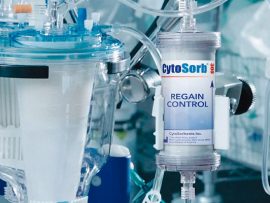

The following case study reports on a 13-year-old pediatric patient (body weight 45 kg) who was admitted to our hospital due to a deterioration in his clinical condition, after he had developed hepatitis as well as viral dilated cardiomyopathy (VDCM) with ventricular dysfunction, for which he had already been admitted..
Read More
Abstract This review wants to give an overview to most of the controversial fields in the clinical therapeutic assistance in neonatal and pediatric general and cardiothoracic surgery in anaesthesia and pre or post-operative Intensive Care Unit Treatments. This is a report of the protocols and studies, published or still on..
Read More
Abstract This is a review of the University of Michigan experience with extracorporeal life support (ECLS) also known as extracorporeal membrane oxygenation (ECMO). Two thousand patients were managed with ECMO from 1973 to 2010. The first 1,000 patients were reported previously. Of the 2,000 patients, 74% were weaned from ECLS,..
Read More
Abstract Objective: Intra-operative cell salvage (CS) was reported to be ineffective, safe and not cost-effective in low-bleeding-risk cardiac surgery with cardiopulmonary bypass (CPB), but studies in high-bleeding-risk cardiac surgery are limited. The objective of this study is to evaluate the efficacy, safety and cost-effectiveness of intra-operative CS in high-bleeding-risk cardiac surgery..
Read More
Abstract The prediction of bleeding risk in cardiopulmonary bypass (CPB) patients plays a vital role in their postoperative management. Therefore, an artificial neural network (ANN) to analyze intra-operative laboratory data to predict postoperative bleeding was set up. The JustNN software (Neural Planner Software, Cheshire, England) was used. This ANN was..
Read More
Abstract Introduction: We have been developing a closed-circuit cardiopulmonary bypass (CPB) system (“Dihead CPB”) for application during coronary artery bypass grafting (CABG) and valve surgery. To strive for minimal hemolysis during Dihead CPB, we compared the hemolysis caused by three different suction systems and performed a clinical study with the..
Read More
Abstract Aim: The ECMO (extracorporeal membrane oxygenation) Program at the American University of Beirut Medical Center was established in November 2015 as the first program serving adult and pediatric population in a low-resource setting. The aim of the study is to describe the challenges faced during the establishment of the..
Read More
Abstract Mechanical support devices have revolutionized the management of circulatory failure. This has been met by a dramatic increase in ventricular assist device (VAD) utilization in children over the last two decades. Previous wide gaps in experience and knowledge have significantly narrowed in the recent years. As we continue to..
Read More
Abstract OBJECTIVES: The upcoming release of aprotinin in paediatric cardiac surgery prompted a re-evaluation of its use in comparison to tranexamic acid (TXA) focusing on their effect on exposure to blood transfusions as well as severe postoperative morbidity or mortality. METHODS: This retrospective study was conducted in a tertiary children..
Read More
Abstract Introduction: We have been developing a closed-circuit cardiopulmonary bypass (CPB) system (“Dihead CPB”) for application during coronary artery bypass grafting (CABG) and valve surgery. To strive for minimal hemolysis during Dihead CPB, we compared the hemolysis caused by three different suction systems and performed a clinical study with the..
Read More