


Abstract Background Elevated arterial–central venous carbon dioxide partial pressure difference (AVCO2) may be an important marker to predict tissue and organ hypoperfusion in adults. We analyzed the hemodynamic data of infants with congenital heart disease who underwent corrective repair with cardiopulmonary bypass (CPB) to identify whether AVCO2 has clinical significance in..
Read More
Abstract The impact of cervical cannulation on neurologic outcome has not been yet studied among children receiving venoarterial extracorporeal membrane oxygenation (VA-ECMO) in the context of severe sepsis or septic shock. A retrospective cohort study was performed using the extracorporeal life support organization (ELSO) registry. A total of 559 children..
Read More
Abstract Extracorporeal membrane oxygenation (ECMO) may be a life-saving procedure for patients with severe reversible pulmonary or cardiac failure or for patients in need for a bridge to transplantation. ECMO is provided by specialized centers, but patients in need of ECMO are frequently taken care of at other centers. Conventional..
Read More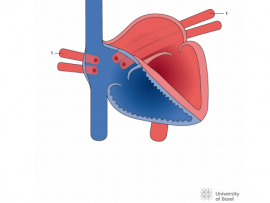
Total anomalous pulmonary venous return (TAPVR) is a rare congenital malformation in which all four pulmonary veins do not connect normally to the left atrium. Instead the four pulmonary veins drain abnormally to the right atrium (right upper chamber) by way of an abnormal (anomalous) connection.
Read More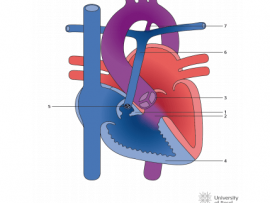
with is a more severe form of TOF, a type of heart defect. It’s a congenital condition, which means it’s something a baby is born with. Babies who have TOF with pulmonary atresia have five heart abnormalities: (VSD) Overriding aorta: This means the aorta is moved toward the right side of heart,..
Read More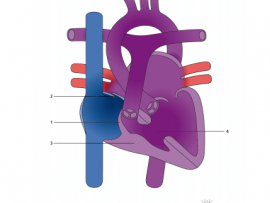
The normal pumping chambers of the heart (the ventricles) must have an inflow valve to let blood in, a good-sized pumping chamber and an outflow to allow blood to exit the chamber during contraction. In tricuspid atresia, the tricuspid valve, which lies between the heart’s upper right chamber (the right atrium) and lower right..
Read More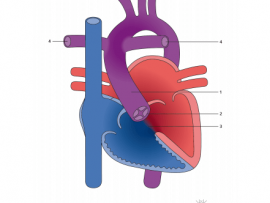
In patients with a TAC only one vessel originates from the heart chambers. Generally the common vessel (truncus) overrides a ventricular septal defect. Depending on the origin of the pulmonary artery, different types are distinguished in the Van Praagh classification (A1-A4; B, without VSD, is rare): type A1-2 (most common..
Read More
Abstract Cardioplegia is used to induce cardiac arrest in order to facilitate cardiac surgery in patients supported by cardiopulmonary bypass. It is administered directly into the coronary vessels after the heart has been isolated from the systemic circulation. We describe the case of a 9-year-old boy who mistakenly received 1..
Read More
Abstract Background: Due to the substantial improvement in survival among pediatric patients undergoing congenital heart surgery, reducing early and long-term morbidity is becoming the major focus of care. Blood transfusion is associated with worse postoperative outcomes after cardiac surgery. Acute normovolemic hemodilution (ANH) is a blood conservation strategy that aims to..
Read More
Abstract Systemic hypertension (HTN) is a recognized complication of veno-venous (VV) extracorporeal membrane oxygenation (ECMO) in children. We sought to determine the prevalence and associated features of HTN in a retrospective cohort of children (>1 year old) supported with VV ECMO from January 2015 to July 2019 at our institution...
Read More