

This case reports on a 14-year-old previously healthy girl who was referred to the Pediatric Intensive Care Unit (PICU) with a suspicion of multisystem inflammatory syndrome in children (MIS-C) and cardiac dysfunction. [pdf-embedder url="https://perfusfind.com/wp-content/uploads/2021/07/CoW_27_2021_E_web_compressed.pdf"]
Read More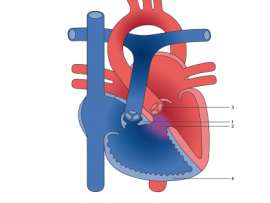
Tetralogy of Fallot (TOF) is a cardiac anomaly that refers to a combination of four related heart defects that commonly occur together. The four defects are: − a hole between the right and left pumping chambers of the heart Overriding aorta − the aortic valve is enlarged and appears to arise from both..
Read More
Abstract We report a successful pediatric bridge to transplant following application of the ProTekDuo Cannula to provide right ventricular support in a 12-year-old child with biventricular cardiomyopathy and on left ventricular assist device support. We are unaware of any other reports of pediatric use of this device in the medical..
Read More
Abstract OBJECTIVES: To compare current practices within the United States of anticoagulation management and blood transfusion in neonatal and pediatric extracorporeal membrane oxygenation patients with a 2013 international report. DESIGN: Cross-sectional survey distributed between August and December 2019. SETTING: Extracorporeal Life Support Organization–registered neonatal and pediatric extracorporeal membrane oxygenation centers..
Read More
Summary There are no data evaluating the microbiome in congenital heart disease following cardiopulmonary bypass. The authors evaluated patients with congenital heart disease undergoing cardiopulmonary bypass and noncardiac patients undergoing surgery without bypass. Patients with congenital heart disease had differences in baseline microbiome compared with control subjects, and this was..
Read More
Abstract OBJECTIVES: During the early postoperative period, children with congenital heart disease can suffer from inadequate cerebral perfusion, with possible long-term neurocognitive consequences. Cerebral tissue oxygen saturation can be monitored noninvasively with near-infrared spectroscopy. In this prospective study, we hypothesized that reduced cerebral tissue oxygen saturation and increased intensity and..
Read More
Abstract Here, we report the case of a 55 year old male patient without significant preexisting cardiovascular disease who received a deceased donor liver transplant. Intraoperatively, the patient developed cardiogenic shock secondary to stress-induced cardiomyopathy or Takotsubo syndrome (TTS), which was refractory to high-dose vasoactive, inotropic medical therapy. The patient..
Read More
Abstract Background Amongst children with congenital heart disease (CHD), earlier age of repair improves cardiovascular outcomes. The effects of early intervention on neurodevelopment remains unclear. We assessed the association between early life repair, cardiopulmonary bypass (CPB) and the incidence of neurocognitive disorders (NCD) amongst CHD patients. Methods We created two..
Read More
Abstract Bleeding in the perioperative period of congenital heart surgery with cardiopulmonary bypass is associated with increased morbidity and mortality both from the direct effects of haemorrhage as well as the therapies deployed to restore haemostasis. Perioperative bleeding is complex and multifactorial with both patient and procedural contributions. Moreover, neonates..
Read More
Abstract We retrospectively compared anticoagulation with heparin and bivalirudin for 32 consecutive children under 18 years old during extracorporeal membrane oxygenation (ECMO) in our pediatric cardiac intensive care unit (PCICU). Between September 2015 and January 2018, 14 patients received heparin, 13 venoarterial (VA), and 1 venovenous (VV). From February 2018 to September..
Read More