


Abstract Background On-pump coronary artery bypass grafting (CABG) triggers inflammatory responses as a result of surgical stress and extracorporeal circulation, which affect platelet and leukocyte activation while enhancing their intimate..
Read More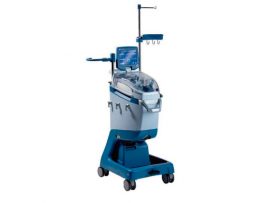
Abstract Background Congenital heart disease is the most common neonatal congenital condition. Surgery is often necessary. Patients with congenital heart disease are potentially exposed to red cell transfusion preoperatively, intraoperatively..
Read More
Abstract There is no consensus on the ideal sweep gas flow volume for achieving targeted blood partial gas pressures during cardiopulmonary bypass (CPB). The sweep gas flow rate is one..
Read More
Abstract Penetrating cardiac injury in children is a life-threatening emergency. The initial reaction of the witness and medical team management plays a crucial role in survival. We are reporting a..
Read More
Abstract Background: Ascorbic acid is a strong antioxidant that prevents postoperative delirium by inhibiting reactive oxygen species production. This pilot study was designed to investigate the prevalence of postoperative delirium among..
Read More
Abstract Background: The sustained renal effects of exposure to cardiopulmonary bypass are unknown. This study aimed to test whether cardiopulmonary bypass (CPB) is associated with sustained renal tissue hypoxia and..
Read More
Abstract Introduction Biostatistics is an increasing focus in both the United States Medical Licensing exams (USMLE) and medical school curricula. Nonetheless, literature has documented that it is poorly understood among..
Read More
Abstract Objective Hemolysis is a complication in surgical procedures requiring cardiopulmonary bypass (CPB). The primary aim of this study was to evaluate the effectiveness of the point-of-care device Hemcheck Helge..
Read More
Abstract Background Although goal-directed perfusion (GDP) during cardiopulmonary bypass (CPB) has been discussed extensively in adult studies, no pediatric indexed oxygen delivery (Do2i) thresholds are universally accepted, and no pediatric..
Read More
Abstract Background Continuous blood gas monitoring (CBGM) during cardiopulmonary bypass (CPB) is essential for maintaining optimal patient outcomes, enabling rapid responses to critical fluctuations in blood gas parameters. This non-inferiority..
Read More
Abstract Background We evaluated outcomes of neonatal cardiac surgery at hospitals affiliated with the European Congenital Heart Surgeons Association (ECHSA). Methods All patients ≤30 days of life undergoing a cardiac..
Read More
Abstract Aim Feeling valued is a striking mitigator of burnout yet how to facilitate healthcare workers (HCWs) feeling valued has not been adequately studied. This study discovered factors relating to HCWs..
Read More
Abstract Importance Excessive bleeding is a common and prognostically important complication of cardiac surgery. For bleeding related to coagulation factor deficiency, frozen plasma is the most used therapy. Preliminary trials indicate..
Read More
Abstract Background: Although technology is rapidly advancing in immersive virtual reality (VR) simulation, there is a paucity of literature to guide its implementation into health professions education, and there are..
Read More
Abstract Nosocomial infections are one of the most frequent complications of extracorporeal membrane oxygenation (ECMO) and are associated with increased mortality (). Bloodstream infections present a particular problem because of..
Read More
Abstract Surgical handover remains a high-risk process with no gold standard for practice despite 20 years of available guidance. Variability in practice is common, and poorly performed handover poses significant,..
Read More
Abstract Heart tumours are a diverse group of tumours that may present with symptoms or be discovered incidentally when a patient is being evaluated for a physical or seemingly unrelated..
Read More
Abstract Objective(s) This study was designed to assess the relative association between adjunctive fresh frozen plasma (FFP) or adjunctive cryoprecipitate and morbidity and mortality in cardiac surgery patients receiving platelets..
Read More
Introduction Myocardial protection during cardiac surgery is a critical determinant of patient outcomes. Traditional cardioplegia techniques primarily aim to arrest the heart, reduce metabolic demand, and preserve myocardial viability (Buckberg,..
Read More
Introduction: Cardiopulmonary bypass, a cornerstone of modern cardiac surgery, temporarily diverts blood away from the heart and lungs, allowing for surgical intervention in a controlled environment. During CPB, blood is..
Read More
Introduction Cardiopulmonary bypass (CPB) is essential for modern cardiac surgery, allowing complex repairs and reconstructions by diverting blood away from the heart and lungs. However, during this process, the heart's..
Read More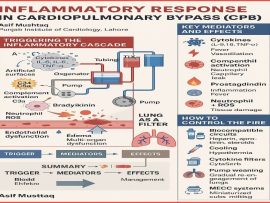
Abstract: Cardiopulmonary bypass (CPB) induces a multifactorial systemic inflammatory response that significantly contributes to postoperative complications such as acute lung injury, renal dysfunction, and increased morbidity. This response is initiated..
Read More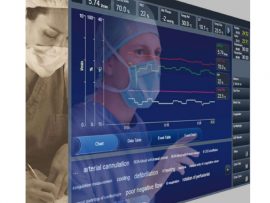
Introduction Cardiopulmonary bypass (CPB) has revolutionized cardiac surgery by temporarily taking over the function of the heart and lungs during complex procedures. Central to this technique is the management of..
Read More
Introduction Cardiopulmonary bypass (CPB) plays a pivotal role in modern cardiac surgery by temporarily assuming the functions of the heart and lungs during complex procedures. However, despite its life-saving capabilities,..
Read More
Introduction: Cardiac surgery is among the most delicate and high-risk procedures in modern medicine, and the use of cardiopulmonary bypass (CPB) is central to its success. In this complex setting,..
Read More
Introduction Cardiopulmonary bypass (CPB) is a cornerstone of modern cardiac surgery, facilitating complex intracardiac procedures by temporarily assuming the function of the heart and lungs. One of the most critical..
Read More
Abstract Background The objective of this study was to evaluate mean cerebral blood flow velocity, gaseous microemboli (GME) counts, regional cerebral oxygen saturation (rSO2), and clinical outcomes using multimodality neuromonitoring..
Read More
Abstract Predictive scoring systems for adult patients receiving extracorporeal membrane oxygenation (ECMO) support for sepsis have not been yet reported. Based on the Chinese Society of ExtraCorporeal Life Support (CSECLS)..
Read More
Abstract Every year, more and more adults and children with severe cardiac and/or respiratory failure require connection to extracorporeal circulation (ECC). Despite a life-saving role in emergency settings, the use..
Read More
Abstract BACKGROUND: A preservation system, the Organ Care System (OCS; TransMedics) uses normothermic pulsatile perfusion during organ transport for heart transplantation. This system has demonstrated favorable outcomes in hearts recovered..
Read More