


Abstract Background Readiness for venoarterial-extracorporeal membrane oxygenation (VA-ECMO) decannulation after extracorporeal cardiopulmonary resuscitation (ECPR) for out-of-hospital cardiac arrest (OHCA) remains poorly defined. Objectives The objective of the study was to..
Read More
Abstract Background There is limited clinical data to guide surgical decisions for ACC with extensive carinal involvement in the left main bronchus. In this case, it is shown that median..
Read More
Abstract Background Determination of brain death/death by neurologic criteria (BD/DNC) in patients supported with extracorporeal membrane oxygenation (ECMO) is particularly challenging due to extracorporeal carbon dioxide clearance, which may interfere..
Read More
Abstract Left ventricular (LV) overload is a recognized complication of venoarterial extracorporeal membrane oxygenation (VA-ECMO), but pediatric decompression remains technically challenging and poorly standardized. The atrial flow regulator (AFR) (Occlutech) is..
Read More
Abstract Topic Importance Extracorporeal membrane oxygenation (ECMO) is a relatively novel, intensive medical intervention. It is known to raise important yet unsettled ethical concerns. Overview We established the ECMO Ethics..
Read More
Abstract Background Deep hypothermic circulatory arrest (DHCA) is widely used in proximal thoracic aortic surgery; however, its association with subclinical cerebral ischemic changes remains poorly understood. Diffusion-weighted magnetic resonance imaging..
Read More
Abstract Purpose: Recirculation is a critical issue in veno-venous extracorporeal membrane oxygenation (VV ECMO). We propose a novel method for estimating the recirculation ratio using temporary sweep-gas control. Methods: A circuit simulating..
Read More
Hemolysis in ECMO: More Than Just a Laboratory Finding Hemolysis remains one of the most challenging complications during ECMO support, impacting patient outcomes, circuit performance, and multidisciplinary decision-making. Understanding..
Read More
Hayatı Geri Getirmek Bir Ekip İşidir Her yıl milyonlarca insan ani kardiyak arrest, ağır travma, şok ve kritik hastalık nedeniyle yaşam mücadelesi veriyor. Bugün biliyoruz ki başarılı resüsitasyon; tek bir..
Read More
Abstract Artificial intelligence (AI), predictive analytics, and digital health technologies are progressively reshaping extracorporeal circulation and perioperative cardiovascular care. In this evolving landscape, cardiopulmonary bypass management is transitioning from a..
Read More
Abstract Recirculation reduces the efficiency of venovenous extracorporeal membrane oxygenation (V-V ECMO), but patient-specific determinants of recirculation and the feasibility of recirculation-guided flow adjustment are not well defined. In this..
Read More
Abstract Unfractionated heparin (UFH) has long been an anticoagulant of choice. Despite the increasing use of low molecular weight heparin derivatives and more recently direct oral anticoagulants, UFH is still..
Read More
Abstract In children, validated tools to monitor anaesthetic depth are lacking. In routine practice, dosing of volatile agents relies on surrogate markers such as minimum alveolar concentration and autonomic responses. In..
Read More
Abstract Background Frozen plasma (FP) is the standard haemostatic therapy after cardiopulmonary bypass, but recent trials indicate that FP is inferior to four-factor prothrombin complex concentrate (PCC). Citrate content may..
Read More
Abstract Multimodal neurologic prognostication (MM-NP) after cardiac arrest has been shown to enhance prognostic accuracy, however, it is vastly underutilized in real-world settings. Guideline-discordant practices and healthcare disparities in post-cardiac..
Read More
Abstract Objectives Coronary artery bypass grafting shows impaired outcomes in women compared to men. Investigation of sex-related outcome differences mostly comprises different operative strategies, potentially hampering interpretation of data. We..
Read More
Abstract Background Neonates with enterovirus myocarditis may require extracorporeal membrane oxygenation (ECMO). The contemporary prognosis and risk factors for mortality of neonates with enterovirus myocarditis supported on ECMO is unknown...
Read More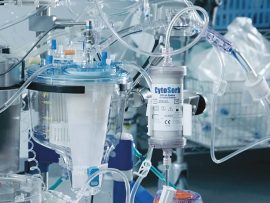
Abstract Cardiopulmonary bypass (CPB) induces inflammation partly via leukocyte activation. We conducted a first-in-human pilot study assessing the feasibility and perioperative safety of a novel activated leukocyte adsorption device during..
Read More
Abstract Background Primary graft dysfunction (PGD) remains the leading cause of early morbidity and mortality after heart transplantation. Despite consensus definitions, clinicians still rely on subjective, indirect assessments of graft..
Read More
Abstract Background Pediatric patients undergoing cardiac surgery are at risk for developing positive cumulative fluid balance (CFB). Our goal was to study postoperative CFB in this population, its explanatory variables,..
Read More
Abstract Venoarterial extracorporeal membrane oxygenation (VA-ECMO) is increasingly used for providing adequate organ support in cardiogenic shock. While the intervention provides circulatory and respiratory support in the critical stage, it..
Read More
Abstract Objective Severe anaphylaxis is a rare but life-threatening condition that may require extracorporeal life support (ECLS). A systematic review was conducted to evaluate the outcomes of patients receiving ECLS..
Read More
Abstract Objectives Core temperature is routinely used to guide hypothermic circulatory arrest (HCA) for acute type A aortic dissection (ATAAD). However, it remains unclear whether impaired carotid artery flow alters..
Read More
Abstract BACKGROUND: Acute normovolemic hemodilution (ANH) is endorsed by contemporary patient blood management guidelines as a cost-effective strategy for reducing allogeneic transfusion in cardiac surgery. However, evidence remains inconsistent due..
Read More
Abstract Background This study aimed to evaluate in-hospital mortality and to identify predictors of mortality in coronary artery bypass grafting (CABG) patients receiving veno-arterial extracorporeal membrane oxygenation (VA-ECMO) support. Methods..
Read More
Abstract Background Use of extracorporeal membrane oxygenation (ECMO) for cardiorespiratory failure has increased substantially. While long-term outcomes for psychological health are increasingly assessed and addressed in critical care survivorship research,..
Read More
Abstract Background: The clinical benefits of pulsatile perfusion during cardiopulmonary bypass (CPB) remain a subject of debate. This study aimed to compare clinical outcomes between pulsatile and non-pulsatile perfusion during..
Read More
Abstract Objectives To determine whether individualized heparin dosing guided by a heparin dose-response (HDR) curve is noninferior to conventional weight-based dosing in achieving target activated clotting time (ACT) of ≥480..
Read More
Abstract Background Extracorporeal membrane oxygenation (ECMO) is a critical life-support intervention for patients with severe respiratory and circulatory failure. Nevertheless, identifying the optimal timing of ECMO initiation and its correlation..
Read More
Abstract The expanding use of extracorporeal cardiopulmonary resuscitation (ECPR) has introduced new clinical scenarios at the intersection of extracorporeal life support and organ donation. Current donor classification systems do not..
Read More