


Abstract This case report describes a pediatric cardiac surgery in which electrocardiographic (ECG) changes appeared immediately after the initiation of cardiopulmonary bypass (CPB), followed by severe bradycardia and ultimately flaccid..
Read More
Abstract Background Subclavian or axillary artery cannulation for venoarterial extracorporeal membrane oxygenation (VA-ECMO) provides a valuable alternative to femoral access; however, a comprehensive overview of such an approach in this..
Read More
Abstract Background Blood oxygen content and management during cardiopulmonary bypass (CPB), particularly during reperfusion phase after cross-clamping related ischemia, may influence systemic oxygen utilization, oxidative stress, and organ ischemia/reperfusion injury...
Read More
Abstract Purpose This study aimed to systematically search, evaluate, and synthesize the latest evidence on the prevention and management of nosocomial infections in patients supported by extracorporeal membrane oxygenation. Methods..
Read More
Abstract Background Optimal anatomical sites for temperature monitoring that most closely correlates with cerebral temperature remain debated in cardiac surgery, particularly during cardiopulmonary bypass (CPB) with deep hypothermic circulatory arrest..
Read More
Abstract Patients with fulminant myocarditis accompanied by severe hemodynamic deterioration, cardiogenic shock, or refractory arrhythmias often require venoarterial extracorporeal membrane oxygenation (VA-ECMO) treatment. When left ventricular (LV) dilation, elevated LV..
Read More
Abstract Purpose of review The present review addresses the underlying biology of acute respiratory distress syndrome (ARDS) while recognizing that extracorporeal membrane oxygenation (ECMO) is an increasingly employed technology in..
Read More
Abstract Background Extracorporeal membrane oxygenation (ECMO) is a technology that provides temporary life support to critically ill patients with heart and/or lung failure. However, the complexity of the care involved..
Read More
Abstract Background Cardiac surgery patients with severe preoperative left ventricular (LV) dysfunction are at high risk for poor postoperative outcomes including prolonged ventilation, renal failure and post-cardiotomy cardiogenic shock (PCCS)...
Read More
Abstract Background Retrograde autologous priming and venous antegrade priming replace the cardiopulmonary bypass circuit crystalloid with patient blood to mitigate hemodilution. However, their effectiveness in pediatric patients, particularly when analyzed..
Read More
Abstract This study aimed to investigate the heterogeneity of treatment effect for intra-aortic balloon pump (IABP) across various lactate trajectories in patients with acute myocardial infarction-related cardiogenic shock (AMICS) supported..
Read More
Abstract OBJECTIVE Extracorporeal membrane oxygenation (ECMO) is a vital support for pediatric patients with severe cardiac or pulmonary failure. However, post-decannulation complications, particularly involving carotid artery ligation (CAL) or carotid..
Read More
Abstract Background/Objectives: Postoperative body temperature abnormalities are common yet underrecognized, and their association with acute kidney injury (AKI) remains unclear. In this study, we aimed to identify early postoperative temperature..
Read More
Abstract Background Pericardiectomy is a definitive treatment for constrictive pericarditis. However, the extent of resection and cardiopulmonary bypass (CPB) use remain debated. We therefore compared hemodynamic changes, complications, long-term survival,..
Read More
Abstract Limb ischemia is the most common vascular complication in patients receiving femoral venoarterial extracorporeal membrane oxygenation (VA-ECMO) and is associated with an increased risk of mortality., To improve blood flow..
Read More
Abstract Background Chronic obstructive pulmonary disease (COPD) is the most prevalent chronic end stage lung disease. There are few long-term treatment options for end stage COPD due to donor lung..
Read More
Abstract Introduction Gastrointestinal (GI) complications following cardiac surgery involving cardiopulmonary bypass are rare but life threatening. Despite GI complications having implications for nutrition delivery, nutrition support practices in this population..
Read More
Abstract Introduction: Weaning from venoarterial extracorporeal membrane oxygenation (VA ECMO) remains a major challenge because reliable indicators of cardiac recovery are lacking. Arterial pulse pressure (PP), a simple and continuously measured..
Read More
Abstract Weaning from mechanical ventilation after cardiac surgery is a dynamic, multifaceted process that extends beyond respiratory function alone. While most patients experience timely extubation, others face delayed or failed..
Read More
Abstract Objectives To synthesise the existing literature on nursing management in the care of ECMO-supported patients, with a focus on: (1) the competencies required for ECMO nursing care, (2) the..
Read More
Abstract When critical illness is further complicated by severe respiratory failure, such as in cases of acute respiratory distress syndrome (ARDS) requiring veno-venous extracorporeal membrane oxygenation (VV-ECMO), patients may be..
Read More
Prolonged Systemic Inflammatory Response Syndrome Predicts Atrial Fibrillation After Cardiac Surgery
Abstract Objectives Cardiac surgery and the use of cardiopulmonary bypass (CPB) lead to short-lasting postoperative inflammatory response and some patients fail to adapt to the stress leading to a prolonged..
Read More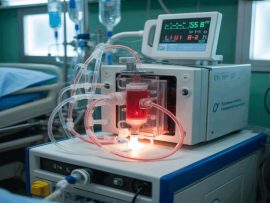
Abstract Extracorporeal life support (ECLS) technology has witnessed remarkable advancements during the last decades. However, further research and development of devices are required to increase, for example, performance-efficiency, hemocompatibility, and..
Read More
Abstract This retrospective single-center study evaluated adults with cardiogenic shock supported with veno-arterial extracorporeal membrane oxygenation (VA ECMO) from 2011 to 2023 to identify predictors of in-hospital mortality among those..
Read More
Abstract Background: Acute kidney injury (AKI) is a critical complication, affecting up to 30% of coronary artery bypass grafting (CABG) patients, and contributing to significant morbidity and mortality. Recent studies indicate..
Read More
Abstract Background Intraoperative cell salvage (CS) reduces allogeneic transfusion in cardiac surgery but depletes coagulation factors, potentially causing dose-dependent coagulopathy. Although mechanistic studies suggest hemostatic impairment at higher volumes, nearly..
Read More
Abstract While cardiogenic shock (CS) is classically defined by primary cardiac dysfunction leading to impaired macrocirculatory variables—such as hypotension, reduced cardiac output (CO), and diminished left ventricular ejection fraction—growing evidence..
Read More
Abstract Objectives Acute kidney injury (AKI) is a common complication following cardiac surgery with cardiopulmonary bypass (CPB). This study investigated whether cell-free hemoglobin (CFHb) levels after CPB are associated with..
Read More
Abstract Rationale In acute respiratory distress syndrome (ARDS), extracorporeal membrane oxygenation (ECMO) without invasive mechanical ventilation (IMV) is particularly challenging. Objectives To study ARDS patients treated with ECMO to avoid..
Read More
Abstract Background and Objectives: Extracorporeal membrane oxygenation (ECMO) provides temporary respiratory or circulatory support when conventional therapies fail. Some patients do not recover and are not candidates for transplant or..
Read More