


Abstract We report the case of a 5-year-old boy who suffered from an intracardiac air influx with suspected cerebral air embolism during the Fontan procedure. We immediately transformed the cardiopulmonary..
Read More
Abstract Objective Right axillary artery is currently recommended for arterial cannulation in surgery for acute type A aortic dissection. However, the feasibility of cannulation on a dissected right axillary artery..
Read More
Patient with dialysis and aortic valve bacterial endocarditis and fistula between ascending aorta and RV and block undergone AVR fistula closure and good course. [playlist ids="36620"] Dr.Sam Zeraatian Nejad..
Read More
he patient was a two-day-old, 3.6 kilogram neonate who was diagnosed prenatally with aortic coarctation. After birth, a prostaglandins infusion was initiated, and a transthoracic echocardiogram showed critical aortic coarctation..
Read More
Patient with abnormal bacterial endocarditis in coronary sinus due to RA catheter for dialysis undergone beating repair with CS reconstruction with autologous pericardial patch weaned from CPB uneventfully. [audio ogg="https://perfusfind.com/wp-content/uploads/2022/11/Bacterial-endocarditis-in-coronary-sinus.ogg"][/audio]..
Read More
Abstract The SynCardia temporary total artificial heart (TAH-t) is a pneumatically driven pulsatile device that replaces a patient’s ventricles and all four valves. It is now available in two sizes..
Read More
Abstract Background: Veno-arterial extracorporeal membrane oxygenation (VA-ECMO) is increasingly being used for circulatory support in cardiogenic shock patients, although the evidence supporting its use in this context remains insufficient. The aim..
Read More
Abstract Background: Post-cardiotomy vasoplegia syndrome (VS) is often linked to an exaggerated inflammatory response to cardiopulmonary bypass (CPB). At the same time, the prognostic role of platelet-leucocyte indices (PLIs) and leucocyte..
Read More
Day 1 - An Exploration of New Technologies for Perfusion, and Returning to Perfusion Joe Basha, CCP and guest discusses the challenges and rewards of returning to clinical perfusion..
Read More
Patient with congenital anomaly of LA and parachute mitral syndrome came with CVA and LA clot filled LA undergone MVR myxoma removal and and LAA closure and LA size reduction..
Read More
Abstract Vasoplegic syndrome (VS) is a common complication following cardiovascular surgery with cardiopulmonary bypass (CPB), and its incidence varies from 5 to 44%. It is defined as a distributive form..
Read More
Abstract Venovenous extracorporeal membrane oxygenation (ECMO) is recommended in adult patients with refractory acute respiratory failure (ARF), but there is limited evidence for its use in patients with less severe..
Read More
Abstract Background Neurologic complications can occur during neonatal Veno-Venous (VV) ECMO. The addition of a cephalad drainage cannula (i.e., VVDL+V) to dual lumen cannulation (i.e., VVDL) has been advocated to..
Read More
Patient with Ascending aorta aneurysm and IMH 90 years old undergone classic florida operation with sinus preservation technique Zeraatiannejaddavani intra operative TEE confirmed no any evidence of AI neither ostial..
Read More
Patient with pulmonary trunc aneurysm and impingement in left main bronchus patient was one variant of TF undergone total correction via left antrolateral thoracotomy and florida for pulmonary trunc. ..
Read More
This case report shows how to perform simultaneously an open surgical correction of an aortic root aneurysm and aortic stenosis by interposition of an aortic composite graft and the transdiaphragmatic..
Read More
Patient with previous CABG and just patent graft LIMA to LAD with occlusion of other SVG grafts undergone posterolateral thoracotomy off pump ! And graft to descending thoracic aorta by..
Read More
Abstract Background: Cor Triatriatum Sinister (CTS) is a rare congenital anomaly with an estimated incidence of 0.4%, resulting from abnormal left atrial septation. It may present in isolation or in association..
Read More
Abstract Background Extracorporeal membrane oxygenation (ECMO) has salvaged many people's life during global pandemics. However, ECMO is associated with a high incidence of hemostatic complications. This study aims to explore..
Read More
Abstract Reoperative valve surgery is being performed with increasing frequency in the last decades. This is mainly due to the increasing use of bioprosthetic valves, a growing population of patients..
Read More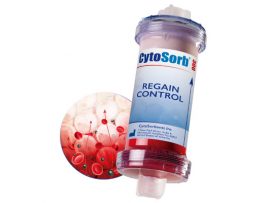
This report describes the case of a 73-year-old male patient (known pre-existing conditions: bilateral peripheral vascular disease grade 2b, hypercholesterolemia with long-term simvastatin medication) who was admitted to the Emergency..
Read More
Abstract PRINCETON, N.J., Nov. 2, 2022 /PRNewswire/ -- CytoSorbents Corporation (NASDAQ: ), a leader in the treatment of life-threatening conditions in the intensive care unit and cardiac surgery using its CytoSorb® blood purification technology,..
Read More
Abstract The primary objective was to investigate the association between partial pressure of carbon dioxide (PaCO2) change after extracorporeal membrane oxygenation (ECMO) initiation and neurologic outcome in neonates treated for respiratory..
Read More
Abstract Background: Survival rates in refractory out-of-hospital cardiac arrest (OHCA) remain low with conventional advanced cardiac life support (ACLS). Extracorporeal life support (ECLS) implantation during ongoing resuscitation, a method called..
Read More
Abstract Objective: Venous drainage is often problematic in minimally invasive cardiac surgery (MICS). Here, we describe our experience with a self-expandable stent cannula designed to optimize venous drainage. Methods: The smart canula® was used..
Read More
Abstract Background Insufflation of carbon dioxide (CO2) into the operative field to prevent cerebral or myocardial damage by air embolism is a well known strategy in open-heart surgery. However, here..
Read More
By Stephanie Louka, MD Case scenario: Paramedics are called to the home of a 59-year-old male patient with an LVAD who was found unconscious and unresponsive by family members. He..
Read More
Abstract Assessment and treatment of a patient with a (VAD) is slightly different than what is expected in any other patient out there. Let’s look at what we need to know..
Read More
Abstract We aimed to evaluate the role of higher mean arterial pressure (MAP) during cardiopulmonary bypass (CPB) in preventing development of acute kidney injury (AKI). Methods. We evaluated a population..
Read More
Abstract Objective In this study, it was aimed to compare various parameters during surgery and postoperative cognitive functions in patients undergoing coronary artery bypass graft (CABG) surgery using different levels..
Read More