
Fibrin Sheath(s) During and After an ECMO Run: Be Suspicious!

Abstract
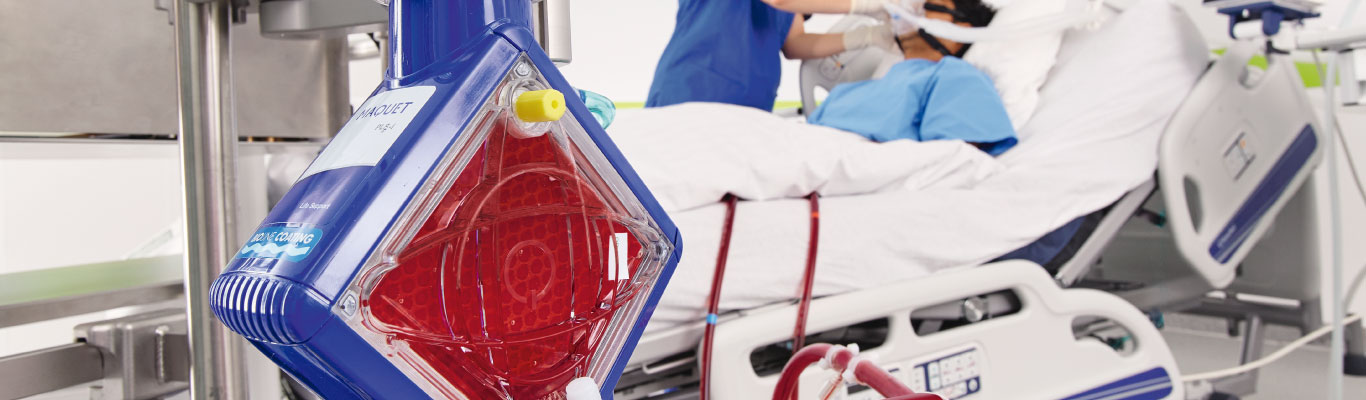
A 28 year old lady experienced acute asthma exacerbation precipitated by the inhalation of a recreational drug (“Kobret”). She presented with ultra-severe hypercapnia and associated acidosis due to refractory bronchospasm (193.4 mm Hg and 6.857 at nadir, respectively), requiring veno-venous femoro-femoral extracorporeal membrane oxygenation (V-V ECMO). The patient received a loading dose of unfractioned heparin at cannulation, and a continuous intravenous infusion was started immediately after, with target activated clotting time 200’. No risk factors for thrombophilic states were know. In the first hours after ECMO initiation, a large white appearing deposit was detected on the arterial side of the membrane lung (Figure 1, see Video 1, Supplemental Digital Content) through flashlight test. Visual monitoring of venous side was unfeasible. The membrane lung internal resistances (MLR),1 720 dynes/sec/cm−5 at first assessment, where definitely higher compared with the initial resistances usually observed with the circuit in use; gas exchange was not affected (see Supplemental Digital Content 1, https://links.lww.com/ASAIO/A990). Over the days, deposit size decreased at a visual monitoring, as MLR, but multiple episodes of severe drainage insufficiency complicated an otherwise uneventful run, despite proper cannula position, relatively low flow and optimization of volume status.