


Abstract Background Donation after circulatory death (DCD) heart transplants have increased in the United States with direct procurement with machine perfusion (DPP) and thoracoabdominal normothermic regional perfusion (TA-NRP) techniques. There..
Read More
Abstract Background Normothermic regional perfusion (NRP) and direct procurement and perfusion (DPP) allow for transplantation with donation after circulatory death (DCD) hearts. This study aimed to characterize the use of..
Read More
Abstract Background Survival for hypoplastic left heart syndrome (HLHS) and variants has improved over the past 4 decades; however, survival remains low compared with other forms of congenital heart disease...
Read More
Abstract Poor or worsening functional status of lung transplant (LTx) candidates is a key risk factor for waitlist and post-transplant mortality. As more critically ill adults and children are listed..
Read More
Abstract Organ preservation plays a critical role in addressing transplantation challenges, including donor shortages and ischemia-reperfusion injury (IRI). Continuous advancements in preservation technologies are essential to meet the increasing demand..
Read More
Abstract Extracorporeal membrane oxygenation (ECMO) traditionally has been used under deep sedation and mechanical ventilation. However, recent advancements have led to the development of awake ECMO strategies, allowing patients to..
Read More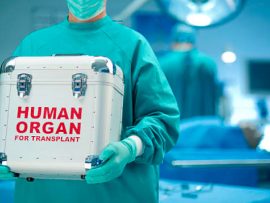
Abstract Donation after circulatory death (DCD) is driving the increase in deceased organ donors in the United States. Normothermic regional perfusion (NRP) and ex situ machine perfusion (es-MP) have been..
Read More
Abstract Venovenous extracorporeal membrane oxygenation is the most commonly used mode of support in pre-lung transplant recipients. In patients who experience right ventricular dysfunction, venopulmonary ECMO is an excellent option..
Read More
Abstract OBJECTIVES Although lung transplantation has experienced great development in the past decades, the survival rate remains low, and lung ischaemia–reperfusion injury during transplantation is a major cause of primary..
Read More
Abstract Objective To report differences between 2 anticoagulation protocols during venoarterial extracorporeal membrane oxygenation (VA-ECMO) intraoperative support and their effects on outcomes after lung transplantation. Methods We performed a retrospective..
Read More
Abstract Cytokine storm (CS) is a severe systemic inflammatory syndrome characterized by the excessive activation of immune cells and a significant increase in circulating levels of cytokines. This pathological process..
Read More
Abstract Background:Mechanical circulatory support, and specifically extra-corporeal membrane oxygenation, plays a critical role in managing paediatric cardiac patients with severe heart failure. Whilst these technologies are vital for bridging patients..
Read More
Introduction Superlatives and acronyms abound in this year’s edition of annual noteworthy literature for Seminars in Cardiothoracic and Vascular Anesthesia. By the numbers, over 22 000 publications from 2024 were screened, and approximately..
Read More
Abstract When conventional cardiopulmonary resuscitation (CCPR) cannot restore spontaneous circulation, the initiation of venoarterial extracorporeal membrane oxygenation during refractory cardiac arrest—known as extracorporeal CPR (ECPR)—might restore circulation and adequate tissue..
Read More
Abstract Background The effect of Friday the 13th and Full Moons on cardiac transplantation is unknown. We investigated the impact of these superstitious events on recipient and donor qualities, complications,..
Read More
Abstract Acute poisoning may lead to life-threatening conditions that require advanced life support, such as extracorporeal membrane oxygenation (ECMO). Data about the use of ECMO in intoxications and overdose are..
Read More
Abstract IN PATIENTS UNDERGOING bilateral lung transplant (BLT), the use of planned intra- and postoperative venoarterial extracorporeal membrane oxygenation (VA-ECMO) is increasing. It has become the standard practice in many..
Read More
Abstract Background Veno-Arterial Extracorporeal Life Support (VA ECMO) is a critical intervention for patients with cardiogenic shock, serving as bridge to recovery, transplantation, or long-term therapies. The complexity of VA..
Read More
Abstract In recent decades, multiple efforts have been made to reduce population exposure to cigarettes, given that smoking is responsible for thousands of deaths annually. These actions have been effective,..
Read More
Abstract Over the past 30 years, licensure and certification requirements for cardiovascular perfusionists have varied considerably in the United States. In addition to intraoperative perfusion for cardiac surgery, the role..
Read More
Abstract Background Extracorporeal membrane oxygenation (ECMO) has emerged as a crucial tool in the care of patients with multiorgan failure and is increasingly utilized as a bridge to transplantation. While..
Read More
Abstract Background Preliminary evidence from small, single-center studies suggests levosimendan may improve the likelihood of successful venoarterial extracorporeal membrane oxygenation (VA-ECMO) weaning in patients with cardiogenic shock. However, the literature..
Read More
Abstract OBJECTIVES Donation after circulatory death provides excellent patient outcomes in heart transplantation; however, warm ischaemic graft damage remains a concern. We have reported that a brief period of hypothermic..
Read More
Abstract Background There remains significant variability in the use of intraoperative mechanical circulatory support in lung transplantation. This report details our outcomes using elective cardiopulmonary bypass (CPB) in lung transplantation...
Read More
Abstract BACKGROUND: A preservation system, the Organ Care System (OCS; TransMedics) uses normothermic pulsatile perfusion during organ transport for heart transplantation. This system has demonstrated favorable outcomes in hearts recovered..
Read More
Abstract Patients undergoing liver transplantation infrequently require extracorporeal membrane oxygenation (ECMO) support. However, when ECMO is required in the peritransplant period, several key considerations are required to maximize the efficacy..
Read More
Abstract Extracorporeal carbon dioxide removal (ECCO2R) is an emerging technique designed to reduce carbon dioxide (CO2) levels in venous blood while enabling lung-protective ventilation or alleviating the work of breathing...
Read More
Abstract Normothermic regional perfusion (NRP) is a surgical technique that can improve the quality and number of organs recovered for donation after the determination of death by circulatory criteria. Despite..
Read More
Abstract Controlled donation after the circulatory determination of death (cDCDD) has emerged as a strategy to increase the availability of organs for clinical use. Traditionally, organs from cDCDD donors have..
Read More
Abstract Purpose of review Venovenous extracorporeal membrane oxygenation (VV-ECMO) provides gas exchange for patients with advanced respiratory failure who cannot maintain adequate oxygenation or carbon dioxide (CO2) clearance through conventional..
Read More