
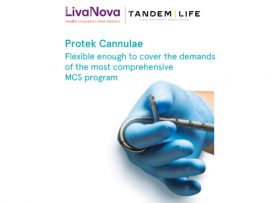

Abstract This chapter provides an in-depth analysis of the ProtekDuo® (LivaNova, London) dual-lumen cannula’s application in extracorporeal membrane oxygenation (ECMO), focusing on the procedural techniques of cannulation, weaning, and decannulation...
Read More
Abstract Aim Venoarterial extracorporeal membrane oxygenation (VA-ECMO) has become a common intervention for patients with cardiogenic shock (CS), often complicated by cardiac arrest (CA). Moderate hypothermia (MH) has shown promise..
Read More
Abstract In patients on veno-arterial extracorporeal membrane oxygenation (ECMO) premembranous venous oxygen saturation (Spm-vO2) is continuously displayed on the ECMO console. However, the concordance between Spm-vO2 and mixed venous oxygen saturation..
Read More
Abstract This retrospective analysis of the Extracorporeal Life Support Organization (ELSO) registry evaluates the outcomes and identifies risk factors associated with conversion from initial venovenous extracorporeal membrane oxygenation (ECMO) support..
Read More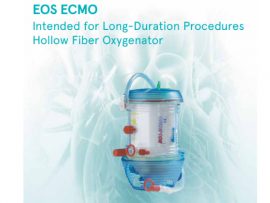
Abstract Refractory septic shock is associated with a high risk of death. Circulatory support in the form of veno-arterial extracorporeal membrane oxygenation (VA ECMO) may function as a bridge to..
Read More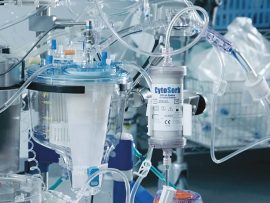
Abstract ExtraCorporeal Liver Support (ECLS) systems were developed with the aim of supporting the liver in its detoxification function by clearing the blood from hepatic toxic molecules. We conducted a..
Read More
Abstract Veno‐venous extracorporeal membrane oxygenation (VV-ECMO) in severe acute respiratory distress syndrome (ARDS) can be lifesaving. In these cases, the complex brain-lung crosstalk might lead to a form of acute..
Read More
Abstract Background: Nitric Oxide (NO) is a naturally occurring modulator of inflammation found in the human body. Several studies in the pediatric cardiothoracic surgery literature have demonstrated some beneficial clinical effects..
Read More
Abstract Background: Thrombosis within extracorporeal membrane oxygenation (ECMO) circuits is a common complication that dominates clinical management of patients receiving mechanical circulatory support. Prior studies have identified that over 80%..
Read More
Abstract Despite immediate coronary revascularization, mortality of patients experiencing infarct-related cardiogenic shock (AMICS) remains high [1]. Over the past decade, there has been a growing interest in the use of..
Read More
Abstract Background Extracorporeal membrane oxygenation (ECMO) is a rescue therapy in patients with severe acute res‑piratory distress syndrome (ARDS) secondary to COVID‑19. While bleeding and thrombosis complicate ECMO, theseevents may..
Read More
Abstract Mortality in infarct-related as well as heart failure-associated cardiogenic shock remains high, reaching 40–50% depending on the etiology and severity of cardiogenic shock. Percutaneous active mechanical circulatory support devices..
Read More
Abstract Extracorporeal membrane oxygenation (ECMO) is a form of cardiorespiratory support, and is being increasingly used to support refractory heart and respiratory failure. It involves draining blood from the vascular..
Read More
Abstract Molecular oxygen is typically delivered to patients via oxygen inhalation or extracorporeal membrane oxygenation (ECMO), potentially resulting in systemic hyperoxia from liberal oxygen inhalation or localized hyperoxia in the..
Read More
Abstract Background The use of extracorporeal membrane oxygenation (ECMO) for patients with acute respiratory distress syndrome (ARDS) has increased substantially. With modern trials supporting its efficacy, ECMO has become an..
Read More
Abstract Background: Cardiogenic shock in children still carries a high mortality risk despite advances in medical therapy. The use of temporary mechanical circulatory supports is an accepted strategy to bridge patients..
Read More
Abstract Extracorporeal Cardiopulmonary Resuscitation (ECPR) has potential benefits compared to conventional Cardiopulmonary Resuscitation (CCPR) in children. Although no randomised trials for paediatric ECPR have been conducted, there is extensive literature..
Read More
Abstract Weaning and liberation from VA ECMO in cardiogenic shock patients comprises a complex process requiring a continuous trade off between multiple clinical parameters. In the absence of dedicated international..
Read More
Abstract Background and purpose Current information on the latest rehabilitative practices is limited, with previous reviews only covering data up to October 2021, and some considering only patients on awake..
Read More
Abstract Introduction Extracorporeal membrane oxygenation (ECMO) may act as a driver or propagator of systemic inflammation. In turn, cytokine release can modify thromboelastographic (TEG) tests which are commonly used for..
Read More
Abstract Extracorporeal membrane oxygenation (ECMO) continues to be an indispenable tool in critical care settings, in particular in patients with severe respiratory and/or cardiac failure. The COVID-19 pandemic highlighted the..
Read More
Abstract Prevention of limb ischemia in patients with venoarterial extracorporeal membrane oxygenation (VA-ECMO) is primarily achieved through the use of distal perfusion catheters (DPC). Our objective was to assess the..
Read More
Abstract Over the past decade, veno-arterial extracorporeal membrane oxygenation (VA-ECMO) has expanded rapidly as a salvage strategy to provide temporary circulatory and respiratory support allowing cardiac function recovery or bridging..
Read More
Abstract Background and objectives Venovenous Extracorporeal Membrane Oxygenation (VV ECMO) provides respiratory support to patients with severe lung disease failing conventional medical therapy. An essential component of the ECMO circuit..
Read More
Abstract Introduction Due to the risk of thrombosis, nearly all children supported by extracorporeal membrane oxygenation (ECMO) receive systemic anticoagulation. While heparin has traditionally been used, there are reports of..
Read More
Abstract Background The impact of mechanical ventilation on the survival of patients supported with veno-venous extracorporeal membrane oxygenation (V-V ECMO) due to severe acute respiratory distress syndrome (ARDS) remains still..
Read More
Abstract The objective was to investigate the outcomes of concomitant venoarterial extracorporeal membrane oxygenation (ECMO) and left ventricular unloading with Impella (ECPELLA) compared with ECMO alone to treat patients affected..
Read More
PRO Building solid evidence in intensive care medicine is challenging, mostly due to patient heterogeneity and concomitant treatment interactions. In the context of acute respiratory distress syndrome (ARDS), only two..
Read More
Abstract During veno-venous extracorporeal membrane oxygenation (V-V ECMO), blood is drained from the central venous circulation to be oxygenated and decarbonated by an artificial lung. It is then reinfused into..
Read More
Abstract Venoarterial extracorporeal membrane oxygenation (VA ECMO) has become a standard of care for severe cardiogenic shock, refractory cardiac arrest and related impending multiorgan failure. The widespread clinical use of..
Read More