


Abstract Extracorporeal membrane oxygenation (ECMO) is a type of circulatory life support for patients with severe lung failure. The use of ECMO has increased worldwide since the pandemic of H1N1..
Read More
Abstract Venovenous extracorporeal membrane oxygenation (VV ECMO) facilitates the reduction of mechanical ventilation (MV) support in acute respiratory failure. Contrary to increasing evidence regarding its initiation, the optimal timing of..
Read More
Abstract Venopulmonary (VP) extracorporeal membrane oxygenation (ECMO) is a mode capable of supporting both pulmonary and right ventricular (RV) functions. Weaning patients from VP ECMO requires careful assessment of both..
Read More
Abstract Use of extracorporeal membrane oxygenation (ECMO) for cardiorespiratory failure remains complicated by blood clot formation (thrombosis), triggered by biomaterial surfaces and flow conditions. Thrombosis may result in ECMO circuit..
Read More
Abstract This review highlights advancements in extracorporeal life support (ECLS), emphasizing the critical role of standardized terminology, particularly for extracorporeal membrane oxygenation (ECMO) in treating right ventricular and respiratory failure...
Read More
Abstract Background: Hemolysis is a frequent complication in patients with sepsis, ARDS, or extracorporeal membrane oxygenation (ECMO). Haptoglobin (Hp) can scavenge released cell-free hemoglobin (CFH). Hemolysis and low plasma concentrations of..
Read More
Abstract Purpose of review This article offers an overview of recent randomized controlled trials (RCTs) testing the efficacy of veno-arterial extracorporeal membrane oxygenation (VA ECMO) and microaxial flow pump (mAFP)..
Read More
Abstract Bleeding and thrombotic complications are major drivers in extracorporeal life support (ECLS) patients’ negative outcomes and are reported in up to 40% of the ECLS-runs [1, 2]. Consumptive coagulopathy..
Read More
Beyond Venoarterial and Venovenous Extracorporeal Membrane Oxygenation: Novel Cannulation Strategies
Introduction Extracorporeal membrane oxygenation (ECMO) is a means of supporting the heart, lungs, or both when more conventional therapy fails to achieve appropriate physiologic endpoints. The majority of ECMO..
Read More
Abstract The development of new right ventricular (RV) dysfunction after cannulation to venovenous (VV) extracorporeal membrane oxygenation (ECMO) and its association with worse outcomes is increasingly recognized in adult patients,..
Read More
Abstract Introduction Mortality rates in cardiogenic shock remain high, especially in patients with SCAI shock stages C to E [1].When hemodynamic status does not improve or worsens despite optimal fluid,..
Read More
Kelli Shaw, 34, believes in happy endings. On June 9, 2024, the Bedford, New Hampshire mother of three celebrated her 10-year wedding anniversary with a vow renewal ceremony. It is..
Read More
Abstract Purpose Skin pigmentation influences peripheral oxygen saturation (SpO2) compared to arterial saturation of oxygen (SaO2). Occult hypoxemia (SaO2 ≤ 88% with SpO2 ≥ 92%) is associated with increased in-hospital..
Read More
Abstract Objectives: Most post-cardiotomy (PC) extracorporeal membrane oxygenation (ECMO) runs last less than 7 days. Studies on the outcomes of longer runs have provided conflicting results. This study investigates patient..
Read More
Abstract Burn patients face cardiopulmonary failure risks, with recent observational studies suggesting promising outcomes for extracorporeal membrane oxygenation (ECMO). However, the effectiveness and long-term survival remain unclear. Our study aims..
Read More
Abstract Venoarterial extracorporeal membrane oxygenation (VA-ECMO) has been increasingly used to treat refractory cardiogenic shock (CS) or cardiac arrest (CA) over the past decades. Peripheral VA-ECMO increases left ventricular (LV)..
Read More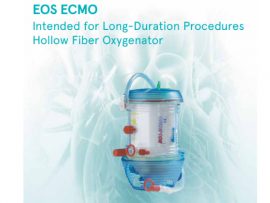
Abstract Extracorporeal membrane oxygenation (ECMO) is a cardiac or pulmonary function support system that is used in cases of refractory organ failure in addition to conventional treatment. Currently, Level I..
Read More
Abstract Hollow fiber membrane is incorporated into an extracorporeal membrane oxygenator (ECMO), and the function of the membrane determines the ECMO's functions, such as gas transfer rate, biocompatibility, and durability...
Read More
Abstract Purpose Severe acute respiratory distress syndrome (ARDS) with PaO2/FiO2 < 80 mmHg is a life-threatening condition. The optimal management strategy is unclear. The aim of this meta-analysis was to compare the effects..
Read More
Abstract Extracorporeal membrane oxygenation (ECMO) is often used in acute respiratory distress syndrome (ARDS) with refractory hypoxemia. There is limited literature highlighting the development of right ventricular (RV) failure while..
Read More
Abstract Background In lung transplantation (LTx) surgery, veno-arterial extracorporeal membrane oxygenation (VA-ECMO) can provide mechanical circulatory support to patients with cardiopulmonary failure. However, the use of heparin in the administration..
Read More
Abstract Sparse data exist on sex-related differences in extracorporeal cardiopulmonary resuscitation (ECPR) for refractory cardiac arrest (rCA). We explored the role of sex on the utilization and outcomes of ECPR..
Read More
Abstract Background: In lung transplantation surgery, extracorporeal life support (ECLS) is essential for safety. Various support methods, including cardiopulmonary bypass (CPB) and off-pump techniques, are used, with extracorporeal membrane oxygenation (ECMO)..
Read More
Abstract Background Although cardiogenic shock requiring extracorporeal life support (ECLS) after cardiac surgery is associated with high mortality, the impact of sex on outcomes of post-cardiotomy ECLS remains unclear with..
Read More
Abstract OBJECTIVES: We planned to synthesize evidence examining the potential efficacy and safety of performing physical rehabilitation and/or mobilization (PR&M) in adult patients receiving extracorporeal life support (ECLS). DATA SOURCES: ..
Read More
Abstract Background Pulmonary shunt refers to the passage of venous blood into the arterial blood system bypassingthe alveoli-blood gas exchange. Pulmonary shunt is defined by a drop in the physiologic..
Read More
Abstract Severe right heart failure, often overlooked and challenging to manage, has prompted a growing interest in innovative approaches to provide functional support. This study uses experimentation in large porcine..
Read More
Abstract Purpose The purpose of this study was to compare techniques for securing the aortic extracorporeal membrane oxygenation (ECMO) cannula, using in vitro models. Methods Two models were studied: a tissue model..
Read More
Abstract Aims This study evaluated how well serial pulse pressure (PP) and PP adjusted by the vasoactive inotropic score (VIS) predicted venoarterial extracorporeal membrane oxygenation (VA-ECMO) weaning success and clinical..
Read More
Abstract Patients undergoing veno-arterial extracorporeal membrane oxygenation (VA-ECMO) typically suffer from cardiogenic pulmonary edema and lung atelectasis, which can exacerbate right ventricular (RV) dysfunction through an increase in lung elastance..
Read More