


Abstract This case report details a rare instance of total reversal of the pulmonary circulation (RPC) in a 56-year-old male patient on veno-arterial extracorporeal membrane oxygenation (V-A ECMO) during emergency..
Read More
Abstract Veno-arterial extracorporeal membrane oxygenation (VA-ECMO) is increasingly used for the management of refractory cardiogenic shock. Although VA-ECMO can stabilize hemodynamics and improve systemic flow, morbidity, and mortality on support..
Read More
Abstract Background The use of extracorporeal membrane oxygenation (ECMO) during cardiopulmonary resuscitation (ECPR) is increasing. Prehospital ECPR (PH-ECPR) for out-of-hospital cardiac arrest (OHCA) may improve both equity of access and..
Read More
Abstract A critical factor in thrombus formation during venoarterial extracorporeal membrane oxygenation (VA ECMO) is prothrombotic flow dynamics generated by the drainage cannula’s design. This study aimed to create and..
Read More
It is well established that clinicians may decline requests for inappropriate interventions, including life-prolonging interventions. This position is supported by major professional organizations,, statutes and regulations, and case law. As such, the open..
Read More
Abstract Under the revised UNOS heart allocation system, waitlist and post-transplant outcomes among patients bridged to transplant with VA-ECMO (BTT-ECMO) have improved. However, it remains largely unknown if these early..
Read More
Abstract Cardiogenic shock is a complex and diverse pathological condition characterized by reduced myocardial contractility. The goal of treatment of cardiogenic shock is to improve abnormal hemodynamics and maintain adequate..
Read More
Abstract Background: Nurses play a vital role in caring for patients receiving extracorporeal membrane oxygenation (ECMO) for severe respiratory or cardiac failure. However, this area of nursing practice presents unique..
Read More
Abstract Examining end-of-life care considerations within an Islamic context, the discussion delves into the intricate nuances surrounding ECMO patients. Drawing from Quranic teachings and Hadith principles, it underscores the sanctity..
Read More
Abstract Introduction The haemodynamic effects veno-arterial extracorporeal membrane oxygenation (VA-ECMO) remain inadequately understood. We investigated invasive left ventricular (LV) haemodynamics in patients who underwent treatment with an intensive care strategy..
Read More
Abstract Up to 50% of patients with pulmonary embolism (PE) experience hemodynamic instability and approximately 70% of patients who die of PE experience an accelerated cascade of symptoms within the..
Read More
Abstract Heart transplantation (HT) is the gold standard treatment of end-stage heart disease. Waitlist mortality remains high due to a shortage of available donor organs. Donation after circulatory death (DCD)..
Read More
Abstract Background Guideline-based care of patients requiring extracorporeal membranous oxygenation, a form of life support for patients with refractory respiratory and/or cardiac failure, requires a multidisciplinary approach, yet a detailed..
Read More
Abstract Background: Extracorporeal membrane oxygenation (ECMO) is a vital mechanical circulatory support used with increasing frequency in complex congenital cardiac surgeries. This study evaluated the outcomes of a protocol-based venoarterial..
Read More
Abstract Objectives: To test feasibility of a randomized controlled trial (RCT) with an endpoint of time at goal anticoagulation in children on extracorporeal membrane oxygenation (ECMO) randomized to receive bivalirudin..
Read More
Abstract Extracorporeal cardiopulmonary resuscitation (ECPR) describes the use of venoarterial extracorporeal membrane oxygenation (VA-ECMO) to restore blood circulation in patients during refractory cardiac arrest. So far, ECPR is not the..
Read More
Abstract Extracorporeal membrane oxygenation (ECMO) provides temporary cardiorespiratory support for neonatal, pediatric, and adult patients when traditional management has failed. This lifesaving therapy has intrinsic risks, including the development of..
Read More
Abstract Anticoagulation is an essential component of optimal extracorporeal membrane oxygenation (ECMO) management. Unfractionated heparin is still the anticoagulant of choice in most centers due to longstanding familiarity with the..
Read More
Abstract The process of placing a patient on venoarterial extracorporeal membrane oxygenation (VA-ECMO) is complex and requires the activation and coordination of numerous personnel from a variety of disciplines to..
Read More
Abstract Background Retrohepatic inferior vena cava (IVC) injuries remain among the most lethal and serious liver injuries. Gauze packing is currently the first choice for IVC injuries; however, laparotomy itself poses..
Read More
Abstract This 5 year retrospective study presents the clinical experience with preprimed extracorporeal membrane oxygenation (ECMO) circuits used in a Single Hub Center Hospital, focusing on sterility, functionality, and safety...
Read More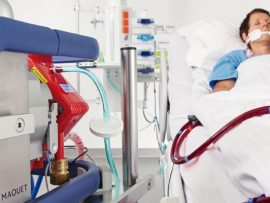
Abstract Purpose Venoarterial extracorporeal membrane oxygenation (VA ECMO) is used in patients with refractory cardiac or cardio-pulmonary failure. Native ventricular output interacts with VA ECMO flow and may hinder sufficient..
Read More
Abstract This referral center prospective inception cohort study included 84 consecutive children having extracorporeal membrane oxygenation (ECMO) for noncardiac illness indications at the age of less than 6 years from..
Read More
Abstract Adverse events (AEs) experienced by children and adults with congenital heart disease (CHD) on ventricular assist devices (VADs) are sometimes unique to these populations. The Advanced Cardiac Therapies Improving..
Read More
Abstract Veno-arterial extracorporeal membrane oxygenation (VA-ECMO) is used in case of potentially reversible cardiac failure and restores systemic hemodynamics. However, whether this is followed by improvement of microcirculatory perfusion is..
Read More
Abstract Introduction Veno-venous extracorporeal membrane oxygenation has increasingly been utilized to support patients in respiratory failure as a bridge to recovery or lung transplantation. As patients progress from cannulation to..
Read More
Abstract Introduction Various cannulation strategies for venoarterial extracorporeal membrane oxygenation (V-A ECMO) support are currently in use according to the clinical urgency and experience of the rescuing team. Although central..
Read More
Abstract Introduction Spinal cord infarction (SCI) or ischemia is a rare but devastating complication of venoarterial extracorporeal membrane oxygenation (VA ECMO). The natural course and outcomes are poorly studied. Methods..
Read More
Abstract Background While left ventricular (LV) venting reduces LV distension in cardiogenic shock patients on venoarterial extracorporeal membrane oxygenation (VA-ECMO), it may also amplify risk of acute brain injury (ABI). We..
Read More
Abstract Purpose Fever is frequent after extracorporeal membrane oxygenation (ECMO) decannulation. We aimed to evaluate the incidence of post-decannulation fever and describe its causes. Methods Adult ECMO patients who were..
Read More