


Abstract Background The expanding availability of venovenous extracorporeal membrane oxygenation (ECMO) and the increasing frequency of prolonged ECMO runs challenge standard definitions of center experience based solely on patient counts...
Read More
Abstract Historically, extracorporeal membrane oxygenation (ECMO) in critical illness and respiratory failure has been used cautiously in patients with morbid obesity. However, recent data show favorable mortality outcomes for higher..
Read More
Abstract Background Venous thromboembolism (VTE) is a common complication following lung transplantation, and perioperative extracorporeal membrane oxygenation (ECMO) use has increased substantially over time. The relationship between ECMO exposure and..
Read More
Abstract BACKGROUND: Individuals who survive acute respiratory distress syndrome (ARDS) often face prolonged cognitive impairments. Comparable consequences have been observed in chronic hypoxic conditions, like COPD and obstructive sleep apnea..
Read More
Abstract Patients supported with extracorporeal membrane oxygenation (ECMO) represent a uniquely challenging population. These patients require specific interventions, such as repeated circuit and lower extremity perfusion assessments, anticoagulation management, frequent..
Read More
Abstract Background Extracorporeal membrane oxygenation (ECMO) is increasingly used in adults with severe respiratory and/or cardiac failure. Because ECMO may alter drug pharmacokinetics (PK), optimizing antimicrobial dosing in this population..
Read More
Abstract Background Acute myocardial infarction complicated by cardiogenic shock (AMI-CS) carries a high risk of in-hospital death. Randomized evidence does not support routine VA-ECMO use in unselected AMI-CS populations. Objective..
Read More
Abstract Extracorporeal membrane oxygenation (ECMO) is a life-saving modality, yet it carries inherent risks of device-related adverse events. This manuscript is a focused review of ECMO circuit mechanics, monitoring, and..
Read More
Abstract Background Severe hyperoxia during venoarterial extracorporeal membrane oxygenation (VA-ECMO) has been associated with adverse clinical outcomes in observational studies. However, causal evidence and optimal oxygen targets remain uncertain. Hyperoxia..
Read More
Abstract Background Veno-arterial extracorporeal membrane oxygenation (VA ECMO) provides temporary mechanical circulatory support, primarily for patients with compromised cardiac function. In individuals supported on femoral VA ECMO with concurrent pulmonary..
Read More
Abstract Background The efficiency of venovenous extracorporeal membrane oxygenation (VV ECMO) may be influenced by cannula configuration, potentially affecting oxygenation and the ability to apply ultra-protective ventilation in severe ARDS...
Read More
Abstract Background This study aimed to evaluate in-hospital mortality and to identify predictors of mortality in coronary artery bypass grafting (CABG) patients receiving veno-arterial extracorporeal membrane oxygenation (VA-ECMO) support. Methods..
Read More
Abstract Extracorporeal cardiopulmonary resuscitation for refractory out‐of‐hospital cardiac arrest is increasingly used, with survival rates up to ≈30% reported in select highly organized systems, although outcomes vary widely across programs...
Read More
Abstract Topic Importance Extracorporeal membrane oxygenation (ECMO) is a relatively novel, intensive medical intervention. It is known to raise important yet unsettled ethical concerns. Overview We established the ECMO Ethics..
Read More
Abstract Purpose: Recirculation is a critical issue in veno-venous extracorporeal membrane oxygenation (VV ECMO). We propose a novel method for estimating the recirculation ratio using temporary sweep-gas control. Methods: A circuit simulating..
Read More
Abstract Recirculation reduces the efficiency of venovenous extracorporeal membrane oxygenation (V-V ECMO), but patient-specific determinants of recirculation and the feasibility of recirculation-guided flow adjustment are not well defined. In this..
Read More
Abstract Venoarterial extracorporeal membrane oxygenation (VA-ECMO) is increasingly used for providing adequate organ support in cardiogenic shock. While the intervention provides circulatory and respiratory support in the critical stage, it..
Read More
Abstract Objective Severe anaphylaxis is a rare but life-threatening condition that may require extracorporeal life support (ECLS). A systematic review was conducted to evaluate the outcomes of patients receiving ECLS..
Read More
Abstract Background This study aimed to evaluate in-hospital mortality and to identify predictors of mortality in coronary artery bypass grafting (CABG) patients receiving veno-arterial extracorporeal membrane oxygenation (VA-ECMO) support. Methods..
Read More
Abstract Background Use of extracorporeal membrane oxygenation (ECMO) for cardiorespiratory failure has increased substantially. While long-term outcomes for psychological health are increasingly assessed and addressed in critical care survivorship research,..
Read More
Abstract Background Extracorporeal membrane oxygenation (ECMO) is a critical life-support intervention for patients with severe respiratory and circulatory failure. Nevertheless, identifying the optimal timing of ECMO initiation and its correlation..
Read More
Abstract The expanding use of extracorporeal cardiopulmonary resuscitation (ECPR) has introduced new clinical scenarios at the intersection of extracorporeal life support and organ donation. Current donor classification systems do not..
Read More
Abstract Background The clinical impact of early spontaneous breathing during veno-venous extracorporeal membrane oxygenation (VV ECMO) for acute respiratory distress syndrome (ARDS) is unclear, balancing potential benefits (reducing sedation and..
Read More
Abstract As ECMO continues to grow beyond the CVOR, a growing number of physicians outside cardiac surgery are being asked to cannulate. This expansion is an important step toward building..
Read More
Abstract Background The use of extracorporeal membrane oxygenation (ECMO) has expanded for severe respiratory and circulatory failure. Acute kidney injury (AKI) is one of the most frequent complications. Up to..
Read More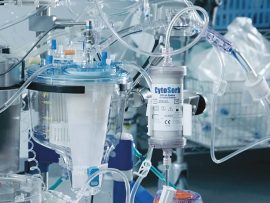
Abstract Background This systematic review and meta-analysis evaluated the clinical efficacy and safety of hemoperfusion in adults receiving extracorporeal membrane oxygenation (ECMO). Methods We systematically searched PubMed, Embase, the Cochrane..
Read More
Abstract Extracorporeal membrane oxygenation (ECMO) is an established life-saving therapy for severe acute respiratory distress syndrome and cardiogenic shock, yet it profoundly alters cardiopulmonary physiology and challenges conventional hemodynamic monitoring...
Read More
Abstract Adult venoarterial extracorporeal membrane oxygenation (VA ECMO) is a costly life support therapy, where patient selection remains a significant hinge-point in determining patient outcomes. Despite this, few sites have..
Read More
Abstract Acute limb ischemia (ALI) remains one of the most common complications of peripheral veno-arterial extracorporeal membrane oxygenation (V-A ECMO). Across heterogeneous cohorts, reported ALI rates vary widely (≈8–30% and..
Read More
Abstract Peripheral venoarterial extracorporeal membrane oxygenation (VA-ECMO) and minimally invasive cardiac surgery often require femoral arterial cannulation, wherein lower limb ischemia remains a major complication. Although introducer sheaths with side..
Read More