

Abstract Background: Protamine administration post-cardiopulmonary bypass (CPB) can potentially cause hemodynamic instability. Histamine released from mast cells is believed to be responsible for hypotension after protamine administration. The aim of this..
Read More
Abstract Background ECMO support is associated with the development of a systemic hyper-inflammatory response, which may become quite significant and extreme in some cases. We hypothesize that Cytosorb or Jafron..
Read More
Abstract Background Many studies explored the impact of ventilation during cardiopulmonary bypass (CPB) period with conflicting results. Functional residual capacity or End Expiratory Lung Volume (EELV) may be disturbed after..
Read More
Abstract Cardiopulmonary bypass (CPB) depletes endogenous Vitamin C and generates oxidative stress in cardiac surgery. This study aimed to clarify whether Vitamin C supplementation reduces oxidant production and improves erythrocyte..
Read More
Abstract Background Myocardial protection during operations with cardiopulmonary bypass (CPB) and aortic cross clamping is vital. For this purpose, Del Nido (DN) and Custodiol cardioplegia (CC) solutions are used for..
Read More
Abstract Objectives: To determine the effect of intraoperative antifibrinolytics, including tranexamic acid (TXA), aminocaproic acid (EACA), or aprotinin, on bleeding in children undergoing cardiac surgery with cardiopulmonary bypass (CPB). Data..
Read More
Abstract Lung transplantation (LTx) historically was performed with cardiopulmonary bypass (CPB) or Off-pump. Recent data suggest an increased interest in extracorporeal membrane oxygenation (ECMO) as perioperative circulatory support by many..
Read More
Abstract Cardiopulmonary bypass (CPB) is a common procedure carried out to provide a fluid free and motionless work field at the time of cardiac surgical procedures. To achieve CPB, cannulation..
Read More
Abstract Objectives The objectives of this study were to evaluate the incidence and to identify risk factors for acute kidney injury (AKI) in neonates undergoing cardiopulmonary bypass (CPB) with a..
Read More
Abstract Conventional ultrafiltration (UF) fails to reverse satisfactorily hemodilution and the rise in total body water (TBW) seen after cardiopulmonary bypass (CPB). We have modified the technique, timing, and placement..
Read More
Abstract The surgical correction of congenital heart disease using haemodilution and hypothermia with cardiopulmonary bypass (CPB) may expose patients to tissue ischaemia and initiate a systemic inflammatory response, increasing the..
Read More
Abstract The use of heparin for anticoagulation has changed the face of cardiac surgery by allowing a bloodless and motionless surgical field throughout the introduction of cardiopulmonary bypass (CPB). However,..
Read More
Abstract Total body water (TBW) is increased after cardiopulmonary bypass (CPB) resulting in tissue oedema and organ dysfunction. Ultrafiltration has been used to reduce this accumulation of water, although conventional..
Read More
Abstract Context: Viscoelastic hemostatic assays (VHA) are commonly used to identify specific cellular and humoral causes for bleeding in cardiac surgery patients. Cardiopulmonary bypass (CPB) alterations to coagulation are observable on..
Read More
Abstract What is known and objective Emergent cardiac surgery in patients under anticoagulant therapy is still a major point of concern. Recently approved reversal agents are often not available or..
Read More
Abstract Objectives Poor medullary oxygenation is implicated in the evolution of acute kidney injury. The authors sought to determine if increasing systemic flow and mean arterial pressure could improve urine..
Read More
Abstract Background: Post-cardiotomy vasoplegia syndrome (VS) is often linked to an exaggerated inflammatory response to cardiopulmonary bypass (CPB). At the same time, the prognostic role of platelet-leucocyte indices (PLIs) and leucocyte..
Read More
Abstract Vasoplegic syndrome (VS) is a common complication following cardiovascular surgery with cardiopulmonary bypass (CPB), and its incidence varies from 5 to 44%. It is defined as a distributive form..
Read More
Abstract Objective: Venous drainage is often problematic in minimally invasive cardiac surgery (MICS). Here, we describe our experience with a self-expandable stent cannula designed to optimize venous drainage. Methods: The smart canula® was used..
Read More
Abstract Background Insufflation of carbon dioxide (CO2) into the operative field to prevent cerebral or myocardial damage by air embolism is a well known strategy in open-heart surgery. However, here..
Read More
Abstract We aimed to evaluate the role of higher mean arterial pressure (MAP) during cardiopulmonary bypass (CPB) in preventing development of acute kidney injury (AKI). Methods. We evaluated a population..
Read More
Abstract OBJECTIVES Sickle-cell disease (SCD) patients are considered to be at high risk from open-heart surgery. This study assessed the role of a simple sickling-prevention protocol. METHODS Perioperative non-specific and..
Read More
Abstract Weaning from cardiopulmonary bypass (CPB) requires the heart to resume its function as the driving force of blood flow, taking over from the mechanical pump in the CPB circuit...
Read More
Abstract Objective Cardiothoracic surgery is a large field in Australia, and evidence suggests post-cardiopulmonary bypass (CPB) hyperlactataemia is associated with higher morbidity and mortality. Low thiamine levels are a potentially..
Read More
Abstract Purpose After weaning from cardiopulmonary bypass (CPB), the radial artery pressure is frequently lower than the central pressure as reflected by femoral pressure. This discrepancy may cause improper blood..
Read More
Abstract Introduction Hyperlactatemia, a problem reported in up to 30% of cardiac surgery patients, results from excessive production of or decreased clearance of lactate. It is typically a symptom of..
Read More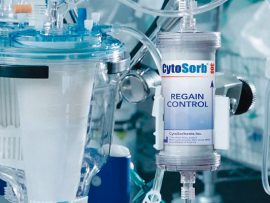
Abstract Background: Patients on direct oral anticoagulants are at high risk of perioperative bleeding complicaapitions. We analyzed the results of intraoperative hemoadsorption (HA) in patients undergoing cardiac surgery who were..
Read More
Abstract BACKGROUND: Perioperative hemodynamic instability mediated by anaphylaxis is a life-threatening complication in patients undergoing cardiac surgery with cardiopulmonary bypass (CPB). This study aimed to evaluate the effect of clemastine fumarate..
Read More
Abstract Introduction Red blood cell (RBC) transfusion is often required during cardiac surgery in children. However, RBC is a rare product, and its transfusion is associated with adverse events and..
Read More
Abstract Neurologic complications, associated with cardiac surgery and cardiopulmonary bypass (CPB) in adults, are common and can be devastating in some cases. This comprehensive review will not only consider the..
Read More