


Abstract Intraaortic balloon pump counterpulsation is the most common form of mechanical circulatory support used in patients with myocardial ischemia and cardiogenic shock. The physiologic principles of counterpulsation include diastolic..
Read More
Abstract In patients with acute MI complicated by cardiogenic shock (AMICS) who are slated to undergo early revascularization, routine use of extracorporeal membrane oxygenation (ECMO) doesn’t reduce 30-day mortality. The..
Read More
Abstract Background Venoarterial (VA-ECMO) is increasingly used with despite the lack of evidence from adequately powered . Three trials reported so far were underpowered to detect a survival benefit; we therefore conducted an individual..
Read More
Abstract LAVA-ECMO has recently gained attention in the medical community, specifically, as support for cardiogenic-shock patients. In particular, interest has picked up since it was highlighted at the 2023 Houston..
Read More
Abstract Introduction Cardiac output (CO) is a key determinant of oxygen delivery. Low cardiac output syndrome (LCOS) causes organ dysfunction, prolonged hospital stay, and reduces survival in perioperative settings and..
Read More
Abstract Due to advances in critical care medicine over the past several decades, the number of survivors of critical illness continues to grow despite increased severity of illness (). There..
Read More
Abstract Background Venoarterial extracorporeal membrane oxygenation (VA-ECMO) is a key support modality for cardiogenic shock. The 2018 United Network for Organ Sharing (UNOS) heart transplant allocation algorithm prioritizes VA-ECMO patients...
Read More
Abstract The use of mechanical circulatory support using percutaneous ventricular assist devices (pVAD) has increased rapidly during the last decade without substantial new evidence for their effect on outcome. In..
Read More
Abstract Background Venoarterial extracorporeal membrane oxygenation (VA-ECMO) is used as a rescue strategy for patients with refractory post-cardiotomy cardiogenic shock (PCS). These patients often have varying degrees of reduced hemoglobin..
Read More
Abstract There are minimal data on the use of venoarterial extracorporeal membrane life support (VA-ECLS) in adult congenital heart disease (ACHD) patients presenting with cardiogenic shock (CS). This study sought..
Read More
Abstract BACKGROUND Tricyclic antidepressant (TCA) drugs are a common cause of fatal poisoning because of their cardiotoxic and arrhythmogenic effects. Classic supportive management includes sodium bicarbonate, gastrointestinal chelating agents, and..
Read More
Abstract This article describes a case study where a patient with ProtekDuo + oxygenator and Impella CP (PROpella) in biventricular failure and cardiogenic shock was reconfigured to venopulmonary-arterial (VP-A) extracorporeal..
Read More
Abstract Objectives To perform a systematic review and meta-analysis of the techniques and outcomes associated with percutaneous decannulation of venoarterial extracorporeal membrane oxygenation (VA–ECMO) using the Manta vascular closure device...
Read More
Abstract In the United States, about one million people are seen to visit the operating theater for cardiac surgery annually. However, nearly half of these visits result in complications such..
Read More
Abstract BACKGROUND Post-cardiotomy veno-arterial extracorporeal membrane oxygenation (V-A ECMO) is characterized by discrepancies between weaning and survival-to-discharge rates. This study analyzes the differences between post-cardiotomy V-A ECMO patients who survived,..
Read More
Abstract Percutaneous cannulation improved femoro-femoral veno-arterial Extracorporeal Membrane Oxygenation (VA-ECMO) results, reducing infectious complications, but remains limited by vascular complications related to the arterial decannulation. Several techniques were described to perform a percutaneous decannulation..
Read More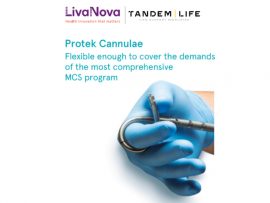
Abstract The ProtekDuo® is a dual lumen cannula that can be used in numerous configurations to treat cardiogenic shock and hypotension. Its default function is as a temporary percutaneous right..
Read More
Abstract Extracorporeal life support with venoarterial extracorporeal membrane oxygenation (VA-ECMO) is used to assist circulation in patients with severe cardiogenic shock or cardiac arrest. The vasoactive-inotropic score (VIS) is a standardized calculation of vasoactive medication support which uses..
Read More
Abstract We aimed to describe the clinical outcomes of veno-arterial extracorporeal membrane oxygenation (VA-ECMO) therapy in our institution considering clinical context and pH at cannulation. All patients treated by VA-ECMO during the..
Read More
Abstract OBJECTIVES Upper gastrointestinal bleeding (UGIB) is a common complication in adults treated with veno-arterial extracorporeal membrane oxygenation (VA-ECMO) for refractory cardiogenic shock or cardiac arrest. We aimed to determine..
Read More
Abstract Background Extracorporeal membrane oxygenation offers temporary hemodynamic support for patients with refractory cardiogenic shock after cardiovascular surgery. However, the initiation time for such patients is controversial. Changing the initiation..
Read More
Abstract Introduction: Massive acute pulmonary embolism (MAPE) with obstructive cardiogenic shock is associated with a mortality rate of more than 50%. Venoarterial extracorporeal membrane oxygenation (VA-ECMO) has been increasingly used..
Read More
Abstract Venoarterial extracorporeal membrane oxygenation provides cardiorespiratory support to patients in cardiogenic shock. This comes at the cost of increased left ventricle (LV) afterload that can be partly ascribed to retrograde..
Read More
Prognosis of Venoarterial Extracorporeal Membrane Oxygenation in Mixed, Cardiogenic and Septic Shock
Abstract Mixed cardiogenic-septic shock (MS), defined as the combination of cardiogenic (CS) and septic (SS) shock, is often encountered in cardiac intensive care units. Herein, the authors compared the impact of..
Read More
Abstract Refractory cardiogenic shock is increasingly being treated with veno-arterial extracorporeal membrane oxygenation (V-A ECMO), without definitive proof of improved clinical outcomes. Recently, pulsatile V-A ECMO has been developed to address some of the..
Read More
Abstract Background It is currently unclear if active left ventricular (LV) unloading should be used as a primary treatment strategy or as a bailout in patients with cardiogenic shock (CS)..
Read More
Abstract Background The mortality rate for a patient with a refractory cardiogenic shock on venoarterial (VA) extracorporeal membrane oxygenation (ECMO) remains high, and hyperoxia might worsen this prognosis. The objective..
Read More
Abstract Veno-arterial extracorporeal membrane oxygenation (V-A ECMO) is an increasingly used rescue therapy forpatients with refractory cardiogenic shock (CS) 1,2 . It provides mechanical circulatory support for both heartand lungs..
Read More
Abstract Background: Exposure to hyperoxia, a high arterial partial pressure of oxygen (PaO2), may be associated with worse outcomes in patients receiving extracorporeal membrane oxygenator (ECMO) support. We examined hyperoxia in..
Read More
Abstract Background High-risk patients with coronary heart disease who develop acute myocardial infarction (AMI) have severe coronary lesions. If severe complications occur, such as malignant ventricular arrhythmia, cardiogenic shock, and..
Read More