


Abstract Background Limb ischemia is a major complication of femoral venoarterial extracorporeal membrane oxygenation (VA-ECMO). Use of ankle-brachial index (ABI) to monitor limb perfusion in VA-ECMO has not been described...
Read More
Abstract Here, we report the case of a 55 year old male patient without significant preexisting cardiovascular disease who received a deceased donor liver transplant. Intraoperatively, the patient developed cardiogenic..
Read More
Abstract The American Society for Testing and Materials (ASTM) F1841 standard for the assessment of hemolysis in blood pumps recommends using phosphate-buffered saline (PBS) for hemodilution to standardize hematocrit (HCT)...
Read More
Abstract Background Amongst children with congenital heart disease (CHD), earlier age of repair improves cardiovascular outcomes. The effects of early intervention on neurodevelopment remains unclear. We assessed the association between..
Read More
Abstract Heparin is the earliest and most widely used anticoagulant and antithrombotic drug that is still used in a variety of clinical indications. Since it was discovered in 1916, after..
Read More
Abstract Importance It is uncertain whether coronary artery bypass grafting (CABG) is associated with cognitive decline in older adults compared with a nonsurgical method of coronary revascularization (percutaneous coronary intervention [PCI])...
Read More
Abstract Objectives: To establish the impact of the COVID-19 pandemic on adult cardiac surgery by reviewing current data and use this to establish methods for safely continuing to carry out..
Read More
Abstract (Epo) is a pleiotropic cytokine, essential for . Epo and its receptor (Epo-R) are produced by several tissues and it is now admitted that Epo displays other physiological functions than..
Read More
Abstract Supraphysiologic high shear stresses created in calcific aortic stenosis (AS) are known to cause hemostatic abnormalities, however, the relationship between the complex blood flows over the severity of AS..
Read More
Abstract Bleeding in the perioperative period of congenital heart surgery with cardiopulmonary bypass is associated with increased morbidity and mortality both from the direct effects of haemorrhage as well as..
Read More
Abstract Objective: The aim was to evaluate the performance of a newly developed magnetically suspended centrifugal pump head intended for use as a ventricular assistance device with a newly developed..
Read More
Abstract We retrospectively compared anticoagulation with heparin and bivalirudin for 32 consecutive children under 18 years old during extracorporeal membrane oxygenation (ECMO) in our pediatric cardiac intensive care unit (PCICU). Between September..
Read More
Abstract Background Elevated arterial–central venous carbon dioxide partial pressure difference (AVCO2) may be an important marker to predict tissue and organ hypoperfusion in adults. We analyzed the hemodynamic data of..
Read More
Abstract Background Intermittent antegrade cold-blood cardioplegia followed by terminal warm-blood cardioplegic reperfusion or hot-shot is reported to reduce myocardial injury in the setting of coronary surgery. The efficacy of this..
Read More
Abstract Controlled donation after circulatory determination of death (DCD), where death is determined after cardiac arrest, has been responsible for the largest quantitative increase in Canadian organ donation and transplants,..
Read More
Abstract CARDIAC SURGERY is inherently complex and is associated with a high risk of perioperative bleeding. As such, it is responsible for a disproportionate percentage of annual blood product usage..
Read More
Abstract Background Familiarity among cardiac surgery team members may be an important contributor to better outcomes and thus serve as a target for enhancing outcomes. Methods Adult cardiac surgical procedures..
Read More
Abstract The impact of cervical cannulation on neurologic outcome has not been yet studied among children receiving venoarterial extracorporeal membrane oxygenation (VA-ECMO) in the context of severe sepsis or septic..
Read More
Highlights •Gravitational ischemia in the brain results from the mass effect of one part of the brain upon another in a gravitational field; •The finding that hypoactive delirium was..
Read More
Abstract Extracorporeal membrane oxygenation (ECMO) may be a life-saving procedure for patients with severe reversible pulmonary or cardiac failure or for patients in need for a bridge to transplantation. ECMO..
Read More
Abstract Extracorporeal membrane oxygenation (ECMO) support is indicated in patients who are refractory to treatment, those with cardiogenic shock or respiratory failure and those with exacerbations eligible for heart and..
Read More
Abstract OBJECTIVES This study aims to improve early detection of cardiac surgery-associated acute kidney injury (CSA-AKI) compared to classical clinical scores. METHODS Data from 7633 patients who underwent cardiac..
Read More
Abstract Introduction: The renal medulla is susceptible to hypoxia during cardiopulmonary bypass (CPB), which may contribute to the development of acute kidney injury. But the speed of onset of renal..
Read More
Abstract Background: The aim of the present study was to use a numerical simulation based on computational fluid dynamics (CFD) to analyze the difference of different cannulation methods on hemodynamics characteristic..
Read More
Abstract Objectives Postoperative delirium is a common neuropsychiatric syndrome after coronary artery bypass grafting (CABG). We aimed to assess and compare clinical outcomes of CABG patients with delirium with a..
Read More
Abstract Left ventricular (LV) distention and pulmonary congestion are major complications inherent to venoarterial extracorporeal membrane oxygenation (ECMO). This study aimed to quantitatively compare the hemodynamic differences between common circulatory..
Read More
Abstract Objective Left ventricular (LV) twist is a major component of ventricular mechanics reflecting the helical orientation of cardiac fibres and compensating for afterload mismatch. However, it is not known whether..
Read More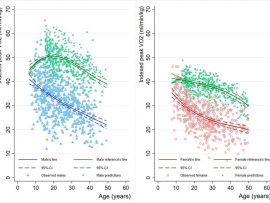
Abstract Objectives This study aimed to provide a perspective for the interpretation of exercise capacity (peakVO2) in patients with repaired Tetralogy of Fallot (patients with rTOF) by describing the course of..
Read More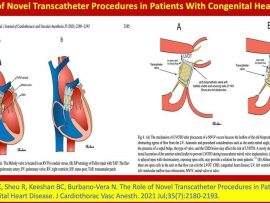
Abstract The development of percutaneous structural interventions in patients with acquired heart disease is happening at an exponential rate, and some of this technology is being used to treat patients..
Read More