


Abstract Extracorporeal membrane oxygenation (ECMO) is increasingly being used for patients with severe respiratory failure and has received particular attention during the coronavirus disease 2019 (COVID-19) pandemic. Evidence from two..
Read More
Abstract Background Extracorporeal membrane oxygenation (ECMO) has been used increasingly for cardiopulmonary rescue. Despite recent advances however, post-cardiotomy shock (PCS)-ECMO survival remains comparatively poor. We sought to evaluate outcomes and..
Read More
Abstract Venoarterial extracorporeal membrane oxygenation (V-A ECMO) is increasingly used in cardiogenic shock for rapid stabilization and bridging towards recovery, long-term mechanical circulatory support or transplant. Although technological advances have..
Read More
Abstract In appropriately selected patients with COVID-19 acute respiratory distress syndrome, venovenous extracorporeal membrane oxygenation (VV ECMO) may offer a promising bridge to lung recovery or lung transplantation if lung recovery..
Read More
Why deresuscitation? While fluid administration is one of the most common therapeutic interventions in critical care, it carries high potential for harm as overzealous fluid resuscitation may lead to glycocalix..
Read More
Abstract Background In 2020, the Extracorporeal Life Support Organization education task force identified seven extracorporeal membrane oxygenation (ECMO) educational domains that would benefit from international collaborative efforts. These included research..
Read More
Abstract Purpose of review Surgery is an important option to consider in patients with massive and submassive pulmonary emboli. Earlier intervention, better patient selection, improved surgical techniques and the use of..
Read More
Abstract Various anticoagulant properties have been associated with hydroxyethyl starch (HES). However, the mechanism remains unclear and it has not been fully considered whether these properties are beyond the dilutional..
Read More
Abstract Following the initial observation in animal models as early as 1967, a key paper in 1974 demonstrating that high inspiratory pressures caused lung injury [] (Fig. ), crystallized the recognition..
Read More
Abstract Purpose of Study: Availability of mechanical circulatory support of both sides of the heart for pediatric patients has been limited due to size constraints. By combining 2 scaled down ventricular..
Read More
[pdf-embedder url="https://perfusfind.com/wp-content/uploads/2022/08/Editorial-Revista-En-Bomba_compressed.pdf" title="Editorial Revista En Bomba_compressed"]
Read More
Abstract Acute kidney injury (AKI) is a common cause of morbidity after congenital heart disease surgery. Progress on diagnosis and therapy remains limited, however, in part due to poor mechanistic..
Read More
Abstract Background Postoperative sepsis is an important cause of morbidity and mortality in patients with infective endocarditis undergoing surgical therapy. Blood purification using hemoadsorption therapy shows promising results in the..
Read More
Abstract Thrombosis in extracorporeal membrane oxygenation (ECMO) circuits remains a frequent complication. We characterize the location, extent, structure, and clinical implications of thrombi in 53 ECMO circuits from 46 pediatric patients...
Read More
Abstract Traditionally, cardiac surgery has been practiced primarily through a median sternotomy; however, as instrumentation and experience continue to advance at exponential rates, the field of minimally invasive cardiac surgery..
Read More
Abstract Objective: Cerebrovascular autoregulation impairment has been associated with stroke risk in cardiac surgery. We hypothesized that greater arterial emboli exposure in open-chamber surgery might promote dysautoreguation. Methods: Forty patients..
Read More
Abstract Background Severe COVID-19 induced acute respiratory distress syndrome (ARDS) often requires extracorporeal membrane oxygenation (ECMO). Recent German health insurance data revealed low ICU survival rates. Patient characteristics and experience..
Read More
Abstract Importance Intraoperative handovers of anesthesia care are common. Handovers might improve care by reducing physician fatigue, but there is also an inherent risk of losing critical information. Large observational analyses..
Read More
Abstract Objectives Despite the increasing utilization of mechanical circulatory support (MCS) devices, the 4Ts and heparin-induced thrombocytopenia (HIT) Expert Probability (HEP) scores have not been validated in patients with suspected..
Read More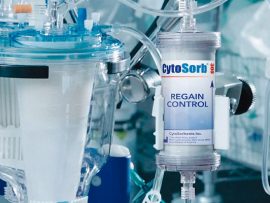
Abstract Introduction: We performed an analysis of two blood purification systems to determine their performance for removing interleukins (ILs)-6 and 10, tumor necrosis factor (TNF)-α and monocyte chemoattractant protein (MCP)-1 from..
Read More
Abstract Extracorporeal hemoadsorption with the CytoSorb adsorber is increasingly being used during the past years. The use in combination with extracorporeal membrane oxygenation (ECMO) is feasible, but frequency of its use and..
Read More
Abstract Aim of Study To prepare for the design of future of cardioupulmonary resuscitation (ECPR), we sought to understand physician beliefs regarding the use of ECPR and subsequent management, among physicians who..
Read More
Abstract Purpose: To evaluate unfractionated heparin (UFH) dosing guided by antifactor Xa levels during targeted temperature management (TTM) post-cardiac arrest. Methods: Single-center, retrospective, observational study between January 1, 2014 and..
Read More
Abstract First described early in the pandemic, coronavirus disease 2019 (COVID-19)-associated fulminant myocarditis can present with arrhythmias and cardiogenic shock, but may be treatable with mechanical circulatory support, such as..
Read More
Abstract OBJECTIVES Risk factors associated with intestinal ischaemia after heart surgery have been previously explored; however, a paucity of data exists with regard to extent of intestinal ischaemia in patients..
Read More
Abstract Introduction Although the established long-term benefit of left ventricular assist device (LVAD) therapy has led to its proliferation as destination therapy (DT), few studies have evaluated LVAD outcomes at..
Read More
Abstract Background Viscoelastic coagulation monitoring is recommended for coagulation management after cardiac surgery, but optimum target values are poorly defined. Aims To determine “to-be-expected” values in rotational thromboelastometry (ROTEM) after..
Read More
Abstract Background In the current practice, graft ischaemia and reperfusion injury (IRI) is considered an inevitable component in organ transplantation, contributes to compromised organ quality, inferior graft survival and limitations in organ..
Read More
Abstract Background Oxylipins are metabolites derived from fatty acids such as arachidonic acid (AA) and are key mediators in inflammation, host defense, and tissue injury. Serum oxylipins increase in adults..
Read More
Abstract Background The rates, outcomes, and long-term trends of stroke complicating the use of extracorporeal membrane oxygenation (ECMO) have been inconsistently reported. We compared the outcomes of pediatric ECMO patients..
Read More