


Abstract Background Congenital heart disease affects approximately 1% of live births worldwide and remains among the most significant contributors to neonatal morbidity and mortality. Approximately half of them require surgical..
Read More
Abstract Deep hypothermic cardiopulmonary bypass (CPB) is used in selected procedures such as pulmonary endarterectomy (PEA) and aortic arch repair. Hypothermia induces metabolic and physicochemical changes that affect hydrogen ion..
Read More
Abstract Background/Objectives: Adult patients supported with extracorporeal membrane oxygenation (ECMO) frequently require invasive diagnostic, therapeutic, surgical, or bedside procedures during ongoing extracorporeal support. These procedures are clinically challenging because ECMO-related anticoagulation,..
Read More
Abstract Objective: The minimised extracorporeal circulation (MiECC) system is an alternative to the classical extracorporeal circulation (ECC) system in coronary artery bypass grafting (CABG) surgery. Some publications reported that there are..
Read More
Abstract Background Extracorporeal membrane oxygenation (ECMO) has become a vital life-support tool in critical care, particularly during the COVID-19 pandemic. The rapid growth of ECMO research necessitates bibliometric analysis to..
Read More
Abstract Objectives To quantify the incidence of Quantra QPlus clot time ratio (CTR) elevation (>1.4) in cardiac surgical patients with suspected postoperative coagulopathy and to investigate the correlation between CTR..
Read More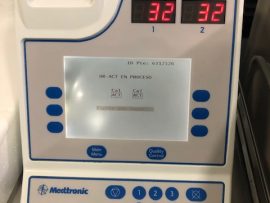
Abstract Objectives Antiphospholipid syndrome (APS) is an autoimmune prothrombotic disorder that complicates anticoagulation during cardiovascular surgery requiring cardiopulmonary bypass (CPB). This systematic review aimed to characterize the anticoagulation monitoring strategies..
Read More
Abstract Background: Cardiopulmonary bypass (CPB) is a cornerstone of modern cardiac surgery, requiring continuous, high stakes decision making based on rapidly evolving physiological and technical parameters. Despite advances in perfusion..
Read More
Abstract Objective To investigate the dynamic impact of anemia at different perioperative timepoints (preoperative, postoperative day 1, 3, and 7) on adverse events in patients undergoing cardiac surgery. Methods This..
Read More
Abstract Background Sex-based differences in outcomes after cardiac surgery are consistently reported, with women frequently experiencing higher postoperative morbidity and mortality. While emerging evidence suggests that patient-physician sex concordance may..
Read More
Abstract Background While cardiac surgery and cardiopulmonary bypass (CPB) are on rise, postoperative infections have become an increasingly prominent problem. We designed this study to compare the four coagulation indicators..
Read More
Abstract Hemolysis, the rupture of red blood cells, releases hemoglobin, haem, and redox-active iron into the bloodstream. When the body’s scavenging capacity is overwhelmed, these species can exert deleterious effects,..
Read More
Abstract Objectives To evaluate postoperative residual and reappearing heparin activity after low-dose, titration-guided protamine reversal following cardiopulmonary bypass (CPB) in elective coronary artery bypass grafting (CABG). Design Prospective, controlled clinical..
Read More
Abstract Background: The aim of this study was to assess the long-term outcomes of patients treated with intra-aortic balloon pump (IABP) alone and in combination with extracorporeal membrane oxygenation (ECMO),..
Read More
Abstract Background Cardiopulmonary bypass (CPB) is essential in open-heart surgery but is associated with systemic inflammatory response syndrome and organ-specific complications, which can worsen patient outcomes. In low-resource settings, limited..
Read More
Abstract Acute kidney injury (AKI) remains one of the most frequent complications after cardiac surgery and is associated with nearly 40% mortality at 5 years (). These concerning outcomes have..
Read More
Abstract Cardiac surgery-associated acute kidney injury (CSA-AKI) is a frequent and severe complication of open-heart surgery. Although oxidative/inflammatory mechanisms are known to contribute to its pathophysiology, the circulating factors involved..
Read More
Abstract In a randomized controlled trial, Jain et al. () demonstrated that administration of a fixed 250 mg dose of protamine following cardiopulmonary bypass (CPB) resulted in lower total protamine dose compared..
Read More
Abstract Background Neonatal cardiac surgery is associated with high morbidity and mortality. Perioperative metabolic stress may result in distinct metabolic phenotypes associated with adverse clinical outcomes. Objectives The purpose of..
Read More
Abstract High-pressure excursions (HPE) during cardiopulmonary bypass (CPB) are rare but potentially life-threatening events linked to coagulation activation, inflammation. Known risk factors include male sex, large body surface area (BSA),..
Read More
Abstract Objectives To compare myocardial protection afforded by three single-dose cardioplegic solutions — Custodiol (HTK), del Nido (DN) and modified del Nido (MDN) — in adult elective cardiac surgery. Design Double-blind randomised..
Read More
Abstract Objective: To describe surgical outcomes, in-hospital mortality, and variables associated with mortality in pediatric patients with congenital heart disease (CHD) at a national referral center in México over 14..
Read More
Abstract BACKGROUND: Vasoplegic shock is distributive shock that follows cardiopulmonary bypass, characterized by hypotension, low systemic vascular resistance, and catecholamine resistance despite preserved or elevated cardiac output. Reported incidence ranges..
Read More
Abstract BACKGROUND: Fibrinogen/albumin ratio (F/A ratio) has been proposed as a prognostic factor for different outcomes in different clinical settings, including cardiovascular interventions. However, few studies address the F/A ratio..
Read More
Abstract Background/Objectives: Postoperative complications following adult cardiac surgery are biologically interrelated, yet most machine learning models predict single outcomes. We developed an explainable multi-output model integrating routinely collected clinical variables..
Read More
Abstract Importance Cyanotic congenital heart diseases, which occur in approximately 0.2% of live births in the United States, have high mortality rates if untreated, but survival to adulthood is common with..
Read More
Abstract Postoperative cognitive dysfunction (POCD) is a frequent complication of cardiac surgery. The present study aimed to quantify changes in Mini‑Mental State Examination (MMSE) scores following on‑pump cardiac surgery and..
Read More
Abstract Background: Discussions continue on the ideal priming fluid in adult cardiac surgery. The purpose of this prospective study was to evaluate the effects of different types of priming fluids..
Read More
Abstract Aortic manipulation and prolonged ischemia during cardiopulmonary bypass remain major drivers of perioperative complications. Optimizing clamping strategies is crucial to minimize iatrogenic blood loss and improve recovery profiles within..
Read More
Abstract This “Pro” argument supports the routine incorporation of point-of-care viscoelastic testing (VET) into perioperative bleeding management algorithms for all cardiac surgery patients. This group of patients remains among the..
Read More