


Abstract Predictive scoring systems for adult patients receiving extracorporeal membrane oxygenation (ECMO) support for sepsis have not been yet reported. Based on the Chinese Society of ExtraCorporeal Life Support (CSECLS)..
Read More
Abstract Objectives: Previous studies have demonstrated an association between transfusion and increased organ dysfunction. We sought to determine the association between transfusion of blood components (red blood cell [RBC], plasma, platelet,..
Read More
Abstract The study Women in cardiac surgery: A global workforce analysis by Izumi et al. [1] provides important insights into women’s representation in the field of cardiac surgery worldwide and offers a useful benchmark..
Read More
Abstract Background Coronary artery bypass grafting (CABG) is one of the most effective treatments for improving the quality of life in patients with severe coronary artery disease. However, these patients..
Read More
Abstract Background The optimal fluid management strategy for patients undergoing on-pump cardiac surgery was controversial regarding the fluid types. This study aimed to compare the impact of hydroxyethyl starch (HES)..
Read More
Abstract Importance Clinical decision-making in thrombotic disorders is impeded by long-standing uncertainty regarding the magnitude of venous and arterial thrombosis risk associated with low protein S. Population-scale multiomic datasets offer an..
Read More
Abstract Background Acute kidney injury (AKI) is a common and serious complication after coronary artery bypass grafting (CABG), significantly affecting patient outcomes. The triglyceride-glucose (TyG) index, a marker of insulin..
Read More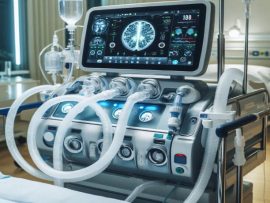
Abstract Extracorporeal carbon dioxide removal (ECCO2R) is an emerging technique designed to reduce carbon dioxide (CO2) levels in venous blood while enabling lung-protective ventilation or alleviating the work of breathing...
Read More
Abstract “Mechanotransduction” is a term I would use to describe my research topic, and it works perfectly well, as long as the goal is to earn confused looks and immediately..
Read More
Abstract Critically ill patients that require kidney replacement therapy (KRT) are among the most ill and complex patients routinely encountered in the intensive care unit (ICU). Continuous KRT (CKRT) is..
Read More
Abstract Human serum albumin (HSA) is a non-glycosylated, negatively charged, single-chain polypeptide composed of 585 amino acid residues with a relative molecular mass of 66.438 kD. It is synthesized by..
Read More
Abstract Chronic kidney disease (CKD) affects 50% of patients with heart failure. The pathophysiology of CKD in heart failure is proposed to be driven by macrocirculatory hemodynamic changes, including reduced..
Read More
Abstract Background:Cardiac surgery-associated acute kidney injury (CS-AKI) and fluid overload (FO) are common among neonates who undergo cardiopulmonary bypass, and increase mortality risk. Current diagnostic criteria may delay diagnosis. Thus,..
Read More
Abstract Background Extracorporeal membrane oxygenation (ECMO) stands as a pivotal intervention for patients grappling with cardiopulmonary insufficiency. However, alongside its therapeutic benefits, ECMO carries the risk of complications, with acute..
Read More
Abstract Cardiogenic shock (CS) is a critical condition with high mortality, characterized by reduced cardiac output (CO) and tissue hypoperfusion, despite advancements in treatment. Traditional hemodynamic markers like CO measurements,..
Read More
Abstract Introduction On January 27, 2025, DeepSeek-R1, a new Generative AI model, was introduced and rapidly gained adoption, taking over the user market to become the No.1 downloaded AI app , , ...
Read More
Abstract The use of extracorporeal membrane oxygenation (ECMO) to support the pregnant patient and fetus requires a complex decision-making process. Peripartum ECMO requires coordinated and informed decision-making between an interdisciplinary..
Read More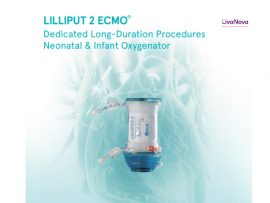
Abstract Aims Knowing the upper time limit for successful weaning from temporary mechanical circulatory support in cardiogenic shock will help with decision‐making regarding advanced heart failure (HF) therapy or considering..
Read More
Abstract Background: Cardiac surgery-associated acute kidney injury (CSA-AKI) results in poor prognosis. Several risk factors for CSA-AKI have been reported, including preoperative creatinine level, cardiopulmonary bypass time, and perioperative blood pressure..
Read More
Abstract Objective To compare the effects of fluid bolus therapy (FBT) with 20% albumin to crystalloid FBT on the incidence of cardiac surgery–associated acute kidney injury (CSA-AKI) and its severity..
Read More
Abstract Background: Cardiac surgery-associated acute kidney injury (CSA-AKI) is a prevalent complication with poor outcomes, and its early prediction remains a challenging task. Currently available biomarkers for acute kidney injury (AKI)..
Read More
Abstract Platelets are anucleate blood cells traditionally associated with hemostasis but now increasingly recognized for their multifaceted roles in immunity, inflammation, and tissue repair. Advances in platelet proteomics, employing high-throughput..
Read More
Abstract Objectives Cardiac surgery–associated acute kidney injury (CSA-AKI) is a common complication with high morbidity and mortality. This study was designed to determine whether adding human albumin to the cardiopulmonary..
Read More
Abstract Objectives Optimal blood pressure goals during cardiopulmonary bypass (CPB) remain uncertain and new metrics to individualize perfusion targets are needed. Critical closing pressure (Pcrit) is a fundamental property of..
Read More
Abstract Objectives To investigate the safety and efficacy of ANG-3777, a hepatocyte growth factor mimetic, in mitigating the risk of acute kidney injury (AKI) in patients undergoing cardiac surgery with..
Read More
Abstract Background The role of pulsatile versus non-pulsatile flow during cardiopulmonary bypass (CPB) is still in debate. This systematic review aimed to comprehensively assess the impact of pulsatile versus non-pulsatile..
Read More
Abstract Around one-quarter of all patients undergoing cardiac procedures, particularly those on cardiopulmonary bypass, develop cardiac surgery-associated acute kidney injury (CSA-AKI). This complication increases the risk of several serious morbidities..
Read More
Abstract Background Near-infrared spectroscopy (NIRS) enables a non-invasive measurement of tissue oxygen saturation (StO2) in regions illuminated by near-infrared lights. Vascular occlusion test (VOT) serves as a model to artificially..
Read More
Abstract Acute kidney injury (AKI) is a common, heterogeneous, multifactorial condition, which is part of the overarching syndrome of acute kidney diseases and disorders. This condition's incidence highest in low-income..
Read More
Abstract Background Acute kidney injury (AKI) is a significant complication in pediatric patients undergoing cardiac surgery. Iron metabolism-related indicators such as ferritin may predict AKI after adult cardiac surgery. However, it..
Read More